













Alwaght- After weeks of clashes between the Israeli occupation forces and Hezbollah fighters in the strategically significant Ali al-Taher heights in southern Lebanon, Israeli officials claimed they have fully captured the region.
The Israeli military spokesman released footage early Friday from the hills, announcing the start of an operation to clear tunnels in the area.
The spokesman claimed that troops from the 36th Division had spent recent weeks clearing two underground tunnels near Ali al-Taher, securing operational control both above and below ground. He said the forces had swept Hezbollah fighters from the area, killing some and driving others from the area.
Separately, Defense Minister Israel Katz asserted that seizing the high ground at Ali al-Taher effectively completes the regime's security zone in southern Lebanon. In belligerent remarks, Katz vowed that the army would finish neutralizing the tunnels and prepare tactical positions to maintain control of the heights and prevent any repositioning of Hezbollah.
“We will not withdraw from Lebanon’s security zone until Hezbollah hands over its weapons,” he declared.
Hezbollah reaction
Despite the Israeli military’s claims of seizing the Ali al-Taher heights, Hezbollah’s response has only deepened doubts about whether the occupation forces truly control the strategic hilltop.
Ihab Hamadeh, a Hezbollah lawmaker in Lebanon’s parliament, pushed back against the Israeli army’s allegations, saying: “Israel has released no footage showing its capture of the Ali al-Taher heights or any of the logistical weapons it claims to have found, especially given its talk of killing large numbers of fighters and sending others fleeing. How could that be possible while it claims to have the area under intense aerial and ground surveillance?”
Notably, Iran had previously warned it would deliver a harsh response if the underground complex were targeted. So far, with Hezbollah pushing back and no direct reaction from Tehran, the Israeli claim of full control over the heights remains clouded by serious ambiguity and skepticism.
Israeli regime has maintained a military presence in parts of southern Lebanon for decades, and over the course of the war that began three years ago, it has expanded its footprint deeper into Lebanese territory.
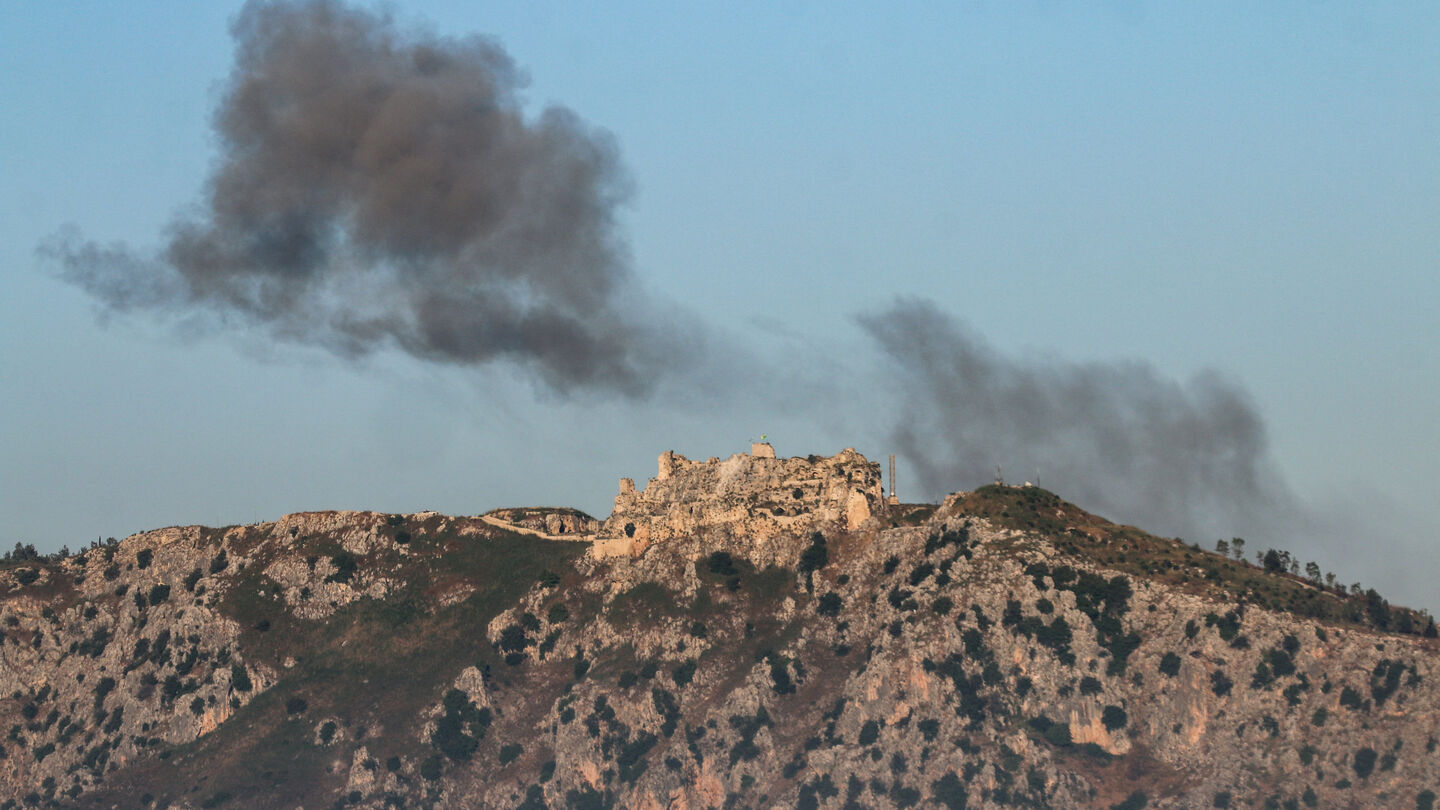
The Ali al-Taher heights lie east of the city of Nabatieh, roughly 15 kilometers from the Lebanon-occupied territories border, at an elevation of about 600 meters. The hilltop’s geography gives it commanding views over wide swaths of southern Lebanon, including routes leading to Nabatieh and the Iqlim al-Tuffah region. Reuters has described the heights as one of the most sensitive flashpoints between Tel Aviv and Hezbollah, citing its network of underground facilities and elevated position as giving it unique operational value.
Lebanese security sources told Reuters they believe Hezbollah has built an underground command center and weapons depots inside the hill. Analysts say the heights give the militant group better capability to deploy drones and launch short-range rockets toward northern occupied territories.
The core of Tel Aviv's claim about Ali al-Taher's military significance, whatever the political narratives, is hardly deniable. The area has been hit repeatedly by Israeli strikes over recent months, and the regime has sought to advance around its perimeter to fold the heights into its self-declared "security zone."
The crucial point is that "operational control" does not necessarily mean permanent occupation and troop presence across the entire hilltop. Even the Reuters report underscored that Lebanese military sources have said parts of the tunnel network may still be manned or booby-trapped with explosives.
Riad Adwan, a Lebanese analyst, struck a cautious note on how much of the hill the occupying army actually holds, saying it would take time to determine the real extent of Tel Aviv's claimed control and assess the ground truth.
Hassan Jouni, a retired Lebanese army general, told Al-Monitor that "Israel is wary of a direct, costly assault on this area because of casualty concerns, which shows that the military price tag for Ali al-Taher remains high."
One reason the Israeli army's latest claim is being greeted with skepticism is that Tel Aviv made the same assertion back in June, boasting full control over the heights. Hezbollah rejected that claim at the time, and Lebanese military sources said the battlefield situation on the heights had not shifted, with no Lebanese forces observing an Israeli advance onto the hill. Al Jazeera reported then that what effectively existed was more "fire control", via airstrikes, drones and artillery, rather than a ground seizure.
Still, some analysts contend that given an actual ground operation was conducted and "operational control" has now been declared, it would be wrong to dismiss the entire affair as mere media theater with no military gains. But the on-the-ground reality, they say, does not match the narrative being peddled by Tel Aviv's military and political officials.
Netanyahu's election drive
Though the Israeli occupation's PM tries to sell the claim of capture of the heights as a military victory against Hezbollah resistance movement, it seems that Netanyahu is driven by political motivations behind this military action.
A Hezbollah lawmaker pushed back hard against the Israeli narrative, insisting that Tel Aviv is trying to portray Ali al-Taher as the militant group's last redoubt, a propaganda trophy for Netanyahu to wield as an election card.
"Like any other hill or location in southern Lebanon, it has its own sacred existential value," the lawmaker said. "Israel's control over it is not a military catastrophe, nor is it the end of the road, especially since the resistance put up an epic fight there. But now there are red lines that will shape Israel's next moves."
It is noteworthy that Israeli parliamentary elections are set for October, and poll after poll show Netanyahu and his far-right allies losing ground, and pressure on the PM is mounting. In a society where security remains a top concern for settler voters, a battlefield victory against Hezbollah carries serious political currency.
Reuters has noted that with elections approaching, capturing Ali al-Taher could serve as "a tempting achievement" for the Netanyahu government.
Andrea Tenenti, a strategic communications expert and former spokesman for UNIFIL, told Al-Monitor: "Israel needs a major win before the elections, especially in an area long known as one of Hezbollah's strongholds."
Netanyahu, in other words, is trying to cast himself as the victor against Hezbollah by announcing the capture of the heights, hoping to rally public opinion behind him, a move that could shore up his political standing just before voters head to the polls.
The regime's media outlets have recently reported that military officials have privately voiced concerns that Netanyahu is deliberately escalating tensions in the occupied West Bank ahead of the elections to divert attention from the failures of October 7. By that logic, his aims in southern Lebanon are just as political: a military win to deflect a torrent of criticism from his own government.
The Israeli army has spent recent weeks mounting a broad operation to encircle, penetrate and destroy the underground infrastructure around Ali al-Taher. It appears to have achieved operational control over at least parts of the heights and the tunnel network. But independent evidence remains scarce, and there is still no proof that the regime has secured lasting, complete command over the entire hilltop or the full underground network.
So, as some observers agree, the claim of capture of the heights is neither false nor fully matching the picture the Israeli regime is projecting of "full capture" of them. The military part of the operation is correct, but the way it is presented to the public is heavily influenced by political reservations.