














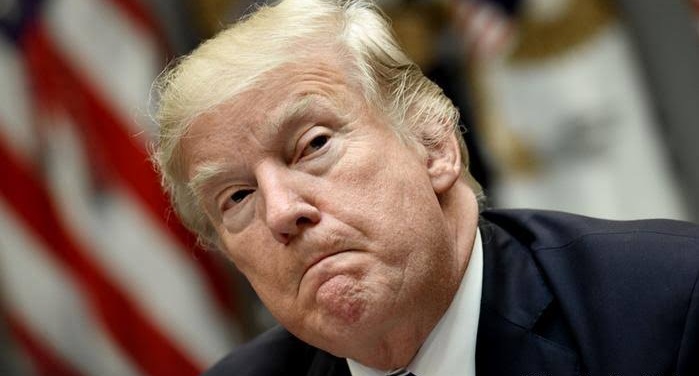


Alwaght- The latest Trump claim that he called off a planned attack on Iran marked another retreat by the blustering US president. After a wave of threats and promises of a heavy bombing campaign against Iran's energy infrastructure, he said that he, for now, has decided to avoid a military escalation to give diplomacy a new chance.
He said this came after a phone conversation with Saudi Crown Prince Mohammed bin Salman, aimed at preparing the ground for a deal about the Strait of Hormuz and Iran's nuclear program.
This is not the first time the hawkish president withdraws his threats against in the last minutes.
Since the war with Iran escalated, Trump has pulled back from his own threats at least six times in 2026, each time after issuing fierce ultimatums, only to blink or extend the clock.
March 24, 2026: After days of threatening to take out Iran's power grid and energy infrastructure if no deal was reached, Trump suddenly announced that "diplomacy will continue" and that strikes were off for now, citing progress in talks. It was his first clear retreat of the conflict.
April 6–7, 2026: He set a final deadline for Iranian compliance, warning of "massive strikes" if Washington's terms were rejected. In the final hours, he extended the deadline. PBS called it the third instance of his now-familiar "deadline-and-delay" pattern.
April 8, 2026: With less than two hours left on that deadline, Trump declared a two-week ceasefire to allow negotiations to begin. The promised attack never came.
July 2026: Another round of brinkmanship: "Deal or we'll finish the job," he warned. But no new military operation followed, and back-channel mediation quietly continued.
August 1–2, 2026: The latest reversal was when Trump ordered a halt to fresh strikes after calls with Saudi Arabia's bin Salman and consultations with other regional players, according to Reuters and the AP. His stated rationale was to give diplomacy one more chance at a deal.
Why has Trump retreated for the sixth threat?
There are various reports about why Trump buried the hatchet, though may be temporarily. Several factors seem to have driven this decision.
Mediation by Saudi Arabia and US's regional allies
Trump said he was called on by bin Salman to give diplomacy a chance. The main concern of Arab countries of war escalation are the potential Iranian retaliation strikes on Persian Gulf energy infrastructure. According to Reuters, the Saudi mediation this time was not a mere phone call and was driven by security and economic calculations. According to reports, the Saudi ruler warned Trump that any US escalation against Iran could sink the whole region into a comprehensive war. Persian Gulf Arab states, fearing that a full-scale US strike would turn their own territory, home to American military bases and critical infrastructure, into legitimate Iranian targets, pressed hard for de-escalation. Alongside Saudi Arabia, Qatar, the UAE, Turkey and Pakistan all urged Washington to dial back the rhetoric and stick with diplomacy.
Economic costs of war
The prolonged confrontation has already sent oil prices soaring and rattled global markets, and any further escalation near the Strait of Hormuz threatens to disrupt energy exports, costly prospect for the US economy and its allies alike. According to Axios, Saudi officials have warned that if Washington strikes Iranian refineries, power plants and energy facilities, Tehran is likely to retaliate against oil installations in Saudi Arabia, the UAE and other (Persian) Gulf Cooperation Council states, a scenario that could cripple regional crude exports.
Home political pressure
Media outlets report drop in public opinion's support to the war. They add that at the same time political pressures on the White House to end the war are building up. As elections draw closer in the US, longer, costly war can bear consequences to Trump's administration. So, one factor that can importantly influence Trump's Iran decision is the domestic calculations of the US. The long wars in Iraq and Afghanistan have left a durable imprint on the American public. When human, financial and economic costs mount, support collapses and the demand for a quick exit surges.
Trump himself, throughout his political career, has repeatedly attacked his predecessors' war policies and vowed never to drag the US into "endless wars."
His critics, meanwhile, have hammered him with a stark warning: an attack on Iran could easily morph, much like Iraq, from a limited strike into a protracted quagmire, one requiring troop deployments, billions in new spending and an open-ended military commitment.
Even within Trump's own base, opposition is stirring. The "America First" current, which insists that US money and military might belong at home, not in yet another West Asian conflict, has grown vocal. Some figures close to that faction have cautioned that a full-blown war with Iran risks alienating a significant slice of Trump's own electorate.










