
















Alwaght- The recent MoU between Iran and the US was supposed to de-escalate tensions and usher in a period of managing the disputes of the two countries. But only a few weeks after inking the deal, the military developments and Washington’s political decisions have shown that there is a long distance between the words and actions of the US.
One of the key terms of the deal was freedom of navigation in the Strait of Hormuz. According to this term, the vessels should transit through the corridors designed and managed by Iran to ensure safe passage through this strategic waterway.
However, what happened in recent days, however, told Tehran that Washington was trying to sidestep that very mechanism. By steering a number of tankers outside agreed-upon corridors, the US effectively called into question the framework laid out in the memorandum of understanding. On Tuesday, several tankers attempted to transit unauthorized routes, prompting a reaction from Iran's armed forces. Iranian officials stressed that this was not a violation but rather the precise execution of responsibilities assigned to Iran under the MoU for managing maritime traffic and safeguarding the Strait of Hormuz.
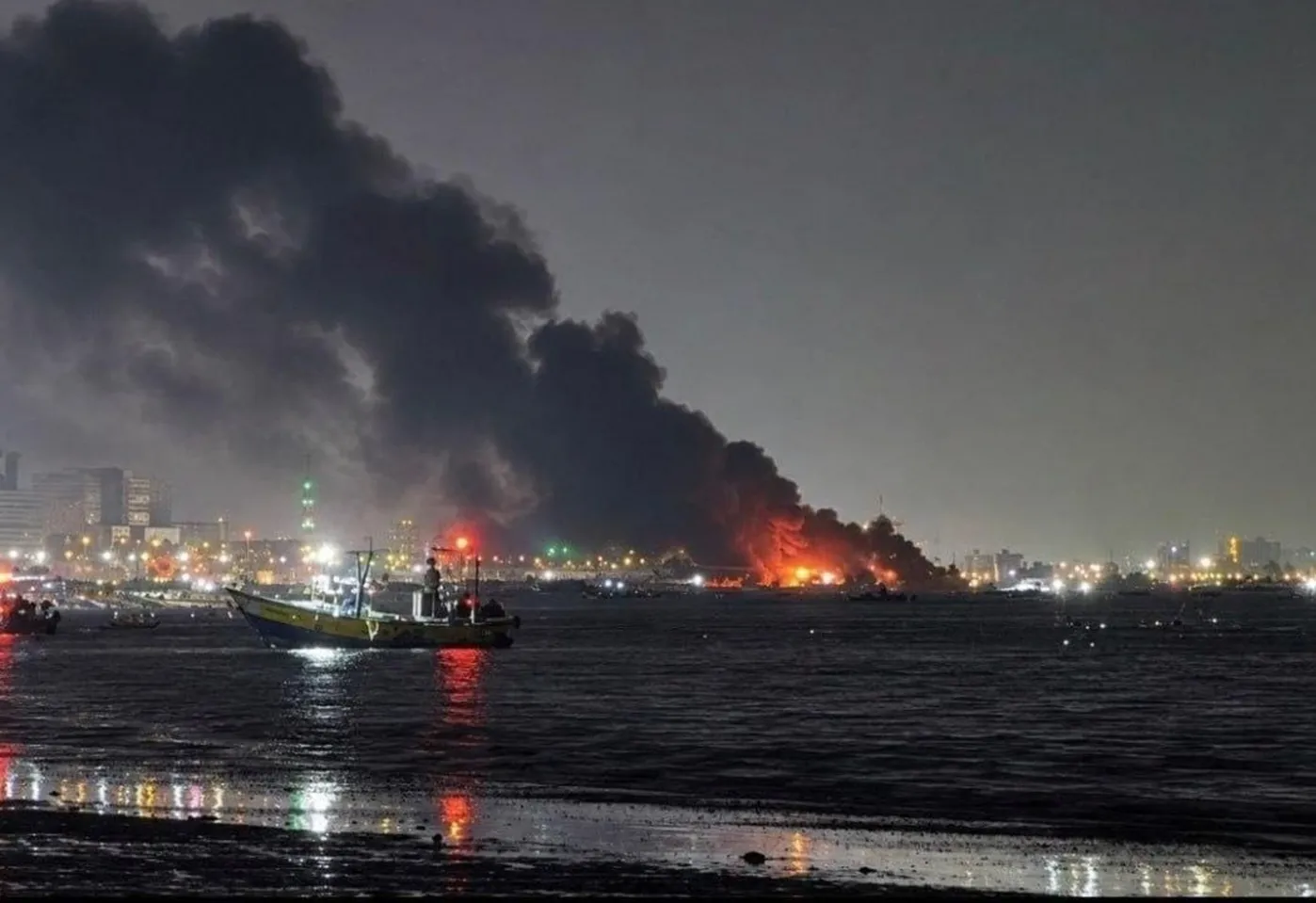
Washington, for its part, offered a different narrative, claiming Iran had breached the memorandum by targeting the tankers. Along those lines, US Central Command (CENTCOM) announced early Wednesday that it had launched an operation aimed at "imposing a heavy cost" on Iran for attacking commercial vessels with civilian crews in an international waterway. Following those strikes, military sites in Bandar Abbas, Sirik, and Qeshm came under aerial attack. A projectile that hit a fishing port pier west of Bandar Abbas set several vessels ablaze, while Sirik reported a number of wounded.
Iran's response to what it called a crime came in the shortest possible time. The Islamic Revolutionary Guard Corps (IRGC) announced in a statement that its naval and aerospace forces, in a coordinated missile-and-drone operation, struck 85 US military targets, including facilities at the Salman port, the US Fifth Fleet headquarters in Bahrain, and Kuwait's Ali Al Salem air base. The IRGC also reported shooting down an American MQ-9 drone that had attempted to operate in Iran.
Doubts about US commitment to promises
Recent military encounter has once again raised the doubts about the extent of the US commitment to the terms of the deal. This becomes more serious when we know that along with the military escalation, the US administration stepped up its economic pressure on Tehran. The Department of Treasury has announced revocation of the license it gave two weeks ago for Iran oil and petrochemicals sales under the deal.
Tehran described the move a clear violation of Washington's commitments and a blatant departure from the agreement's terms. Deputy Foreign Minister Kazem Gharibabadi warned in response that Iran would take decisive and proportionate action to safeguard its security and national interests. The Foreign Ministry of Iran, in a statement, labeled the US Treasury Department's decision a "gross breach" of Article 10 of the memorandum of understanding and held the American government fully accountable for all consequences of this faithlessness.
All this comes as the US President Donald Trump on Tuesday once again claimed that talks with Iran were progressing well, yet the simultaneous escalation of military strikes and the return of economic pressure paint a very different picture of the White House's actual policy. That very disconnect between diplomatic rhetoric and on-the-ground action, in the view of many observers, now stands as the biggest obstacle to building confidence between Tehran and Washington.
Iran will not yield to pressure
The experience of past years has shown that the "maximum pressure" strategy of Trump administration against Iran has neither delivered Washington's stated objectives nor forced Tehran to accept demands beyond its legal and political framework.
Against that backdrop, Foreign Minister Seyyed Abbas Araghchi, citing the memorandum's terms, stressed: "Article 13 of this document is crystal clear; as long as military threats against Iran continue, negotiations for a final agreement will not begin." He also called on the US to honor its own signature and stop actions that undermine the dialogue process.
What today, more than any other factor, has clouded and complicated the negotiations is the glaring gap between America's written commitments and its actual conduct on the ground.
That disconnect, combined with Washington's track record of bad faith, particularly its unilateral withdrawal from the 2015 nuclear deal, has deepened Tehran's distrust of US promises to an unprecedented degree.
Recent remarks by US Secretary of State Marco Rubio, who dismissed the MoU with Iran as "just a piece of paper" and hinted at the possibility of talks collapsing, have only reinforced the perception that the Trump administration is unwilling to act on its promises.
Iranian officials insist that any agreement can only be stable and durable if it is backed by the practical implementation of commitments, not just political pledges. Accordingly, Tehran continues to view the negotiating process with caution and skepticism. For that reason, the Islamic Republic has declared that while it will keep the diplomatic channel open, it will also leverage all of its defensive and deterrent capabilities to counter any threat, and that its armed forces remain on full alert, ready to deliver a proportionally harsher response if attacks are repeated.
In such circumstances, the future of the negotiations is more uncertain than ever. And if the US persists in pairing military and economic pressure with dialogue, the prospect of reaching a final deal will only grow more remote.
In general, military attacks combined with economic pressures amid talks send the message that Washington still prefers pressure over diplomacy. Continuation of this approach not only will weaken opportunities for a final deal, but also risks return to escalation, this time at a broader level. Therefore, success of the talks hinges on the US quiting its adventures and acting on obligations it approved of under the deal.










