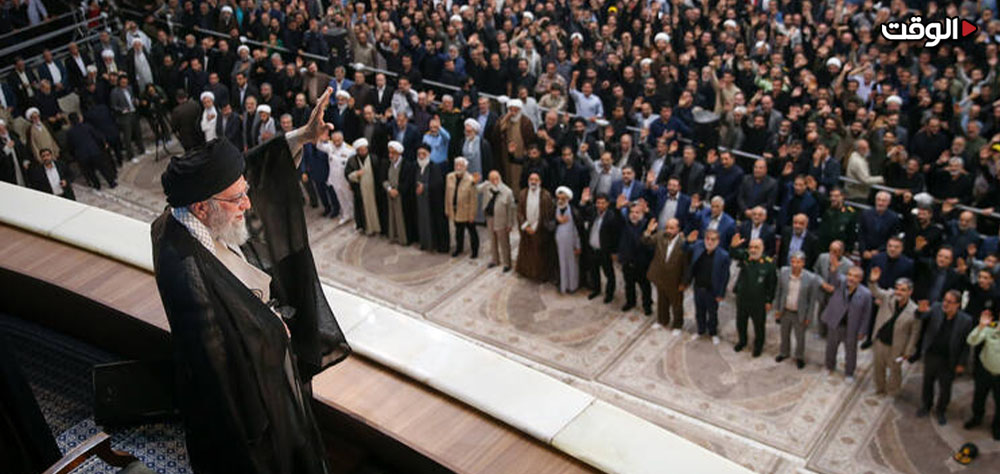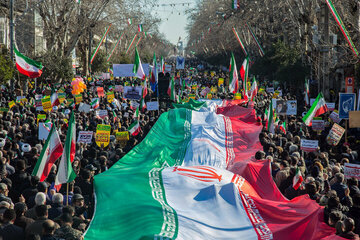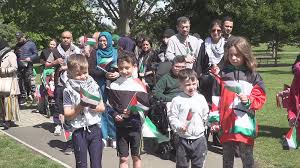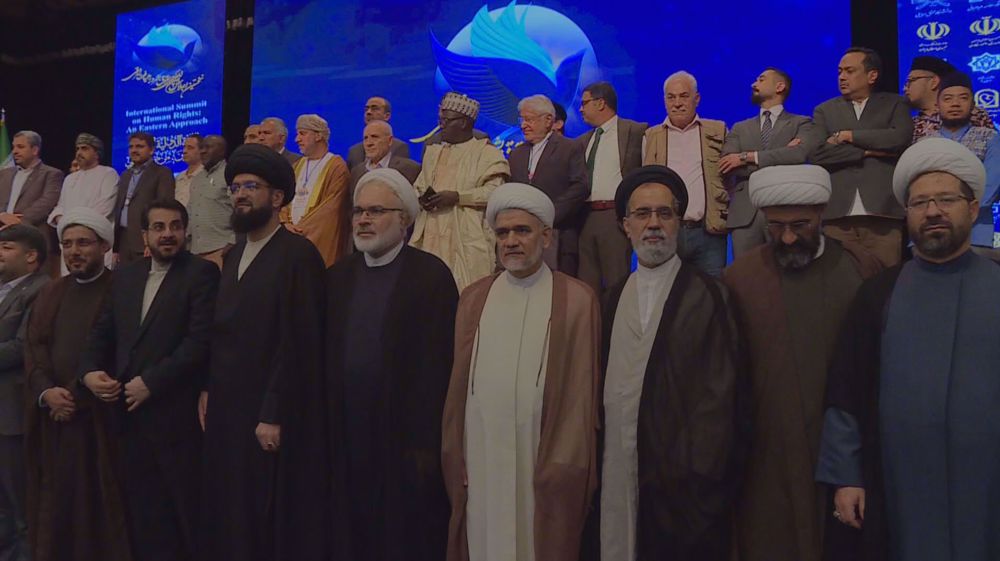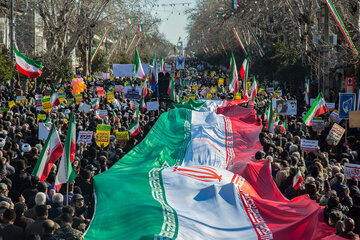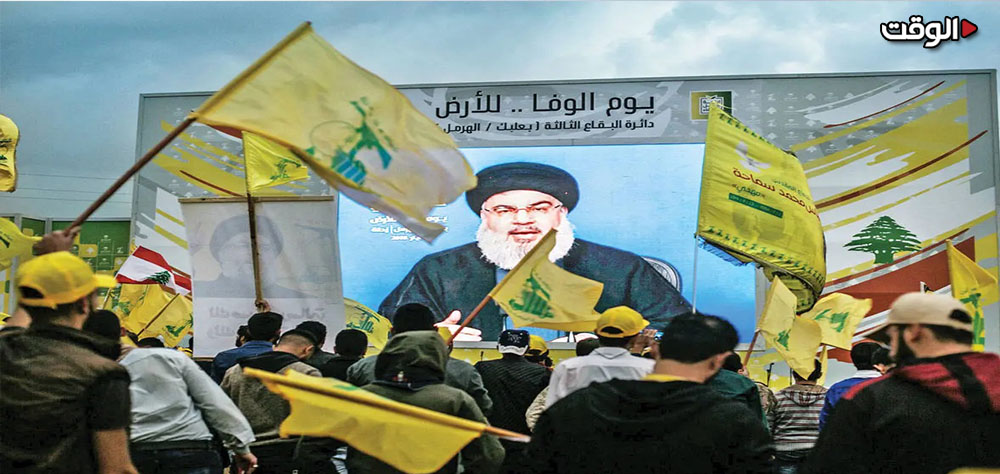
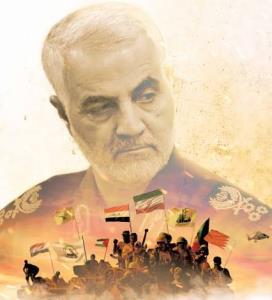
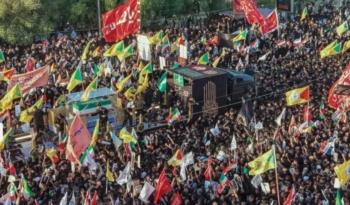


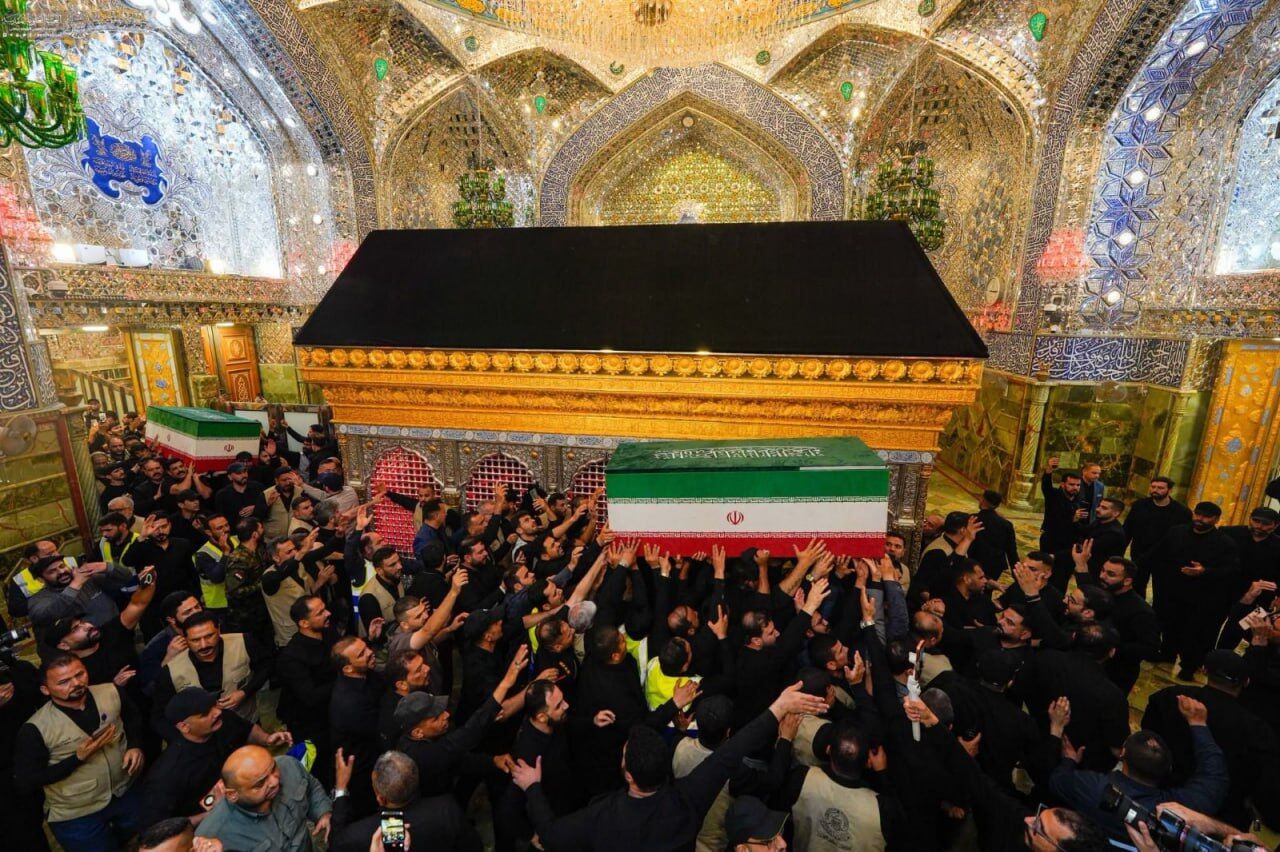


Alwaght- As millions in Tehran bade farewell to the martyred Supreme Leader of Iran Ayatollah Sayyed Ali Khamenei. This scene was repeated in Iraq today. From Baghdad to Najaf to Basra, mourning ceremonies have been held and religious, social and political figures of Iraq have attended to commemorate the Leader. Many of the Iraqis find the martyred leader not just the leader of Iran.
Many Arab observers believe that this massive turnout is not just a result of close political ties between the two neighbors, rather, it is driven by historical, religious, and cultural bonds of the two nations which have existed centuries before the rise of the modern states.
Why has Iraq hosted funeral of Iranian leader?
Al Jazeera, in one of its reports on Tehran-Baghdad relations, writes that Iran-Iraq ties are no modern phenomenon, but they stretch back thousands of years, rooted in shared civilizational, cultural, and religious bonds.
That analysis makes clear that for many Iraqis, the funeral and commemoration ceremonies for Iran’s slain leader were not a political event, but a natural extension of that historic connection.
Al-Sharq al-Awsat, in a piece titled “History and Geography Have Made the Two Countries Permanent Partners,” notes that no political upheaval has ever managed to erase these social and cultural links.
Meanwhile, the US-based Middle East Council, in a study on Iran-Iraq relations held that the relationship is not merely built on political interests, but on a vast web of religious, social, and cultural ties.
Why are Iraqis interested in the martyred leader?
A major part of the martyred leader's popularity in Iraq stems from his religious and intellectual standing. Iraq's official news agency (INA), in a report on Iran-Iraq cultural ties, described the relationship as "a model of cultural convergence" and wrote: Iraq and Iran are bound by a civilizational and cultural heritage that stretches back centuries.
On that basis, many Iraqis did not view Iran's leader solely through a political lens, they saw him as a religious figure who played a key role in defending the Islamic ummah, championing the Palestinian cause, and safeguarding the independence of regional nations.
Al-Mayadeen news network, in its own report, stressed that religious commonalities, the Najaf and Qom seminaries, and cultural exchanges are the single most important factor drawing the two nations together, ties that run far deeper than official state-to-state relations.
Religious influence of Ayatollah Khamenei in Iraq's religious community
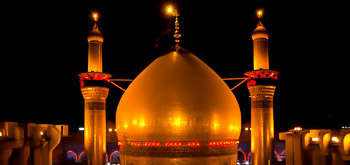
One of the most critical dimensions of the martyred leader's standing in Iraq was his scholarly and religious influence within the country's religious community. A study by the University of Baghdad's Center for Strategic Studies notes that over the centuries, Najaf and Qom have stood as the two primary hubs of religious scholarship and scholarly exchange.
That historical link ensured that Iran's leader, mainly his writings, messages, and views, were widely known among seminary students, clerics, and religious circles across Iraq.
Arab analysts maintain that his emphasis on Islamic unity, interfaith rapprochement, respect for Najaf's religious authority, and defense of Islamic sanctities carved out a unique place for him among a broad spectrum of Iraq's religious elite.
Fight against terrorism, the turning point in Iraqi-Iranian relations
One of the biggest drivers of the martyred leader's popularity in Iraq was the Islamic Republic's role in confronting ISIS terrorist organization.
Al Jazeera's research center, in an analysis of Iraq's 2014 developments, writes that Iran was the first country to answer Baghdad's call, dispatching direct support to combat ISIS.
Al-Arabi Al-Jadeed, in an analysis of Tehran-Baghdad relations holds that the fight against ISIS became a turning point in Iran-Iraq ties.
Iraqi politicians have repeatedly stated that Iran's advisory support, alongside Najaf's historic fatwa and the resilience of Iraqi forces, played a decisive role in preventing Baghdad's fall and liberating occupied territories.
In the eyes of many Arab analysts, Ayatollah Khamenei's stance in support of Iraq's territorial integrity and counterterrorism efforts stands as one of the most crucial factors behind the Islamic Republic's social capital in Iraq today.
Beyond neighborhood
Many Arab researchers suggest that Iranian-Iraqi ties cannot be described just through lens of political dynamics. In this relation, Al-Arabi Al-Jadeed in a conclusion of its reports on the funeral ceremony in Iraq maintains that social, religious, and cultural relations between the two nations are deeper and more sustainable than their political developments. And perhaps that is precisely why Iraq, after Iran itself, became the most significant arena of mourning for the martyred leader. Iraq is a country where millions see the border between Iran and Iraq as nothing more than a political line, not a divide between two peoples bound by a shared history.