
















Alwaght- In the geopolitical equations, power is not measured just by the number of missiles, fighter jets, or economy size, and one of the power indicators is the social capital and the extent of social cohesion at security junctures. Whenever a country can mobilize a major part of its population around such concepts as independence, national sovereignty, and territorial integrity, in practice it displays one of the most important pillars of its deterrence.
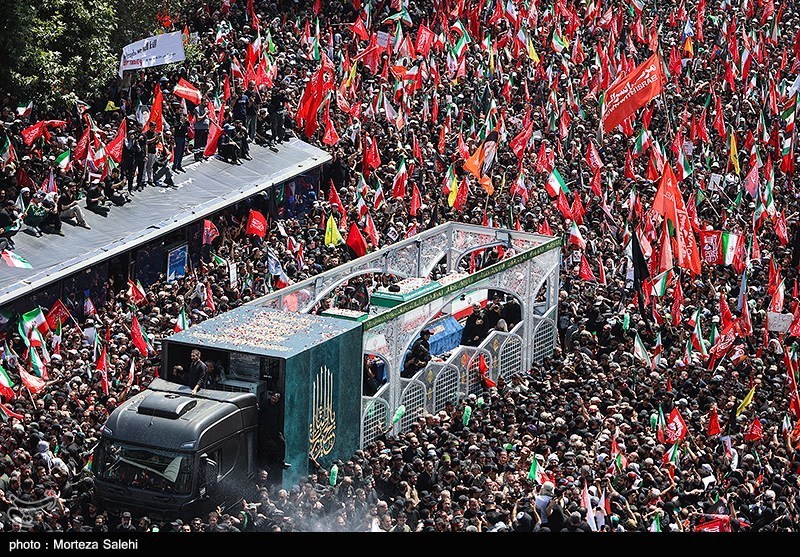
The massive turnout at the funeral procession for the martyred Iranian Leader Ayatollah Seyyed Ali Khamenei, regardless of differing estimates of its size, carried a strategic message that went far beyond a mere memorial ceremony.
It must be noted that he turnout demonstrated that when the country is perceived to face an external threat, a significant segment of society is ready to set aside internal differences and rally around the defense of Iran, national security, and territorial integrity. For any foreign actor assessing Iran's capacity for resistance, such convergence is a critical variable in their security calculations.
Media coverage of the event and accounts from foreign journalists and observers confirm that the scale of public participation did not go unnoticed. These reflections, irrespective of each outlet's political leanings, indicate that Iran's social dynamics continue to shape international perceptions of the country's stability and its domestic mobilization potential.
Alongside this display of solidarity, the demand for accountability, and for retaliation against those behind the attacks, was palpable in the chants and public mood. From a deterrence studies perspective, such demands can be read as part of societal expectations for safeguarding national security credibility. In much of international relations theory, when a state fails to respond to actions it deems a threat to its security, rivals may interpret that inaction as lowering the cost of future aggression. That said, any decision regarding the type, timing, or scale of a response rests with the responsible institutions and will be shaped by a complex array of political, military, and diplomatic calculations.
Also noteworthy was the cross-section of society in attendance: youth, students, families, and diverse social groups. This diversity, while not necessarily signaling uniform political views among all participants, does point to a significant common ground: a shared sensitivity to national security, sovereignty, and Iran's territorial integrity.
For outside observers, the most important takeaway from this event may not be the sheer numbers, but rather Iran's capacity for social mobilization in times of crisis. Historical experience shows that whenever external pressure escalates to the level of threatening national existence or sovereignty, Iranian society has repeatedly demonstrated an ability to regenerate degrees of cohesion, a factor that, alongside military capabilities, constitutes one of the core pillars of the Islamic Republic's deterrence.
Finally, what stood out glaringly in this massive turnout was the reaffirmation of defending the country, preserving territorial integrity, safeguarding national security, and exacting vengeance for the martyred leader. In the high-stakes security environment of West Asia, this social capital may prove just as consequential as military might and diplomatic influence. Because in the strategic equations of a country that enjoys social backing during crises, the costs imposed on any hostile action tend to be substantially higher, and that, in itself, is one of the most effective elements of deterrence.










