











Alwaght- Time will reveal the full consequences of the US-Iran memorandum of understanding. The core issue remains the 60-day negotiation track aimed at striking a nuclear deal. But in the early read on what just went down, Trump got little more than the reopening of the Strait of Hormuz.
His pre-war demands included regime change, eliminating highly enriched uranium, completely halting Iran's domestic peaceful enrichment program, and dismantling its missile program. Yet under the current preliminary agreement, none of those demands are being met. In fact, the US explicitly commits to curbing Israeli regime aggression against Lebanon as part of de-escalation on all fronts, which analysts see as Washington's de facto endorsement of Tehran's regional influence.
This is a major crisis for the Israeli regime. After casting its post-October 7 battle as an existential struggle to reshape the regional security order and impose its will, it now finds itself the big loser in the new equation, with Netanyahu personally emerging as the deal's double loser.
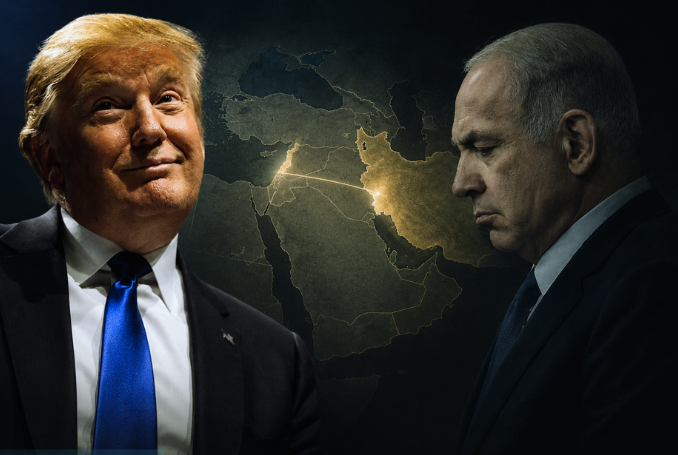
So now the dynamic comes down to two conflicting calculations: Trump's versus Netanyahu's. The former wants to end the war to lock in his midterm odds. The latter wants to keep it going to hold onto his prime minister's chair.
Netanyahu’s calculations
He's facing a brutally complex calculus, and with midterms looming, a full halt to the war simply does not work in his favor. Netanyahu sees the US-Iran deal as a prelude to certain electoral defeat down the road.
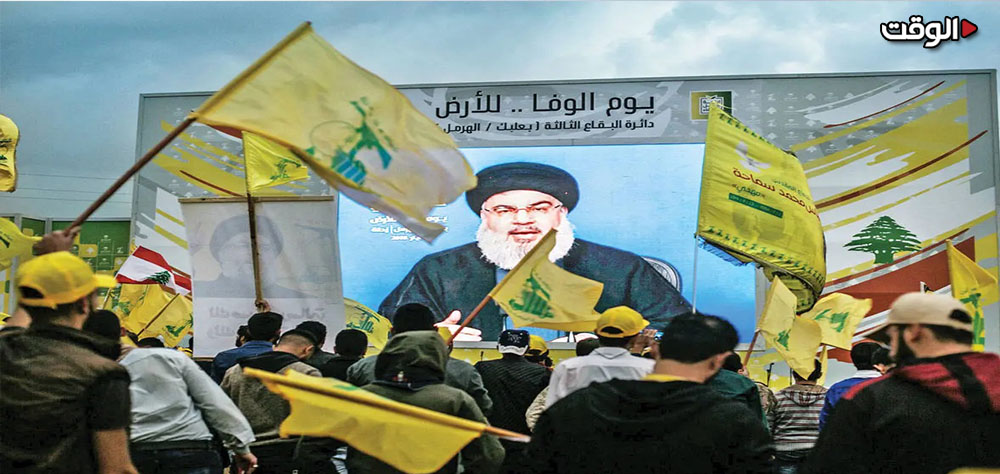
If the Israeli military is forced to stop fighting and pull back from Lebanon, then Iran has effectively tied the Lebanon case into a neat knot, and inside Lebanon itself, Hezbollah will be crowned the war's victor. The US, for its part, is trying to push a political track toward Hezbollah's disarmament through back-channel talks between Beirut and Tel Aviv. But a ceasefire actually undercuts that goal: it weakens the Lebanese government's position while strengthening the Hezbollah's standing and gains at home. That, in turn, gives Hezbollah the political cover, backed by public opinion, to squeeze the Joe Aoun-Nawaf Salam accommodationist government into walking away from the humiliating direct negotiations with the regime, talks designed to leave Lebanon defenseless against its enemy. Hezbollah's argument will be simple. Every government option has gone nowhere; it's the resistance's arsenal and the axis's backing that have actually preserved Lebanon's territorial integrity and sovereignty against occupation.
What this adds up to is Lebanon operating under two protective umbrellas aimed at safeguarding territorial integrity, securing Israel's withdrawal, and enabling reconstruction and the return of displaced people to their lands. The first is the domestic umbrella of the Hezbollah's arsenal. The second is the regional umbrella of Islamic Republic of Iran’s backing, which, as the region's security order continues to be redrawn, could even expand through constructive cooperation with other regional players like Saudi Arabia, Pakistan, and Egypt.
No ceasefire with Barrack's political lever
So, Netanyahu is pushing for continuing the military operation inside Lebanon in any way and even possibly, to avoid tensions with Trump, will tie exit from Lebanon territory to Hezbollah disarming.
He certainly does not want any withdrawal from Lebanon to happen under the terms of the US-Iran deal. Instead, he is intent on tying that pullback to completing negotiations with the Lebanese government and imposing joint US-Israeli conditions on dismantling Hezbollah's weapons and pushing its fighters north of the Litani River.
To get there, Netanyahu is positioning himself not as opposing US policy in Lebanon and the region, but as marching in lockstep with it. The US envoy Thomass Barrack's push for a new political strategy, one that links his vision for Lebanon to his broader regional outlook stretching from Turkey to Syria and Iraq, is exactly what Netanyahu has latched onto. In Lebanon, that strategy zeroes in on persuading Hezbollah to accept disarmament in exchange for Washington's nod to its continued existence and political role. Barrack is trying to rebrand a shift from the old US approach of dissolving Hezbollah and all its political, social, and financial institutions, a pivot designed to match the new regional balance of power emerging from the US-Iran agreement.
But regardless of how futile such a policy is, because Hezbollah will never sign on, this is going to be a long, grinding process. And that suits Netanyahu just fine, because it stalls the fulfillment of one of Tehran's core conditions in its preliminary deal with Washington.
Finally, it must be said that all signs suggest Netanyahu is resolved to continue his military operations inside Lebanon and reach Zahrani River, or at least Nabatieh or Tyre. Meanwhile, some internal Israeli analysts admit that even if Trump forces the Israeli PM to de-escalate and stop attacks on Lebanon until a final deal is secured with Iran, Netanyahu will very likely later gradually resume aggression on Lebanon.