









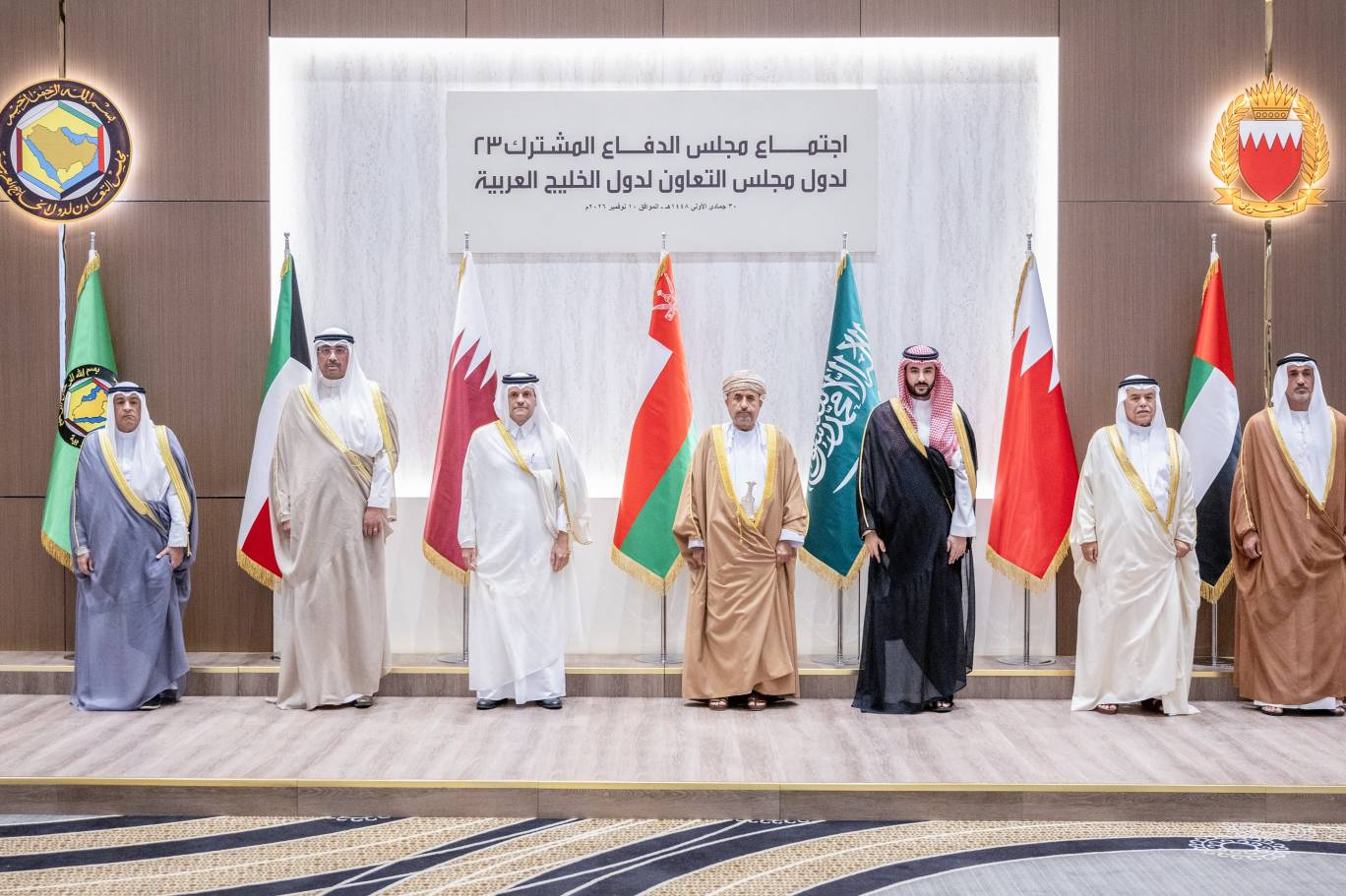


Alwaght- For decades having entrusted their security and territorial integrity to the US for protection for billions of dollars in costs, the Persian Gulf monarchies have concluded after the US-Israeli war on Iran and Iranian attacks on their lands in response for facilitating this aggression have concluded that security cannot be bought and they should seek a fundamental solution for defense. That is driving them to prioritize regional defense pacts and mechanisms.
In this connection, the defense ministers of these countries on Tuesday gathered in Bahraini capital Manama and approved a plan to establish an advanced military command in Kuwait. They also agreed to provide the command center with human and financial sources.
Jassim Mohammed Al-Budaiwi, secretary-general of the (Persian) Gulf Cooperation Council, said the establishment of an advanced command and the assignment of forces to it fall within a series of decisions aimed at expanding military cooperation among the Persian Gulf states and deepening integration among the armed forces of member countries. He said the moves implement directives issued by (P) GCC leaders at their extraordinary summit in Jeddah last April on strengthening joint military cooperation.
Al-Budaiwi stressed that the cooperation reflects a shared responsibility among all Persian Gulf states for the security of member countries, and that pooling their military efforts strengthens their ability to protect their territories and resources and to safeguard the security of citizens and residents.
The decision is part of a broader package of measures the (P) GCC members have undertaken to develop a joint defense system. Those efforts have gathered pace, particularly after the leaders' directive in Jeddah in April to bolster military integration and speed up completion of a plan for an early-warning system against ballistic missiles.
The (P) GCC Secretariat has so far released no details on the number of forces to be assigned to the new command, the type of weaponry involved, its missions or when it will begin operating. It also remains unclear whether the command will be built from permanent combat units or will merely handle operational management and military coordination.
Saleh Al-Maqaitah, a UAE military analyst, believes otherwise: "Establishing an advanced command in Kuwait with appropriate force support marks a shift from coordination and consultation to a level closer to operations management and field planning. Such a step could speed up intelligence-sharing, improve coordination of military movements and raise readiness levels against cross-border threats. Possible missions for the command could also include monitoring developments on the ground, joint planning and coordinating responses."
What are the goals?
These developments are coming as tensions between the US and Iran are escalating and meanwhile Yemeni Ansarullah's attacks on Saudi Arabia, a major US ally, have dramatically increased. The reflection of these security concerns could be seen the the defense ministers' meeting, who condemned the attacks on the Saudi infrastructure.
During the 40-day war, Cooperation Council member states faced common threats, but their responses made clear that reactions were shaped largely at the national level, based on each country's own capabilities and calculations.
Missile and drone attacks on Arab targets and infrastructure thus demonstrated that possessing air-defense systems, advanced military equipment and bilateral security cooperation with the United States does not necessarily mean an effective collective-defense mechanism exists.
For the Persian Gulf Arab states, the recent war was therefore not merely a military crisis but a serious test of the credibility and effectiveness of their collective-security architecture. Against that backdrop, the establishment of a command headquarters in Kuwait can be seen as an attempt to turn scattered cooperation into a more cohesive, organized structure.
Challenges of common defense
Though Arab leaders try to uplift their security level with such defense initiatives, the experience has shown that Arabs still face serious limits independently and effectively countering security crises.
The idea of a joint military structure among the Persian Gulf states is nothing new. Since its founding in 1981, the (P) GCC has wrestled with how to harness members' military capacities within a coherent and effective mechanism serving collective defense.
The first serious step came in 1982 with the creation of the Peninsula Shield Force, initially comprising 5,000 troops from member states to serve as the executive arm of (P) GCC collective defense. But the project ran into structural and political obstacles from the outset: disputes over command, the level of members' participation, the force's basing, and some countries' fears of expanding Saudi influence prevented Peninsula Shield from becoming a strong joint military force.
Peninsula Shield's only significant operational experience came in 2011, when its forces intervened to suppress popular protests in Bahrain. But that intervention highlighted its role in addressing internal crises more than it demonstrated any capacity to defend member states against external threats, raising serious questions about the force's effectiveness in achieving its core purpose, which is collective defense.
Moreover, because the Arab states depend on Western weaponry and defense systems, especially American equipment, to protect their airspace, any joint defense cooperation will inevitably rest on those same capabilities; in practice, they will have no independent defense tools beyond Patriot and THAAD systems. Air-defense systems are already deployed in abundance on their soil, so a joint command alone adds no new defensive capacity; at best, its payoff will be limited to better coordination and more effective use of existing equipment.
At sea, too, the experience of war with Iran showed that the US, despite deploying aircraft carriers and dozens of warships in the region, has been unable to wrest control of the Strait of Hormuz from Iran or guarantee fully secure maritime passage through the waterway. Even ships belonging to regional Arab states, despite US military escort, remain exposed to Iranian missile threats, and transit through the Strait of Hormuz is neither risk-free nor cost-free for them.
This situation suggests that enjoying advanced equipment necessary does not mean having the capability to protect security and take the initiative of field developments. Therefore, if Washington, with its all military and naval capacities, has failed to realize its goals in the Persian Gulf, it is highly unlikely the Arab states, which have challenges in home security, can make considerable success against foreign threats without reliance on foreign powers.
On the other side, the Saudi-Emirati competition over leadership of the Arab world and transformation into a superior power in the Persian Gulf over the past decade has been a serious obstacle in the course of cooperation and convergence among the (P) GCC states.
Generally speaking, as long as the Cooperation Council ties its security to the American military support, durable security for Arab states will remain just a dream. The most effective way to collective defense, thus, is reviewing the security ties with their powerful neighbor Iran and settlement of the disputes between member states.