














Alwaght- Suspicious flights in the Iraqi sky, reports of Israeli fighter jets flying from Iraqi airspace near Iranian borders, and explosions in the munition depots of the Iraqi resistance groups have all set off the alarm bells about possible rejuvenated escalation in the region. The moves, if proven linked to each other, can signal efforts by Israel and the US to weaken defense capabilities of the Axis of Resistance before any fresh aggression against Iran.
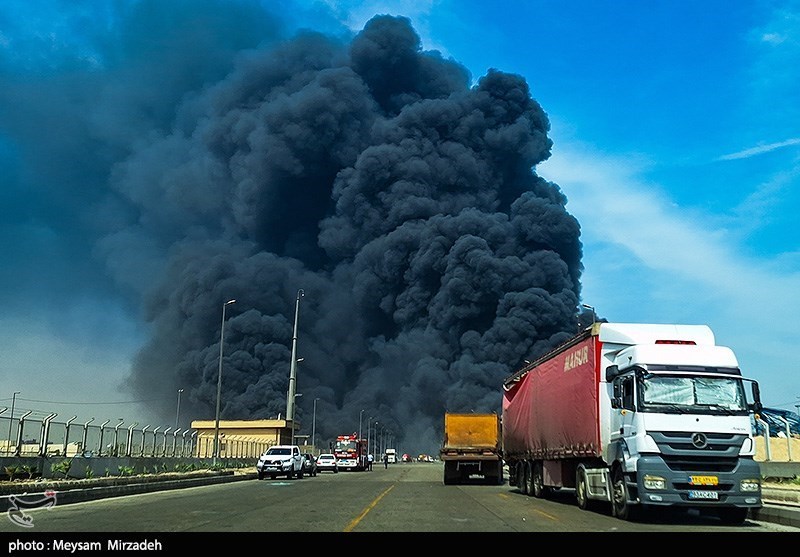
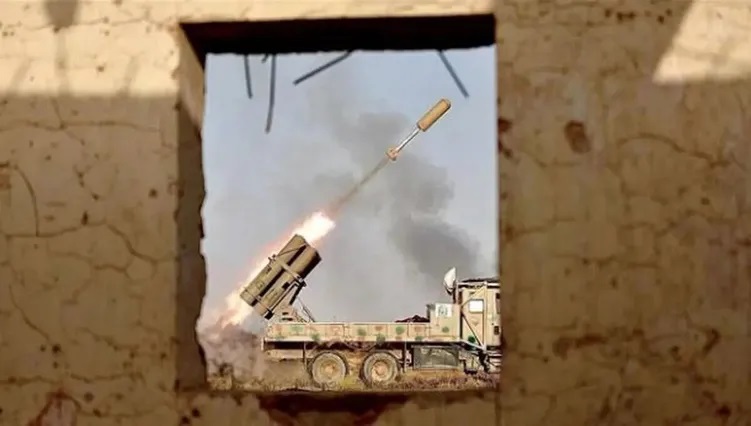
In a report headlined "Baghdad Suspects Israel Targeted Chinese Air-Defense Systems Supplied to Iraqi Groups," Asharq Al-Awsat reported that Iraqi officials suspect the Israeli regime played a role in possible strikes on weapons depots belonging to resistance factions. According to the report, some of these sites housed Chinese-made air-defense systems said to have been transferred from Iran to Iraq. The newspaper also cited a series of explosions at warehouses belonging to Iraqi armed groups since the start of October—facilities that, according to published accounts, were in some cases used to store reconnaissance drones and one-way attack drones.
Nightly fights of Israeli jets near Iranian borders
In recent days, reports have also surfaced of Israeli fighter jets flying over Syria and Iraq and moving along a route toward Iran. The Times of Israel, citing US media, reported that Israeli warplanes flew deep into the night to near the Iranian border before turning back.
According to the report, the Israeli military aircraft were accompanied by refueling planes during the flight, a detail of military significance, since aerial refueling enables operations over longer distances. The Times of Israel also noted speculation about the purpose of the mission, including the possibility of sending a deterrence message to Iran amid ongoing regional tensions and domestic political divisions in Tel Aviv.
Some media reports have raised the possibility that such flights were intended to provoke Iran into responding and to create the political groundwork for a potential strike.
Iraq, by virtue of its geographic position between the occupied territories and Iran, could figure in the operational calculus of any long-range air campaign. The repeated military flights along this route, particularly fighter jets accompanied by aerial tankers, point to possible rehearsal of flight corridors, assessment of air-defense responses and a display of operational readiness.
In this connection, the Iraqi outlet 964 Media published remarks by Saad Maan, head of Iraq's Security Media Cell, on violations of the country's airspace. Maan said violations are documented and referred to the Foreign Ministry for follow-up. He also stressed that air movements are being monitored and that Iraq's rights remain safeguarded.
Netanyahu and temptation of war to stay in power
Iraq's developments cannot be assessed in isolation from Israel's domestic politics and the anxieties surrounding Netanyahu's political future. The Palestine-Now news agency, in a report headlined "Israeli Analysts Warn: Netanyahu May Spark Regional War to Delay Transfer of Power," spotlighted warnings by two Israeli analysts about the possibility of a new round of regional war driven by political motives.
Amos Harel, the military analyst for Haaretz, has warned that Netanyahu may exploit escalating security tensions to shore up his political position. According to this assessment, Netanyahu's efforts to intensify confrontation with Iran ran into obstacles, and the Israeli military itself played a role in preventing a strike at that juncture. The analyst also voiced concern that such a scenario could recur during negotiations over forming the next cabinet.
Nahum Barnea, the political analyst for Yedioth Ahronoth, has laid out an even more dangerous scenario. In his assessment, launching a regional war, with or without US, could become a tool for delaying the transfer of power. He warned that the emergence of a state of emergency and mounting security pressures could push Netanyahu's rivals, including Naftali Bennett and Gadi Eisenkot, to join a national unity government.
These analyses indicate that anxiety over the blurring of political calculations and military decisions extends even within Israeli media and analytical circles. From this perspective, the prospect of heightened tension with Iran is viewed not merely as a military matter but as one bound up with Netanyahu's political survival.
Iraq, the ring the Israelis cannot ignore
One likely objective of any operation against Iraqi resistance groups is to degrade their capacity to take part in a wider confrontation with the US and Israeli regime. If their weapons depots and air-defense systems have been targeted, such strikes could be aimed at blunting their ability to counter attacking aircraft, disrupting their equipment supply chains and limiting their operational capacity.
Yet during the recent 40-day war against Iran, Iraqi resistance groups were hardly bystanders. Throughout that war, the Islamic Resistance in Iraq claimed a string of attacks on American positions and interests in Iraq and the region, attacks that demonstrated how expanding the war to Iran could activate additional fronts.
Rudaw reported on April 8 that the Islamic Resistance in Iraq said it had carried out 831 attacks over 39 days of fighting. The Kurdish broadcaster also reported that the attacks employed drones and missiles and targeted US military positions, diplomatic facilities and several locations in the Kurdistan Region.
These figures show that the Iraqi front in the recent war both became one of the pressure channels on the US and itself came under heavy attack. Efforts to degrade the military infrastructure of Iraqi resistance groups must therefore be examined within a broader equation. Strikes on their air defenses and weapons depots do not necessarily mean removing these groups from the calculus of a future war. The experience of the 40-day conflict showed that, should the war widen, they are capable of imposing new military and security costs on Washington and Tel Aviv.
Actually, any push to remove the Iraqi resistance groups from the military equations before any potential war against Iran faces the potential prospects that these groups will enter conflict again. So, even if the Israelis manage to degrade part of their strength, there is no guarantee Tel Aviv can prevent activation of Iraq front against the anti-Iranian camp.