










Alwaght- As tensions have escalated between Israeli regime and Turkey in recent months, the two sides have intensified their push to cement and expand their influence in various regions. Eastern Mediterranean, meanwhile, that has for years been a setting for Tel Aviv-Ankara dispute once again rose as an area of confrontation.
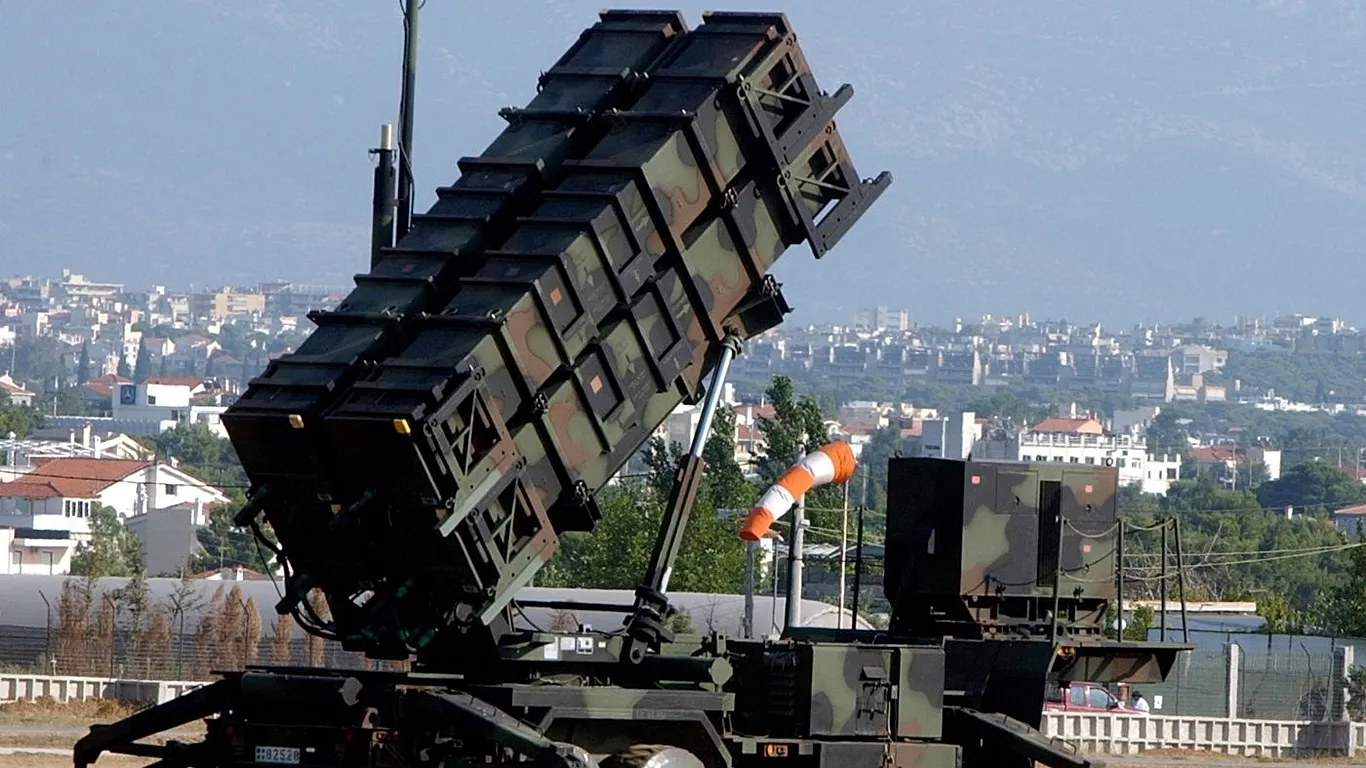
In this connection, the Achilles Shield air defense pact that was signed on Saturday between Israeli regime and Greece for $3 billion is not just a trade deal. According to it, for the first time, the Israelis will deliver a full and unified air defense system to another country. The system is, according to the Israeli defense ministry, is meant for countering a wide range of threats including ballistic missiles and drones.
Also a supplementary deal, worth $26 million, for selling "Drone Dome" air defense produced by Rafael Advanced Defense Systems was signed between the two. The cooperation will also include technology transfer to Greek local industries as part of a joint venture.
Deal directed against Turkey
With one of the core objectives of this defense agreement being to bolster deterrence against Turkish influence in the eastern Mediterranean, it is poised to push the regional rivalry between Ankara and Tel Aviv into a new and more sensitive phase. In Turkey's view, the deployment of David's Sling and Spyder air defense systems on Greek Islands, and even Cyprus where Turkey and Greece are at loggerheads, is not merely a defensive measure. Rather, it is part of a strategic gambit to tighten the noose on Ankara and curtail its room to maneuver in the eastern Mediterranean.
The main root of the escalating tensions lies in the shifting and deepening nature of cooperation among Greece, Cyprus, and Israeli regime. What began largely as energy and economic collaboration has, with Washington's backing, steadily morphed into security and military coordination, and now shows clear signs of crystallizing into a coherent military alignment in the eastern Mediterranean.
It is little wonder, then, that Ankara views such military convergence as a direct threat to its national security and to its position on Northern Cyprus. Turkey contends that strengthening the military ties among these three actors could tip the regional balance of power decisively against it. In its latest response, the Turkish government went so far as to liken the Greek Cypriot administration to a "protectorate" of Israel.
Some analysts suggest that the Israeli-Greek air defense network is being assembled specifically to erode Turkey's drone warfare superiority, a factor that could further inflame competition and friction between Ankara and Tel Aviv in the eastern Mediterranean.
That backdrop helps explain why Turkish Defense Minister Yasar Guler announced on August 2 that his country was conducting a "meticulous and sweeping update" of its military readiness in Cyprus, explicitly citing Israeli activities in southern Syria and in the area under Greek Cypriot administration.
It is noteworthy that Turkish and Israeli maneuvers have entered a fresh chapter since the Israeli military struck the Abu al-Duhur military base in northern Syria. This timing matters because it suggests that reinforcing Turkey's position in Cyprus is not merely an ad hoc reaction to events in Syria. Rather, it appears to be part of a broader strategic calculus by Ankara to push back against Israel's growing military footprint and influence in the Mediterranean. In other words, Cyprus is fast becoming a crucial pillar in Turkey's strategy to manage and contain the security pressures emanating from Tel Aviv's moves.
Possible Ankara-Tel Aviv encounter
Growing tensions in Eastern Mediterranean tensions between Turkey and the Israeli regime has pushed up possibility of disputes expansion to Northern Cyprus and even of a military clash. Ma'ariv newspaper of Israel reported recently that if Tel Aviv concludes that Turkish military presence in the Eastern Mediterranean poses risks to the Israeli security interests there, it will mull attacks on some Turkish positions in Northern Cyprus. According to the newspaper, Ercan Airport and a sea military base in Kyrenia are targets for a potential Israeli strike, especially as Turkey may decide deploy warship to this region.
On the other side, Israel's state broadcaster Kan reported last week, citing unnamed sources, that Turkish warships had approached Israeli naval vessels in the Mediterranean and communicated their maritime routes to them. In response, the Israeli navy raised its alert level and braced for any potential developments at sea.
Konstantinos Filis, a professor at the American College of Greece and director of the Institute of Global Affairs, said the recent period of calm between Athens and Ankara, rather than resolving core disputes, merely gave both sides more room to build up their military capabilities, while the absence of a permanent dialogue mechanism has only deepened mutual mistrust.
Though Turkey and Israeli regime are both seeking to avoid direct confrontation, their conflicting interests across multiple domains could ultimately drag them toward a collision course.
Israeli foothold in Cyprus a security threat to Turkey
For Turkey, Cyprus is far more than just another island in the Eastern Mediterranean. Given its strategic location and proximity to the Turkish coast, it ranks among the most critical footholds for securing Ankara's security, military, and geopolitical interests in the region.
Turkey has maintained a continuous military presence in Northern Cyprus since 1974, with roughly 35,000 troops stationed there. Ankara operates air bases and military infrastructure in the territory, and it does not require permission from the Cypriot government to deploy F-16 fighters or extend runways.
Seen through that lens, when Turkey's defense minister speaks of a "meticulous update" to military readiness in Cyprus, he is effectively referring to the strengthening of a position that Ankara has directly controlled for decades, an initiative fundamentally different in nature from the denials surrounding Turkey's military presence at the Abu al-Duhur base.
Within this context, Israel's growing military engagement and cooperation with the Greek Cypriot administration is not merely a routine security development for Turkey. The significance of Israel's footprint in Cyprus becomes even clearer when viewed alongside Tel Aviv's expanding military ties with Greece.
In recent years, Israel has deepened its defense collaboration with Greece and Cyprus, conducting joint military drills, intelligence sharing, and training programs. The result is a gradually emerging security triangle in the eastern Mediterranean, one that binds Israel, Greece, and Cyprus ever closer together in a strategic alignment Ankara is tracking with acute sensitivity.
Turkish Foreign Minister Hakan Fidan earlier warned about the trilateral cooperation among Greece, Cyprus, and Israel, describing it as a recipe for "more mistrust, more problems, and more war."
For Turkey, then, the issue is not simply about Cyprus bolstering its military capabilities. The deeper concern is a potential shift in the balance of power along Turkey's maritime periphery. The deployment of advanced air defense systems, heightened intelligence cooperation, and joint exercises could enhance Greece and Greek Cyprus's surveillance and rapid-response capabilities, and, in a crisis, could constrain Turkey's freedom of action in the eastern Mediterranean.
Furthermore, Turkish-Israeli competition over energy and maritime borders has doubled the significance of the region. Eastern Mediterranean in recent years has become a hot spot for a rivalry over gas resources, energy transfer lines, and determining exclusive economic zones. Ankara pushes to entrench itself as one of the leading actors in this dynamic, while Israeli cooperation with Israeli regime, Greece, and Cyprus can shape part of the energy and security order of this region without Ankara participation.
This is precisely why, for Tel Aviv, Cyprus is not merely a geographic waypoint—it could become part of Israel's strategic depth in the eastern Mediterranean. The island offers Israel enhanced access, surveillance capabilities, and closer military coordination with Greece, all while sitting just off one of Turkey's most sensitive security flanks.
Tel Aviv has even turned to international bodies to curb Turkish influence in Cyprus. In recent remarks, Prime Minister Benjamin Netanyahu accused the European Union of double standards, saying the EU has remained silent over Turkey's illegal occupation of half of Cyprus, yet it opposes the Jewish people's historic right to live in their ancestral homeland.
Sustained Tel Aviv-Ankara hostility in new regional order
The confrontation between Turkey and Israeli regime must be analyzed within the broader context of their bilateral relations and regional rivalries. The developments in Syria, the Gaza war, the contest for regional influence, and the battle over the future of the region's security order have all placed the two sides in increasingly adversarial positions. In this climate, Tel Aviv no longer views Turkey as merely a political critic but as a long-term strategic competitor, just as Ankara sees Israeli growing footprint on its periphery as part of a concerted effort to contain its regional power.
Significantly, since Turkey, Saudi Arabia, and Pakistan signed the Mecca Pact in mid-August, concerns in Tel Aviv over Ankara's rising clout in West Asia have intensified. The pact, which emphasizes mutual defense and strengthened military cooperation, is viewed in Israeli circles as potentially bolstering Turkey's standing in the region's security equations. Tel Aviv thus regards Turkey's deepening involvement in West Asian security arrangements as a shift in the balance against its favor, and is increasingly leaning into its partnerships with Athens and Nicosia to offset Ankara's influence.
From this vantage point, the deeper Israel's cooperation with Greece and Cyprus grows, and the more its military presence in the region expands, the sharper Turkey's sensitivities will become. Conversely, any reinforcement of Ankara's military posture will only heighten concerns in Tel Aviv and among its allies.
What is unfolding in Cyprus today is not merely an uptick in military collaboration among a few actors. It is a harbinger of a new security order taking shape in the region, one in which Ankara and Tel Aviv find themselves on increasingly opposing sides of a geopolitical fault line. Should this development continue, the Eastern Mediterranean could transform from an arena of scattered disputes into one of the most consequential theaters of sustained, direct friction between Turkey and Israeli regime, with reverberations that may well be felt as far away as Syria.