










Alwaght- The 40-day war the US-Israeli alliance waged against Iran did not just upend the military and geopolitical calculus of West Asia. It exposed the sheer depth and precision of the Islamic Republic's combined missile-and-drone barrages, and in doing so, lifted the veil on what may be the most devastating intelligence-security debacle Washington has failure in eight decades.
Now, a new exclusive report from NBC News, corroborated by multiple informed sources on Capitol Hill and inside the US intelligence community, reveals that Iranian drones, leveraging advanced navigation tech and likely sharing intelligence with Russia, inflicted billions of dollars in damage on critical CIA facilities and other American spy installations from Riyadh to Sulaymaniyah. The scale of the destruction dwarfs any comparable incident in the agency's history, and it has left officials scrambling over a stark question: just how ready is US air defense, and at what cost can Washington rebuild its intelligence footprint across the region?
Size and unprecedentedness of damages
According to the NBC report, Iran's missile and drone strikes over the 40-day war with the US and Israel inflicted unprecedented damage on American intelligence facilities and equipment across West Asia.
Four sources familiar with the matter told the network that the scale of the destruction surpasses any comparable blow to US intelligence agencies in their history, and marks the first time since the CIA's founding in 1947 that its installations have been hit on this magnitude.
Financial aspect: Several billions in damage
News sources put the cost of rebuilding the facilities and replacing damaged equipment at several billion dollars.
More precise estimates, floated by the American Enterprise Institute, suggest that merely restoring the physical infrastructure will exceed $5 billion, and that is before factoring in the cost of destroyed military and intelligence systems.
The damage has left Congress staring down the urgent need to secure fresh funding to rebuild and reconsolidate US intelligence capabilities across the region.
Details of targets hit
According to to existing data, the Iranian strikes hit a spectrum of American intelligence and military targets, the most important of which are:
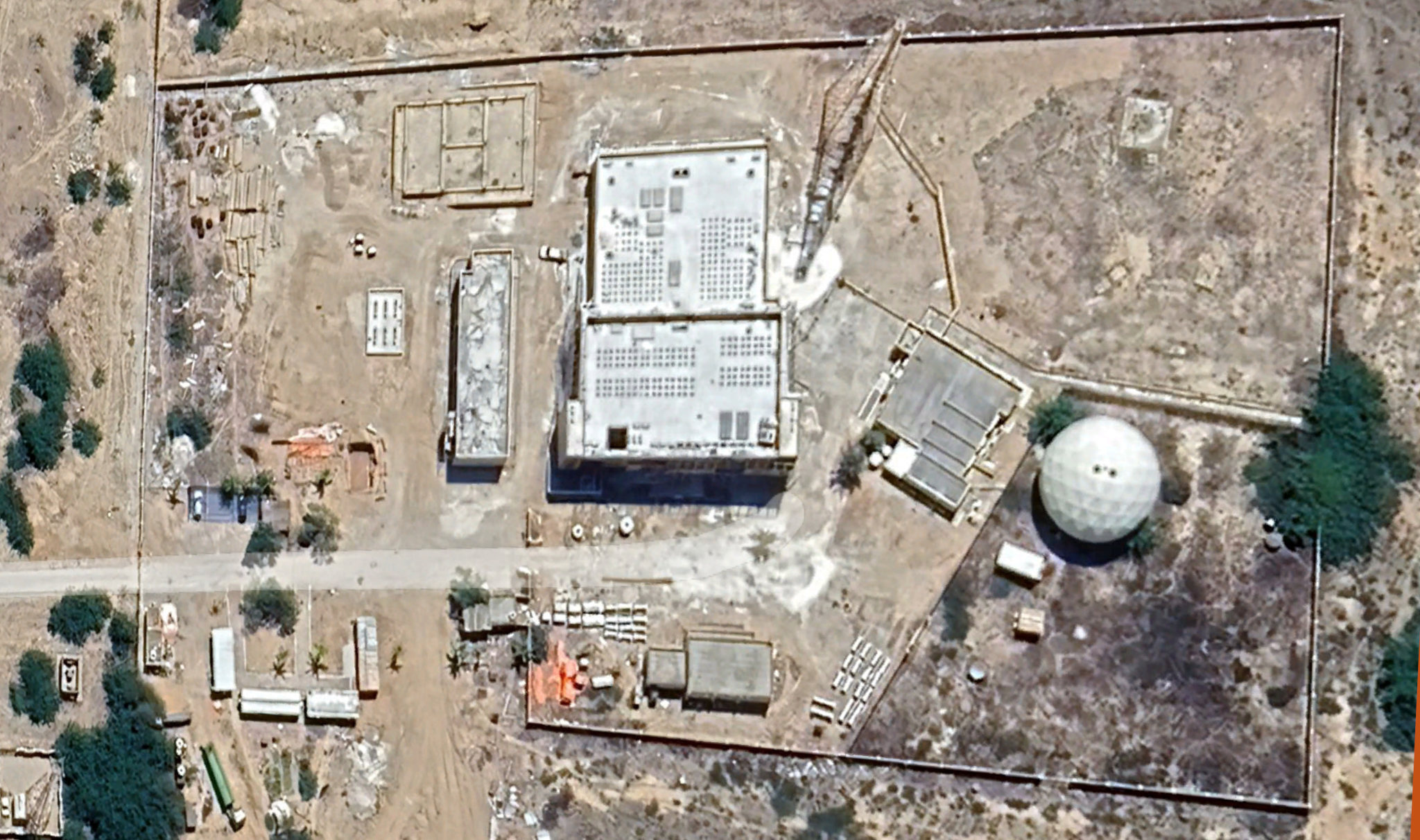
The CIA facility in Riyadh: Housed within the US embassy compound, the facility was struck in March by Iranian drones. Western intelligence assessments indicate the attack likely involved two upgraded Shahed drones in a tandem strike: the first breached the building's outer shell, and the second flew through the resulting gap to detonate inside. The hit caused substantial damage to both the structure and the agency's signals-collection equipment.
The US intelligence hub in Iraq's Sulaymaniyah: This facility was also hit in the opening days of the war. Beyond the aerial campaign, Iranian special forces conducted cross-border ground operations in the Sulaymaniyah and Erbil areas, aimed at dismantling CIA and Mossad spy networks on the ground.
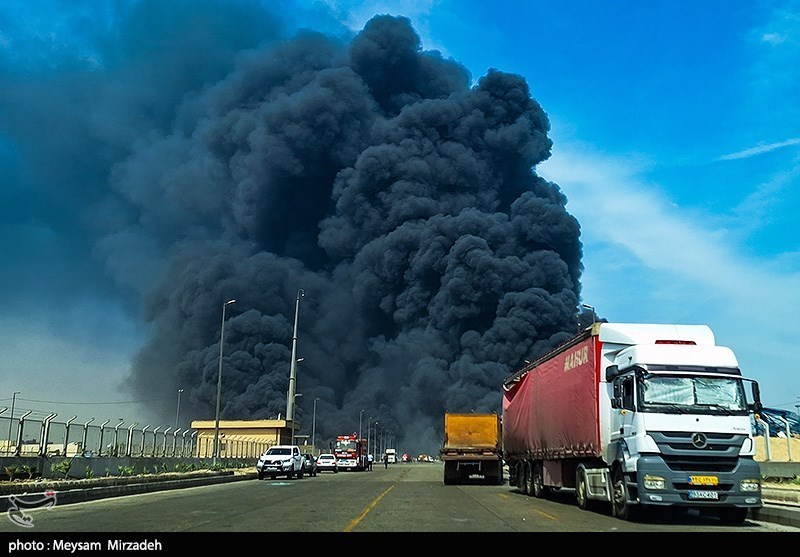
Other facilities and equipment: They did not escape unscathed either. Sources report damage to radar arrays, fixed electronic eavesdropping stations, satellite communications gear, data-processing centers, and even power lines and cooling systems, vital for keeping advanced equipment operational.
The initial tally shows more than 100 targets across multiple countries, including Qatar, the UAE, Bahrain, Jordan, Kuwait and Saudi Arabia, were struck, with 16 US bases sustaining damage in the barrage.
Concerns about possible Russian role and technical dimensions of attacks
A critical layer of this saga is the classified US intelligence probe into Russia's possible behind-the-scenes role in the attacks. American analysts are now weighing two main hypotheses:
1. Intelligence sharing: That Moscow fed Tehran precise targeting data to home in on high-value American assets.
2. Technological upgrades: That Russia supplied its advanced "Kometa-M" satellite navigation system, dramatically sharpening the accuracy and electronic warfare resilience of Iran's Shahed-136 drones.
The precision and lethality of the Iranian strikes have been so striking that one Western intelligence agency has concluded Russia "most likely" played a hand in helping Tehran identify its targets. Still, investigators have yet to reach a final determination on whether Iran directly used Russian spy intel to hit the Riyadh embassy compound.
Strategic challenges and operational consequences
Beyond the financial toll, the strikes have raised serious questions about the readiness of the Pentagon and the US intelligence community to counter large-scale, precision-barrage warfare.
American military experts, including Seth Jones of the American Enterprise Institute, argue that US defense systems were ill-prepared for this volume and pattern of attacks, and that the US absorbed a staggering blow in this conflict.
Add to that a report from the Center for Strategic and International Studies (CSIS), which shows that roughly 65 percent of Patriot missile interceptors and more than 38 percent of THAAD systems were expended over the course of the war, a logistical nightmare now confronting the Pentagon.
Worse, in the opening days of the fighting, advanced American radar systems, including the AN/TPY-2 in Jordan and the AN/FPS-12 in Qatar, were completely destroyed.
At the broader level, the Department of War has put the cost of the war so far at $37.5 billion, and has submitted an emergency funding request for an additional $67 billion.
It should be noted that Iran's integrated campaign during the recent war, zeroing in on intelligence and military targets, and likely leveraging both technology and foreign intelligence, has become one of the largest and costliest blows to the US spy network in decades.
With billions in damage to critical infrastructure, deep doubts now linger over the effectiveness of US air-defense systems against future combined-arms attacks, and Washington faces a grueling strategic and financial slog to fully restore its operational and intelligence footprint in West Asia.