
















Alwaght- Nearly four months after formation of the new Iraqi cabinet by Prime Minister Ali al-Zaydi, some of the most important ministries and the government's future plans for them remain in uncertainty.
This comes as Iraq, impacted by regional tensions, is facing an array of political, security, and economic crises and the ruling majority, Shiite Coordination Framework (SCF), is seeking a way to manage these challenges and prevent escalation of crises through talks with various political factions.
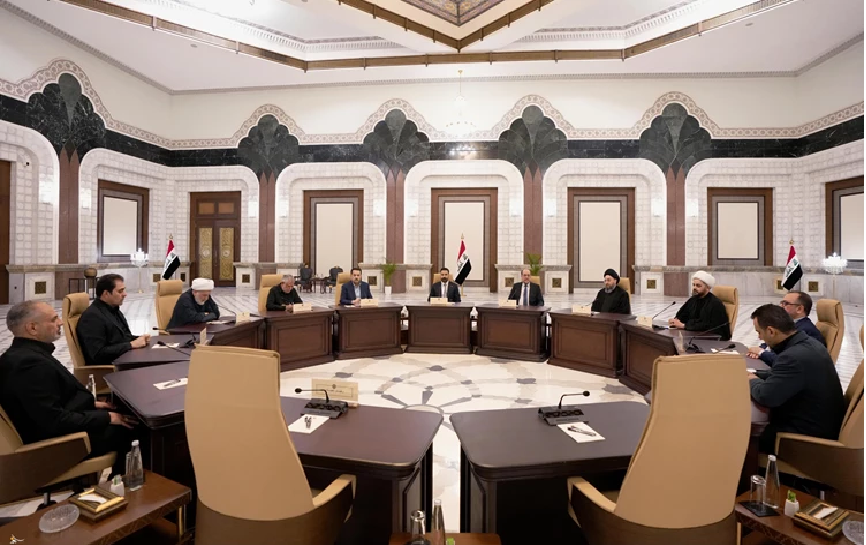
In this connection, Odai Abdul Hadi, a member of the SCF, has recently reported the bloc's intention to determine the vacant posts of the government.
"Forces of this coalition will meet on Thursday to discuss five key cases," he said. The meeting, however, seems to have been postponed.
Abdul Hadi told Al-Maalouma news website that the upcoming meeting’s agenda, as laid out by planners, will center on three core issues: the nature of the current phase’s challenges, the government’s steps to tackle the financial crisis, and completing the cabinet formation process.
He said the session could yield an agreement to push forward with the final stages of government formation, particularly since voting on the remaining ministerial nominees remains a critical hurdle. He noted there is consensus within the SCF forces to move this stage forward, finalize it through parliament, and coordinate with other political blocs. “This meeting will be highly consequential in terms of its outcomes on the issues under discussion,” he added.
In related remarks on Friday, Abdul Hadi stressed that intensive political talks have kicked off in Baghdad with representatives from various political factions, aimed at crafting a roadmap for a comprehensive deal to settle the nominees for ministries currently run by caretakers.
“Next week will be packed with meetings and deliberations,” he said. “As a result, a final agreement could be reached on mapping out the next phase’s contours, after which we will contact the parliament speaker to schedule a voting session on the candidates for the nine remaining ministries.”
Why does picking ministers matter?
Al-Zaydi’s government currently has 14 ministers and 9 ministries, the interior, defense, planning, higher education, labor, migration, culture, youths and sports, and construction and housing, remain vacant. Some of the candidates failed to win confidence of the parliament due to political disputes or disagreement over the nominees. Some were delayed for further consultations.
On the security front, the interior and defense ministries remain the most significant vacant posts. Analysts say the Iraqi government is navigating a tightrope: managing lingering ISIS threats, US pressure to disarm militia groups, and regional tensions stemming from the US-Iran conflict all at once.
The Soufan Center, a Washington-based intelligence research group, warned in a recent report that leaving the interior and defense posts unfilled undermines the government’s capacity to make strategic national security decisions.
Prime Minister al-Zaydi is pushing to complete his cabinet and resolve the resistance groups' weapons case within the next two months. But the issue remains tangled in political and security obstacles. With some factions refusing to hand over arms, citing continued US hawkish policies and escalating regional tensions, back-channel talks among Shiite leaders have intensified in search of a consensus solution.
On Saturday, the Al-Hadath news network reported that a delegation from the SCF had traveled to Tehran for consultations with Iranian officials over centralizing military authority and monopolizing weapons in the hands of the central government. The ruling bloc has also set up a committee to engage Iraqi armed groups and review the weapons handover process, according to the report.
Economically, al-Zaydi’s government faces a hard outlook. Recent regional tensions, damage to energy infrastructure, and the closure of the Strait of Hormuz, which has slashed Iraqi oil production and exports, have piled new pressure on the state budget.
Given Iraq’s deep dependence on oil revenues, a prolonged crisis could curb the government’s ability to make payrolls, deliver basic services, and fund reconstruction projects. Managing the economic crunch and halting further revenue erosion stand as a-Zaydi’s most daunting challenges—made all the more difficult without a fully seated, cohesive cabinet.
At the same time, Baghdad is courting new foreign investment, especially in oil, gas, and electricity. Reuters reported, coinciding with al-Zaydi’s visit to Washington, that his administration is seeking major US investment to rebuild Iraq’s economy and energy sector, an ambition that will prove far harder to realize without a complete and unified cabinet in place.
At the same time, Baghdad is courting new foreign investment, particularly in oil, gas, and electricity. Reuters reported, coinciding with al-Zaydi’s visit to Washington last month, that his administration is seeking major American investment to rebuild Iraq’s economy and energy sector, an ambition that will prove far harder to realize without a fully seated, cohesive cabinet.
International firms typically view political stability and a full economic team as non-negotiable prerequisites for entering new markets. Completing the cabinet would thus send a positive signal to foreign investors, demonstrating that the government has the cohesion needed to execute long-term contracts. That is why the SCF has repeatedly stressed in recent weeks the urgency of finalizing the cabinet to drive economic reforms, resolve the electricity crisis, and expand the private sector.
Iraq still relies on gas imports, mostly from Iran, to meet its power needs, and the recent regional tensions that have cut into those imports have further strained the national grid. Rolling blackouts have spread across several provinces in recent weeks, fueling public anger and triggering street protests. Tackling this chronic crisis demands a strong, unified government capable of coordinating across ministries and agencies to reduce energy dependency and deliver lasting improvements to the power network.
Beyond security and energy, ministries such as planning, higher education, labor, and housing play a direct role in implementing development programs, curbing unemployment, and managing infrastructure projects. Experts warn that leaving these posts under caretaker leadership is slowing decision-making and hobbling economic reforms, construction, and public services.
Meanwhile, Al Araby news network recently quoted an SCF source claiming that al-Zaydi had threatened to resign over political blocs failing to back his government on key national issues. But the State of Law Coalition, led by ex-PM Nouri al-Maliki, swiftly denied the report, dismissing it as an attempt to sow division and undermine Iraq’s political unity at a critical moment.
Observers argue that the longer it takes to fill the ministry posts, the higher would be the possibility of new tensions and opposition pressures. Therefore, the SCF will in the next weeks intensify consultations and negotiate with Shiite, Sunni, and Kurdish parties to arrange a parliament meeting to vote on new ministers to allow al-Zaydi to continue with a full cabinet nearly four months after start.










