









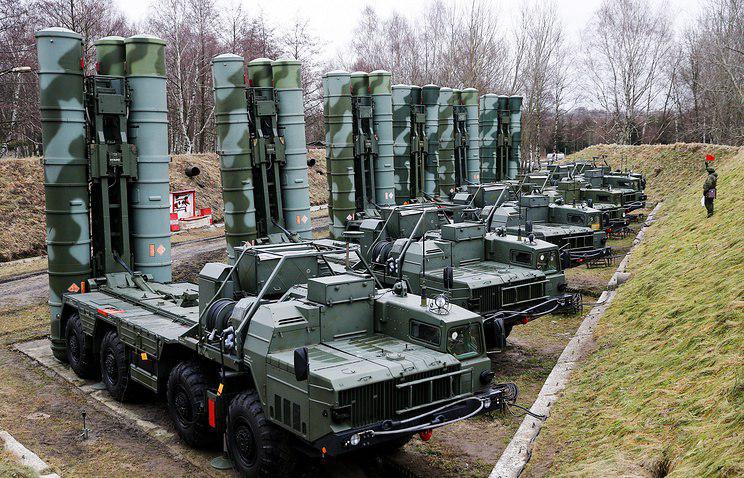


Alwaght- Years after Turkey’s purchase of the S-400 air defense system from Russia tore open one of the deepest rifts in NATO history, the case has reached its final stage. Once hailed as a symbol of Turkey’s strategic independence from the West and a bold display of Recep Tayyip Erdogan’s determination to chart an autonomous foreign policy, the system is now on the verge of leaving Turkish soil.
Following last week’s NATO summit, where Ankara formally signaled its intention to sell the system to a third country, The Wall Street Journal now reports that the likely destination is the United Arab Emirates, a deal that, according to the newspaper, has already received Russia’s initial go-ahead.
From the very start, the S-400 case was never just an arms deal. It morphed into one of the most consequential strategic confrontations in Turkey-NATO relations, one that not only reshaped Ankara’s standing within the Western security architecture but also upended the balance of power across the Eastern Mediterranean. If the sale goes through, it will close the books on one of the costliest and most bitterly contested security disputes between Turkey and the West in a decade.
Turkish motivation to buy S-400 system
Turkey signed the contract for the S‑400 system with Russia on April 11, 2017, and the first shipments touched down in Ankara in July 2019. But the decision was never just about hardware. It was part of a broader push by Ankara to bolster its defense independence and rebalance its fraught relationship with the West.
At the heart of Erdogan’s calculus was a growing distrust of the US and key European allies. Turkey felt that its NATO partners were not providing sufficient backup at a time when it faced serious security threats, a sentiment that only deepened after the failed 2016 coup attempt, which sent Turkish-American relations into a tailspin. Turkish officials came to believe that Washington was consistently disregarding their concerns on critical security files, from Syria to Kurdish militant groups.
It was the first time a NATO member had purchased Russia’s most advanced air-defense system, a move the West saw as a troubling signal of Ankara drifting toward Moscow and cracking the alliance’s security unity. Ankara, for its part, was determined to show that it was no longer a subordinate ally and had other options when it came to national security. The message landed with immediate and fierce pushback from Washington and European capitals.
Washington’s primary concern was that if the S‑400 were deployed alongside US F‑35 fighter jets on Turkish soil, the system’s sophisticated radars could gather critical data on the jet's stealth capabilities, flight patterns and radar signature, intelligence that could easily find its way back to Moscow and compromise the crown jewel of NATO’s air power.
The American response was swift and punishing: Turkey was kicked out of the joint F‑35 production and purchase program, a project in which Ankara had invested more than $1 billion and where Turkish defense firms played a role in the supply chain. Washington then followed up with CAATSA sanctions, targeting Turkey’s defense industry.
The truth is that the S‑400 never actually became part of Turkey’s active air-defense network. The pressure from Washington and NATO was so relentless that Ankara chose to keep the system in storage rather than fully activate it. In effect, Turkey shelled out $2.5 billion for a system that never entered operational service, and never filled the air-defense gap it was meant for.
Now, the possible sale of this disputed missile system is a telling confession of the failure of onr of the most important defense projects of Erdogan's government that was meant to enhance Turkish strategic independence, but only ended in limitation of Ankara’s access to Western technology.
Return to NATO
The developments of recent years suggest that Erdogan’s government has gradually backed away from its confrontational posture toward Western allies, pivoting instead toward de-escalation, repairing ties with Washington and shoring up Turkey’s standing within NATO’s security framework. The approval of Sweden’s NATO membership, the expansion of economic cooperation with Europe, the push to mend fences with Washington and the easing of tensions with several Arab states, all of it fits that same pattern.
Quitting S‑400 program is very much part of this new Ankara playbook, a bid to restore trust with the West and reengage in broader security cooperation with the alliance.
At the top of Turkey’s wish list is a return to the F‑35 program. Washington has not made any firm promises on that front, but American officials have repeatedly made clear in recent months that resolving the S‑400 standoff is a non-negotiable precondition for any serious discussion about the fighter jet.
Alongside that case , Washington is also moving ahead with the sale and modernization of Turkey’s existing F‑16 fleet, a step that many analysts see as the first real gesture of goodwill in rebuilding trust between Ankara and Washington. Still, Turkey’s full reentry into the advanced F‑35 program remains tangled in political and security hurdles, with the final call ultimately resting with Congress and NATO’s broader strategic calculus.
Continued security challenges of Turkey in the absence of S-400
With the S‑400 now on its way out, the future of Turkey’s air defense has run headlong into a new set of uncertainties. Ankara is shelving the system at a moment when its surrounding security environment has grown more volatile than ever.
In the eastern Mediterranean, Greece, France, Cyprus and Israel are deepening their military cooperation and steadily tilting the regional balance of power. Greece has spent recent years bolstering its air force, acquiring French Rafale jets, pushing to secure its own F‑35s and expanding defense ties with Washington, all of which has only sharpened Turkish anxieties about losing its aerial edge and regional deterrence.
The Israeli regime, meanwhile, remains the only regional power with an operational F‑35 fleet, giving it a considerable air superiority over other actors in West Asia. And the technology gap between Turkey’s air force and some of its regional rivals is widening by the year.
In this climate, walking away from the S‑400 without securing a capable alternative, whether the F‑35 or advanced air-to-air interceptors, risks exposing the existing holes in Turkey’s defensive shield. That is all the more concerning because the domestically built fighter jet, KAAN, is still in development and remains years away from entering operational service or making any real dent in the regional air balance.
NATO's real test
Now that Turkey has removed the single biggest security headache for NATO by offloading the S‑400, the episode has morphed into a fresh test for the Western military alliance, one that will reveal just what concessions Brussels and Washington are willing to offer their eastern ally in return.
The natural expectation is that the West will reciprocate by filling at least some of Turkey's defense gaps, whether through reinstatement in the F‑35 program, the delivery of advanced air-defense systems or an upgrade to its aerial deterrent. If that does not happen, the nagging question will linger: Does NATO genuinely treat the security concerns of all its members equally, or does the alliance's real priority remain the strategic interests of its Western powers, and preserving Israel's military edge in the region?
Past records suggest that Washington plays a long game when it comes to transferring cutting-edge military technology, even to its allies. A swift Turkish return to the F‑35 program faces formidable obstacles, not least Israel's deep-seated opposition and security concerns, which remain a major roadblock. And with Donald Trump, as Tel Aviv's staunchest ally, back in the White House, he is unlikely to risk alienating the Israelis by greenlighting advanced fighter jets supply to Ankara. So, Turkey could walk away from the S‑400 only to find itself in a strategic vacuum locked out of both the Russian system and American fifth-generation fighters.
In general, if the West responds to Erdogan's retreat with little more than a partial lifting of sanctions or a limited F‑16 sale, Ankara's old distrust of NATO's commitment to Turkish security is all but certain to resurface, even stronger than ever.