















Alwaght- The IRGC’s missile strikes at Israeli regime last night and this morning that came in realization of threat to respond to the Israeli aggression against southern Lebanon were not a simple military action, rather, they carried a message of state of Iranian military readiness, the way of Iran's use of two ceasefires for rebuilding its military power, and also a transformation of the operational doctrine of the Axis of Resistance.
A look at aspects of these attacks shows that at least four points lie deep in these operations:
1. Iran's offensive and defensive readiness to return to war
The first thing that stands out in the latest attacks is Iran’s high state of readiness to quickly revert to wartime conditions. Recent operations have shown that the two-month ceasefire was not a period of stagnation, but a golden opportunity to rebuild combat capabilities, restore damaged infrastructure, and enhance the operational readiness of its armed forces.
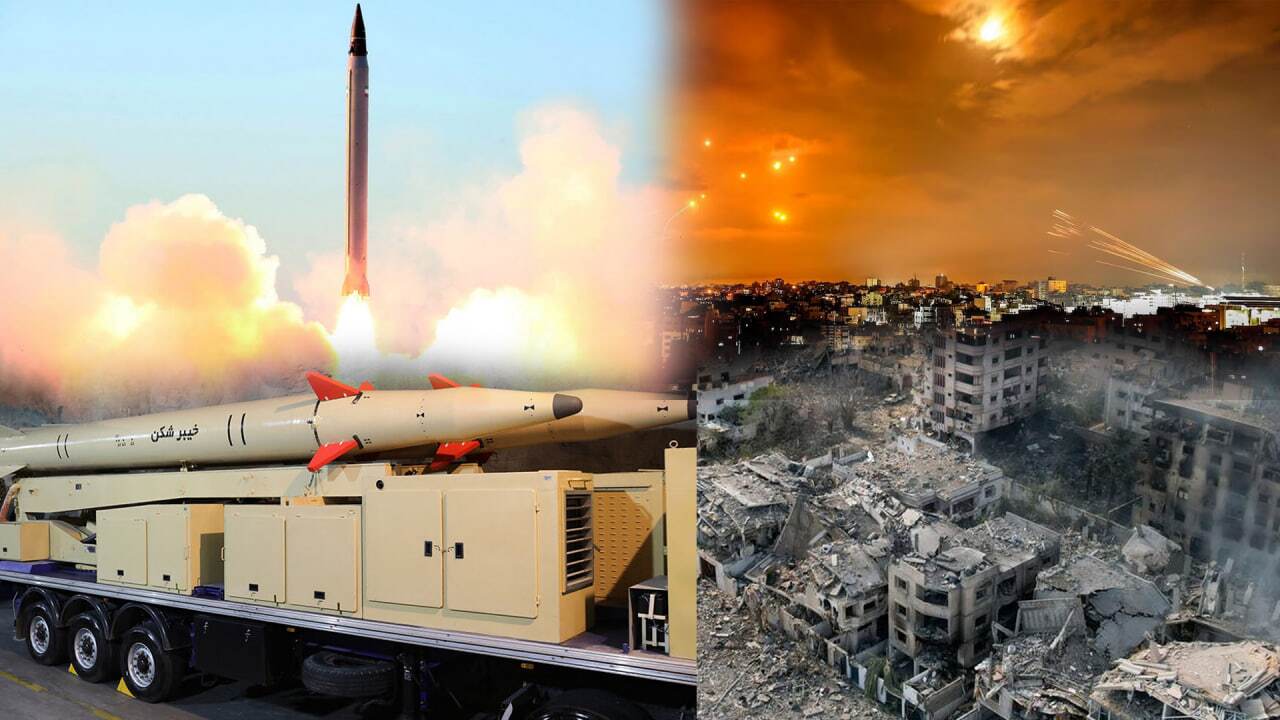
The new wave of missile strikes came just as the enemy, over the past few weeks, had been working hard to sell the narrative that Iran’s missile and drone power had been crippled by the recent war of attrition. But the scale and quality of the latest operations, especially with Israeli sources admitting to at least 24 missiles being fired, proved that Iran’s offensive structure hasn’t collapsed. On the contrary, it has managed to rebuild and reorganize itself in a short span of time.
Of particular importance is the operational reconstruction of missile and drone cities. Over the years, Iran has built an extensive network of underground bases, whose primary purpose is to preserve offensive power during a prolonged conflict and prevent paralysis of its response capability in the face of surprise enemy attacks. The continued missile operations show that these infrastructures remain active and fully functional.
There are also signs of an expanding target bank. The choice of targets, timing of operations, and execution methods all suggest that the Islamic Republic continues to develop its intelligence and reconnaissance capabilities to design counter-strike scenarios.
On the defensive side, an important message was also sent. During the previous war, some of Iran’s air defense systems were hit. But now, with the Israeli military admitting that last night’s aggression focused on targeting air defense systems, it is clear that the process of replacement and redeployment has moved quickly. This has allowed Tehran to send the message that it is ready not just offensively, but to counter any new wave of potential attacks.
2. Island command and decreased dependence on units and heads of command
The second point about the Iranian strikes is a transformation in the command and control structure in the Iranian armed forces, a shift that can be called moving to "Island command" or increasing the operational independence of units. Massive counterattacks to the Israeli airstrikes within an hour signified high speed of decision-to-execution process.
Recent wars have shown that one of the enemy’s top priorities in the opening hours of any conflict is disrupting the chain of command and paralyzing decision-making. That is precisely why Iran’s armed forces, over the past several months, appear to have focused heavily on reducing the dependency of frontline and operational units on top-level command structures.
The goal here is to boost reaction speed, blunt the enemy’s element of surprise, and scramble the calculations of both Israel and the US regarding Iran’s operational logic. In short, the more decentralized and flexible the command structure, the harder it becomes for the enemy to predict Iran’s battlefield moves.
The latest operations sent a clear message: even if some command centers are hit or communications disrupted, the ability to respond and carry out missions remains intact. This is part of a broader strategy, "continuity of operations under chaos", which has become critical in modern warfare.
What the recent operations have demonstrated is that the future model of combat is no longer dependent on a single center of gravity. Instead, a network of semi-autonomous operational units can spring into action quickly and at high speed. This shift could thoroughly upend the enemy’s assumptions about landing a paralyzing blow to Iran’s military structure.
3. An example of more advanced stage of "unity of fronts" doctrine
The third message of the recent Iranian attacks was unveiling a more advanced stage of the unity of fronts doctrine formulated by the Iran-led Axis of Resistance. The doctrine suggests bonds between various regional fronts and transformation of a limited war on one side of the Axis of Resistance into a multi-front crisis.
Yemen's Ansarullah entry to the clash and the message it sent about possible closure of the Bab-el-Mandeb Strait was one face of this updated doctrine.
The spokesman to the Yemeni armed forces Major General Yahya Saree in a statement published this morning asserted: "As part of countering US and Israeli aggression against the axis of jihad and resistance in Iran, Palestine, Lebanon, Iraq, and Yemen, and in line with the unity of battlefields, Yemen’s armed forces have struck sensitive Israeli targets in Tel Aviv with several missiles."
Saree also announced that navigation for the Israeli enemy in the Red Sea is now completely banned, and any enemy movement following this declaration will be considered a military target by Yemeni forces.
This move by Sana'a marks a highly significant shift in the logic of future tensions.
In the previous war, Iran first leveraged its geostrategic position, raising the Strait of Hormuz as a strategic lever against hostile actions by the US and its allies. Disrupting or halting oil exports through that chokepoint, which handles roughly G20 percent of the world’s energy, sent energy prices soaring and triggered widespread economic jitters in global markets.
After the war, Tehran also tried to change the legal status of transit through the Strait of Hormuz, turning it into part of a new power equation in the Persian Gulf and the wider region.
Now, however, the Ansarullah operation has sent a clear message, saying that in the event of a new war, it would not just be the Strait of Hormuz under threat, but Bab-el-Mandeb could be subjected to the same path. That matters because Bab-el-Mandeb is one of the world’s most vital arteries for global trade, linking the Red Sea to the Indian Ocean.
In essence, the Axis of Resistance wants to make one thing clear: any future war will not remain confined to the geography of Iran, occupied Palestine, or the Persian Gulf. The scope of the crisis could instead engulf the entire region, including its critical energy and global trade routes.
4. Test of resilience: Iran moving ahead of enemy
The fourth point in the recent attacks is the issue of the resilience and resistance in a war of attrition. In its recent operations, both in the Persian Gulf in response to the provocative American military measures and in its last night missile strikes at Israeli regime, Iran tried to send the message and demonstrate that in the resilience race after two bloody wars within a year, Tehran still has the upper hand.
Iran’s political leadership and military command almost certainly factored in the possibility of a full-blown, prolonged war before deciding to pull the trigger on last Sunday night’s missile strike on occupied territories. They were ready for that scenario.
In a war of attrition, sheer firepower is not everything. What matters more is the ability to maintain internal cohesion, manage economic pressure, control public opinion, and sustain military operations over time. And Iran’s readiness comes at a time when the domestic situations in both the US and Israel are more fragile than before.
In the US, Donald Trump’s administration is grappling with internal challenges, political rifts, and economic pressures. Any entanglement in a large-scale regional war could carry heavy costs for Washington. Recently, several Republican congressmen joined Democrats in an anti-war motion, passing a resolution to revoke Trump’s war powers against Iran, a sign that voices opposed to the costs of war are growing louder, even inside Republican circles.
In Israel, meanwhile, Netanyahu’s political and social standing is shaky and uncertain after parliament dissolved and his government’s collapse became all but certain. A prolonged war of attrition could further deepen the regime’s internal crisis.
So the latest operation sent a clear message: contrary to enemy assumptions, Iran has not buckled under military or economic pressure. It remains capable of seizing the initiative on multiple military, security, and regional fronts. These recent strikes are more than just a tactical response; they are part of a battle of wills and a demonstration of staying power in a long-term conflict.
Generally speaking, the recent strikes by Iran should be seen going beyond a limited military reaction. These operations are a combination of strategic messages about Iran's readiness for a fresh war, transformation in command structure, upgraded "unity of fronts" doctrine, and also Tehran's self-confidence in a war of attrition. Actually, they carry important meanings and warnings not only for Tel Aviv and Washington but also the whole region and other international actors.










