












Alwaght- While the world is grappling with a wave of geopolitical instabilities, a familiar model in the US foreign policy is repeating itself. This model regards the regional crises not as security challenges, but opportunities to reproduce economic and industrial power, especially the weapons industry. The recent war with Iran has highlighted this issue.
In this regard, the US State Department said that it approved weapons sales to West Asian allies including the Israeli regime, Qatar, Kuwait, abd the UAE worth $8.6 billion. The announcement adds that the US will provide guided munitions named AKPWS along with related systems worth nearly $1 billion.
Washington has also approved the sale of a combat management system and related equipment to Kuwait, worth nearly $2.5 billion. Meanwhile, the State Department has signaled potential approval for a $4.01 billion deal to supply sustainment services for Patriot air and missile defense systems and associated gear to Qatar. It has made no mention of the arms it intends to supply to the UAE.
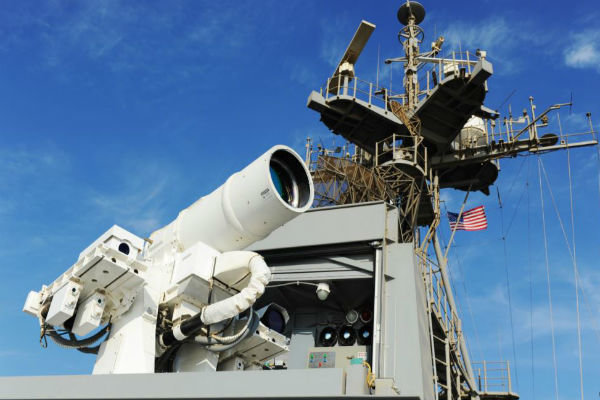
The new US weapons sales to Arab nations come as Washington faces a sharp drop in its own ammunition stockpiles after 40 days of military confrontation with Iran. In response, the Pentagon has placed rush orders with defense contractors to ramp up production of interceptor missiles and other military equipment.
At the same time, despite continuing arms exports to Arab allies, Washington has warned European partners, including Britain, Poland, Lithuania, and Estonia, that they may face lengthy delays in receiving their own weapons orders due to dwindling American reserves.
Capitalizing on the crisis
To understand the roots of crisis-mongering and arms deal signings, one should look at the US power structure where the bond between politics and the military industry has become one of the most entrenched domestic alliances. 65 years on, Dwight Eisenhower’s historic warning about the lobbying power of the “military-industrial complex” has not only failed to fade but has found even more concrete expression today. In this setup, a crisis is not merely a threat; it is an economic opportunity, one that keeps assembly lines running, boosts budgets, and creates new markets.
Decades of US administrations, following this playbook, have repeatedly capitalized on West Asia instability to drive up weapons sales. By hyping threats like Iran in the aftermath of the latest war, Arab nations are nudged into ramping up military spending, which in turn feeds US’s defense industry.
As a result, a form of arms dependency takes hold, where security rests not on local capacity but on a steady flow of imported military hardware. As Arab countries have done for decades, spending hundreds of billions of dollars on weapons, they have now become the primary customers of the US military industry.
However, this volume of military purchases does not mean defense independence. In many cases, advanced missile systems like Patriot and THAAD are operated purely by the Americans despite their deployment on the soil of other countries and they act only if American interests are at risk. This showed itself in recent Iran war when these systems only acted to protect American military bases, leaving vital infrastructure of the Arab countries exposed to missile strikes.
While arms sales are always justified as protecting the security of Arab allies, critics argue this cycle may itself become a driver of persistent instability. Stockpiling weapons in a region already gripped by geopolitical rivalries does not create absolute deterrence, but in some cases, it only deepens tensions and raises the stakes.
Over the past four decades, massive US weapons sales to Arab nations, fueled by threat-mongering about Iran, have turned the region into a powder keg during periods of high tension, with Washington pocketing billions from the arms race it helped stoke.
So, under this recurring crisis-mongering playbook, Washington’s allies get trapped in a cycle of U.S.-led wars and find themselves needing ever more weapons. It is a dynamic where security, economics, and geopolitics operate in lockstep. Washington’s security relationships with its allies are thus no simple defense partnership andthey form a web of mutual dependencies in which regional crises act as the main engine.
Similar model in Europe and East Asia
Weapons sales and profiting from wars is not limited to West Asia. This model is pursued in other hot spots. Ukraine war is a telling example where despite heavy human and economic costs, the demand for weapons purchase has increased.
Being at the forefront of this war, European countries have rushed to increase their military spending and bought weapons from the US. This means war is profitable and this may stand as a less interests in the Americans to fast end the war.
Donald Trump himself admitted a few months ago what is really going on. He said that despite its massive military and human costs, the Ukraine war has been highly profitable for US weapons makers, and that if the war stops, so does that revenue stream. So, while Washington officially talks up peace and an end to the Russia-Ukraine conflict, the economic interests of defense contractors are quietly shaping White House decisions on when, or whether, to stop the fighting.
Since European allies are bearing the brunt of Ukraine’s war costs and there is no direct threat to US interests, the military-industrial complex has every incentive to keep this manufactured crisis alive. That is why a war that was supposed to be over quickly has now dragged on for five years, with American defense firms raking in the biggest profits.
In East Asia, the US follows the same model. Washington justifies missile deployments in South Korea and Japan as a shield against North Korean and Chinese threats, projecting an image of a protective ally. But when push comes to shove, Washington’s security behavior tells a different story. When military pressure ramps up against the U.S. itself or Israel, priorities shift—and other allies get pushed down the list.
During Iran war, as missile and drone threats escalated, advanced THAAD defense systems were redeployed from East Asia to the Persian Gulf to counter them.
In the eyes of some analysts, these moves show that arms sales are not really about defending allies. Instead, they are a tool for securing economic gains and reinforcing a cycle that ensures military hardware is always ready to defend the US own interests first.
In general, the American defense policies tell us about a cycle in which the crises lead to increased demand and demand leads to production, and production leads to profits, a process that reproduces insecurity at regional and international levels. The ultimate goal of these policies is not really lasting stability or security. It is crisis management, to keep the production cycle of weapons manufacturers running.