
















Alwaght- With the protracted and convoluted dispute among Kurdish parties over Iraq’s new president finally settled, another turbulent chapter in the formation of a new government has come to a close. Now, all eyes are on the Shiite Coordination Framework (SCF), the majority coalition in parliament, as Iraqis wait to see which candidate will emerge from behind closed doors, amid murky political horse-trading and backroom negotiations, for the key post of prime minister.
After recent elections, the formation of Iraqi government has become a time-taking and sometimes challenging process. This time is no exception. When in November the election results were announced, the political groups and parties have failed to form a new cabinet. Still, with the president elected, hope is growing about picking a new prime minister in a 15-day time format and so there will be no need to extend this period as only one week is left. However, there is no clear outlook for a deal among the factions of the bloc.
It is noteworthy that earlier the bloc had agreed to name ex-PM Nouri al-Maliki for the post, but American interference in Iraq's political affairs, particularly Trump's strong-toned threats to severely sanction Iraq if al-Maliki is picked led to collapse of the consensus, while some still insist on al-Maliki as their PM of choice.
In such complex conditions, multiple scenarios for the post of PM in Iraq can be raised.
Al-Maliki had earlier set a condition for withdrawing his candidacy for PM post: the current PM Mohammad Shia al-Sudani should not be nominated again. And just when it seemed the rivalry between the two within the SCF had ended, and attention had shifted to other names, such as Basem al-Daraji, Mohsen al-Mandawi, Hamid al-Shatri, Qassem al-Araji, and Ali Shukri, the bloc's currents, even after partially getting past the head-to-head clash between al-Sudani and al-Maliki, still failed to reach a consensus on a compromise candidate.
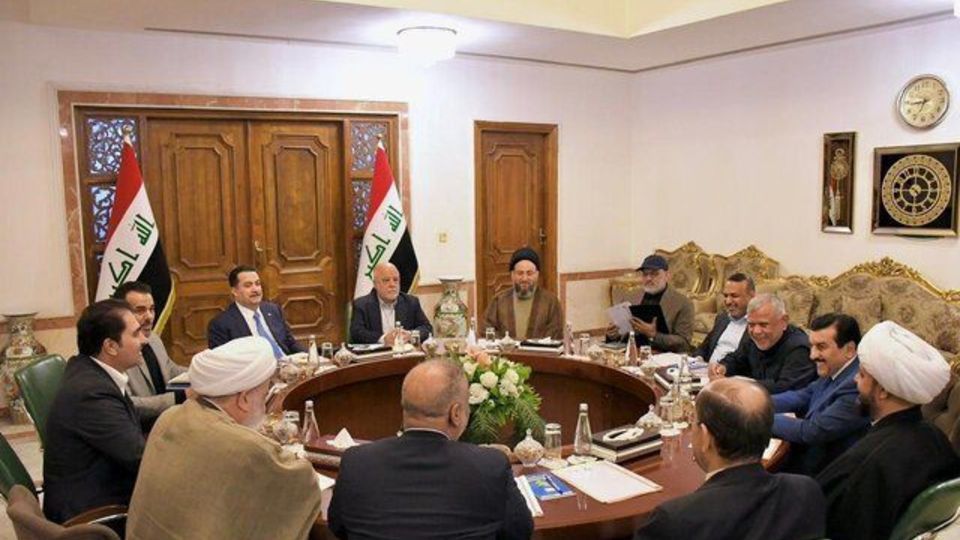
Last Monday, leaders of the SCF gathered at the home of Ammar al-Hakim. At that meeting, two candidates, Basem Badri and Ihsan al-Awadi, were put to a vote, but neither managed to secure the required two-thirds majority.
Reports say that Basem Badri, having al-Maliki's backing, received 7 out of 12 votes, falling just one vote short of the 8 needed to win. In contrast, Ihsan al-Awadi, known to be close to Shia al-Sudani, got 5 votes.
That’s why, in the latest consultative meeting, some members proposed moving the decision-making process to the parliament floor in order to break the political deadlock, similar to what happened in the election of the president, when Kurdish parties could not settle their differences and the vote ultimately went to parliament. This proposal appears to come from al-Sudani’s camp, which now believes al-Maliki’s leverage to impose conditions, like keeping al-Sudani out, is weaker than before. They see a pathway for al-Sudani to become new PM if the final decision shifts to parliament. Al-Sudani’s supporters, citing the backing of 114 MPs, believe they hold a majority in parliament.
On the opposite side, crossing the two-third threshold and accepting the vote of the simple majority within the SCF will increase al-Maliki’s chance for the PM post. This comes as the sources familiar with the SCF sessions say that al-Maliki is yet to accept withdrawal from candidacy in favor of compromise candidate and argues he is the main option of the State of Law coalition. In this connection, recently the Islamic Dawa Party issued a statement, saying that al-Maliki’s candidacy is still standing and he has not withdrawn his candidacy yet.
Ultimately, the future of this competition hinges on how the SCF resolves its internal disputes, and how much the shadow of the direct and indirect al-Maliki-al-Sudani rivalry continues to loom over the factions' negotiations.










