














Alwaght- The longer the Israeli-American aggression against Iran becomes, the more the signs of loss of Washington and Tel Aviv emerge. This is obvious in the statements and actions of the aggressors.
While Trump and other senior officials in the US administration had claimed that war will only target the military sites and nuclear facilities to remove the so-called threat of Tehran building nuclear weapons, these days the scope of their crimes is not limited to military positions and they are in a targeted way damaging the Iranian health, water, and energy infrastructure.
From day one of the aggression, the US and the Israeli regime have shown that they are unafraid to commit any crimes to impose their demands and exert pressure on the Islamic Republic. From the attack on a girls’ school in Minab in souhern Iran to hospitals, residential areas, and desalination facilities on Qeshm Island, all evidence points to the enemy’s commitment to the destruction of Iran.
Attacking civilian areas, including schools and hospitals, is prohibited under the laws of war; however, the US and the occupying regime have disregarded all international rules and have targeted dozens of health centers and schools.
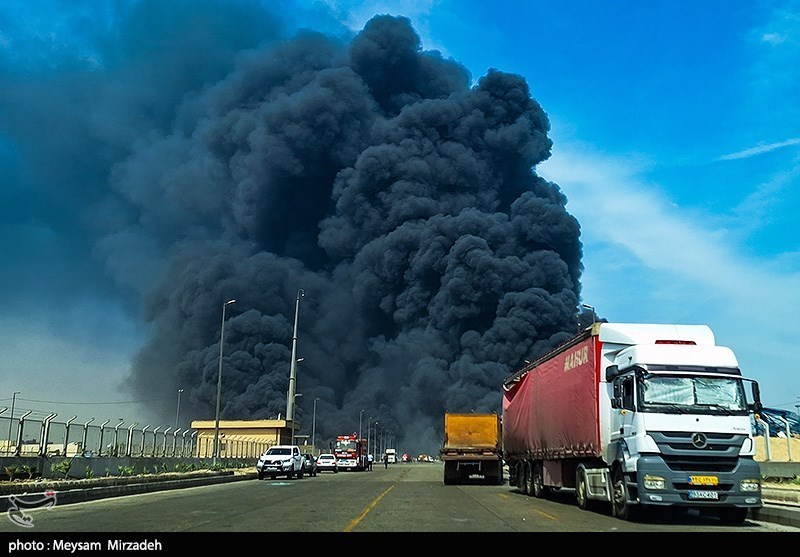
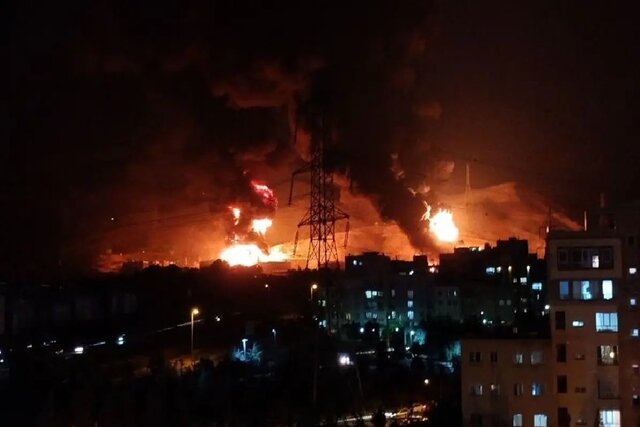
As the war drags on, these crimes have taken on extensive dimensions, with refineries and power plants recently also falling victim to enemy aggression. The attacks on oil depots in the Shahran area of Tehran and the Shahr-e-Rey refinery are part of the enemies’ campaign to inflict damage on Iran, aiming to force the Islamic Republic into submission and gain their desired concessions at the negotiating table.
Targeting refineries has dire consequences for human life and the environment due to the chemical hazards involved. Some Western analysts have vehemently criticized this horrific crime. By attacking refineries, Washington and Tel Aviv seek to disrupt the supply of gasoline to the public and increase pressure on the government, although Iran’s reserves have so far thwarted the enemies’ goals, and there is no issue with gasoline production.
In his latest comments early Tuesday, Trump claimed that if necessary, they would also target power plants in Iran, as rebuilding these facilities would take years.
Failure to realize military goals
The factor driving the US and Israeli regime to bomb the Iranian energy infrastructure in recent days is that in the past eleven days, they have failed to achieve their stated aims, which they thought will realize in less than a week. Actually the resolute response of the Iranian armed forces to this warmongering was beyond imagination of the foes and now all of the American bases in the region and all Israel are regularly targeted by Iranian missiles and drones. This has been a source of concern to the Americans, to the extent that Trump in his speech admitted that Tehran has missiles more than what Washington and Tel Aviv estimated and that they have a difficult job destroying Iran’s missile capabilities.
Officials in Tel Aviv and Washington have admitted that they have been unable to neutralize Iran’s military power and are now turning to mediators in an attempt to halt this self-created crisis. Following a phone call with Russian President Vladimir Putin, Trump stated that the war might soon come to an end.
Such remarks from Trump indicate that the developments on the ground are not unfolding as the enemies desire. Despite their attempts to project the image that they have achieved most of their goals, the realities on the battlefield have forced the enemy to seek alternatives.
When a war reaches the stage of destroying critical infrastructure, it signifies that the enemy has not achieved military success. These crimes are committed with the objective of increasing pressure on the attacked country’s government, ensuring that they emerge from the conflict with some form of leverage. Even if they fail to secure concessions at the peace negotiation table, they aim to impose significant financial burdens for rebuilding infrastructure, making it difficult for the affected country to return to its pre-war status in the short term.
Strikes on Iran’s infrastructure reveal that the U.S. and Israel are frustrated with the prospect of a prolonged, grinding war while relying solely on air power from a great distance. They are reluctant to remain trapped in this self-created quagmire for an extended period, as they lack the military capabilities to effectively confront Iran’s power and its regional proxy groups while also undermining its sovereignty. The longer this tension persists, the heavier the toll and costs they will incur.
On the other hand, Iranian military officials have warned that if the US strikes infrastructures, they will reciprocate and will attack infrastructure of any country from whose soil attacks are carried out. When Qeshm Island’s desalination plant was attacked, Iran struck a desalination facility in Bahrain, from which the anti-Iranian attack was conducted, signaling that any crimes has a price.
So, if Iran wants to attack the Arab power plants, both the fuel and solar-powered, in response to the American and Israeli strikes, the war will be inflamed and consequences will also affect Washington and its allies.
Israel incapable of waging war of infrastructures
It may be true that the US is unafraid to wage a war against infrastructure because it is tens of thousands of kilometers away from Iran, but this is not true when it comes to the Israeli regime. If Iranian oil refineries and power stations are hit, there would be little doubt that the Iranian armed forces will reciprocate and since Israel is a small territory and has a small number of energy infrastructure, Iranian missiles will sure cause a crisis to Tel Aviv.
In their latest wave of Operation True Promise 4, Iranian forces struck oil and gas facilities and fuel storages in Haifa, a move sending Israelis extremely worried about a potential energy crisis.
The Haaretz newspaper reported that the war with Iran and the firing of Iranian missiles at the Israeli home front has caused a shock in the regime’s energy market. The report acknowledged that missile strikes in various occupied territories have halted gas production from the regime’s Mediterranean gas fields. As a result, the Israeli power grid has reverted to using pollutive fuels like coal and diesel to compensate for the gas shortage.
It is worth noting that the Israeli regime is currently reliant on gas reserves from the Tamar, Leviathan, and Karish fields for its electricity supply, and the continued shutdown of these fields could lead to dire consequences in the occupied territories. Yaamit Mor, CEO of Eco Energy, warned that the shutdown of the Leviathan and Karish fields is due to the risk of billions of dollars in damage if gas is still flowing when the facilities are hit by missiles. If this situation persists for more than a month, power outages in the occupied territories could become likely. The operations of the Haifa refinery have also been limited, which may even impact the fuel supply for the Israeli Air Force.
Moreover, millions of settlers are now spending most of their time in underground shelters, disrupting their daily lives. If they were to be deprived of electricity and water, chaos would ensue in the occupied territories, and with a new wave of anti-war protests emerging, Netanyahu’s cabinet would find itself in a significant bind.
On the other hand, due to its control over the Strait of Hormuz, Iran has the ability to disrupt the supply of oil and gas globally by halting shipping, and experts suggest that the Israeli regime would also suffer from this situation.
Only eleven days after the brutal aggression against Iran, some Israeli officials are growing cautious, saying that they cannot fight two fronts against Iran and Lebanese Hezbollah. Even some have admitted that they cannot strike all of their targets inside Iran and have failed to weaken the Islamic Republic.
In summary, the insanity of the US and Israel in attacking critical Iranian infrastructure reflects their repeated failures against Iran’s resistance. The efforts of Trump’s advisors to bring the war to an end also indicate that the continuation of this situation not only fails to bring Washington and Tel Aviv closer to their goals but also forces them, amidst ongoing conflict and heavy costs and casualties, to exit this war with even greater losses. This humiliating defeat will tarnish the US image globally.