




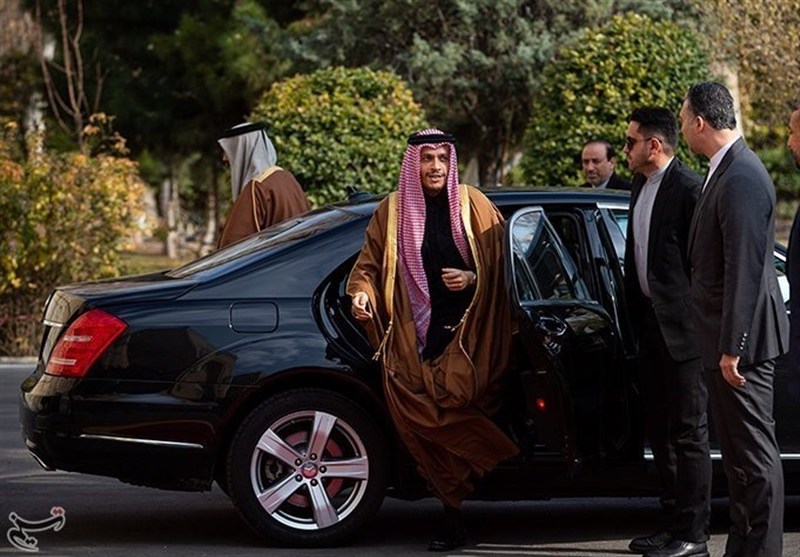


Alwaght- While the US through naval amassment in the Persian Gulf waters in the Iranian vicinity has pushed up the domain of the tensions to unprecedented levels, media leaked a visit of the Qatari Prime Minister Sheikh Mohammad bin Abdulrahman Al Thani to the Iranian capital. The visit was not given publicity upon its happening and the Qatari official left Iran a few hours after his arrival.
This trip has stirred speculations about his mission regarding regional efforts to de-escalate tensions in the Persian Gulf between the US and Iran and he actually traded messages between Washington and Tehran.
Even official statements by Iranian foreign ministry have failed to clarify the nature of the Qatari official's visit to Tehran, leaving its purpose shrouded in ambiguity. On Sunday, Esmail Baghaei, spokesman for Iran's foreign ministry, confirmed to reporters that Abdulrahman Al-Thani had met with Foreign Minister Seyed Abbas Araghchi and Ali Larijani, the chief of Iran's Supreme National Security Council. However, regarding the content of these talks, Baghaei offered only a general explanation, stating the visit was "part of ongoing amicable efforts and regional consultations about developments, aimed at exchanging views on preserving regional peace and stability."
The Qatari foreign ministry has similarly provided no clear details about Al-Thani's mission to Tehran. According to its statement, the Qatari PM, during the visit, emphasized Doha's support for peaceful solutions to enhance regional security and stability.
The most substantive clue about Al Thani's primary objective came indirectly from a social media post by Ali Larijani. Without directly mentioning Saturday's meeting with Al-Thani, Larijani wrote on X: "Contrary to the artificial media war narrative, a structure for negotiations is taking shape and progressing."
Significantly, this hint of behind-the-scenes diplomatic efforts to reduce tensions and break the deadlock in talks between Tehran and Washington aligns with recent statements from the US President Donald Trump. Trump has again asserted:"We are talking to them very seriously, and they are talking to us very seriously."
On Saturday night, on board the Air Force One in a reply to a question by a journalist about if he made a final decision on Iran, Trump repeated his anti-Iranian threats and claims adding: "As you know, I can't tell you. I hope they negotiate something that's acceptable."
Connecting these dots suggests the Qatari top diplomat has been shuttling messages between Tehran and Washington, with progress reported in regional mediators' efforts to establish a framework for negotiations.
However, as senior military and political officials have repeatedly stressed in recent weeks, they still view war as a serious possibility and a likely decision from the opposing side. Relying on their experience with Donald Trump's misleading political maneuvers, from the 12-day war precipice to his deceptive techniques and psychological operations regarding Venezuela, they remain fingers on the trigger.
From this viewpoint, the atmosphere of vigilance, resistance, and defensive readiness in Iran is not overshadowed by potential diplomatic progress. Instead, it is reinforced as a necessary pillar supporting any negotiation or political initiative. In Tehran's broader strategy, diplomacy and field readiness are parallel and complementary tracks, not substitutes for one another.