
















Alwaght- Six years after assassination of Iran's General Qassem Solemani and Iraq's Abu Mahdi Al-Muhandis at Baghdad International Airport, the memory and name of these distinguished commanders remains in the minds of the regional nations, and the passing of time has not only eroded the impacts of this incident, but also further strengthened the position of these two anti-terror commanders among the public.
Like over the past five years, this year, too, memorial ceremonies were held for these two commanders in various countries. In Iraq, where they were assassinated at the direct order of the US President Donald Trump on January 3, 2020, various cities have become scenes to ceremonies, gatherings, and different programs commemorating these martyrs.
Baghdad and Basra, the birthplace of the martyr al-Muhandis, witnessed the largest public gatherings in affirmation of loyalty to the path of the two martyred commanders. Numerous commemorations were also held across other cities.
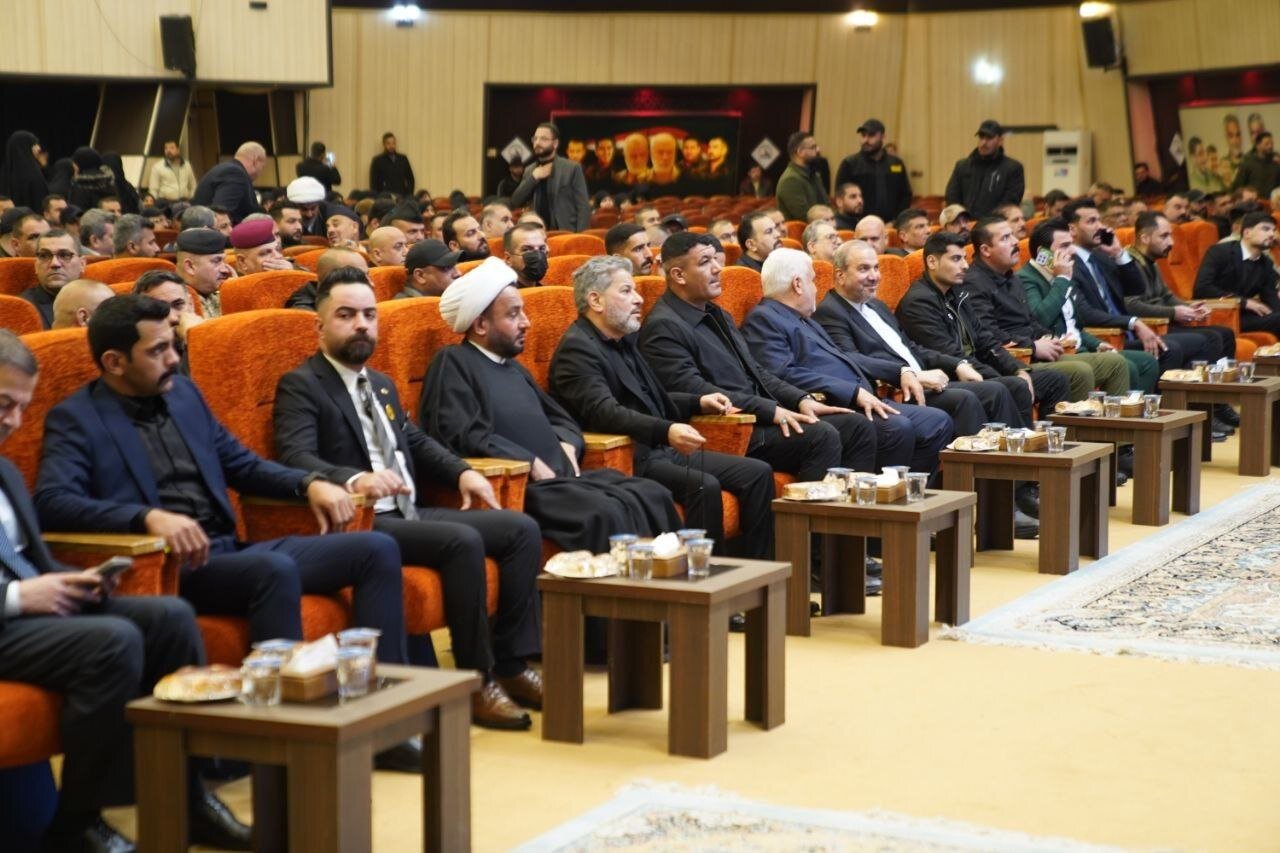
A ceremony honoring the memory of them was held at the Iranian embassy in Baghdad. It was attended by senior political figures, religious scholars, and diverse segments of the Iraqi populace.
In remarks at the event, Mohammad Kazem Al Sadeq, Iran’s Ambassador to Baghdad, stressed that these martyred commanders, through their own choice, charted a permanent path for confronting injustice and safeguarding sovereignty.
“Today, we are in the presence of two commanders who erased the artificial borders between the two nations and, with their blood and martyrdom, forged a bond of brotherhood between Iraq and Iran," Kazemi said.
Faleh al-Fayyadh, commander of the Popular Mobilization Forces (PMF), stated at the ceremony: "Commemorating the martyrdom of the Victory Commanders is an occasion relevant to the entire world and is not confined to any specific region. The Victory Commanders are defenders of rights and humanity, and every free person should honor their memory."
Al-Fayyadh, noting that Iran stood alongside the Iraqi people and resisted terrorism, a" companionship worthy of appreciation", and referring to the stature of the martyrs Soleimani and al-Muhandis, emphasized that these commanders "drew the line of humanity" and upheld human values.
He added: "The memory and path of these martyrs must remain alive, for they gave their lives to honor all values and illuminate the path of resistance... Today, if we witness the global isolation of the Zionist regime, this situation has been achieved through the blessing of the blood of the great commanders and martyrs who, by their sacrifice, changed the course of history."
With reports and special programs, Iraqi media brought the event to the public focus. Large banner of General Solemani and his Iraqi companion were displayed along the roads leading to the Baghdad International Airport.
Baghdad's Martyrs' Memorial was decorated with images of the martyrs, broadly recognized as the "Victory Commanders," to mark the anniversary of their martyrdom.
Meanwhile, a major commemoration ceremony for the anniversary of the resistance commanders was held in the holy city of Najaf, attended by religious figures, scholars, and the public. The ceremony, organized in cooperation with the PMF and local committees in the holy city, featured Ayatollah Seyed Mojtaba Hosseini, the representative of the Supreme Leader of the Islamic Revolution of Iran Sayyed Ali Khamenei in Iraq, as the keynote speaker. The event also honored the companions of the two martyred commanders.
The gathering, held under the slogan "Martyrdom and Honor," emphasized the legacy of resistance, sacrifice, and unity embodied by the martyrs Soleimani and al-Muhandis. Speakers at the event highlighted the pivotal role these two commanders played in confronting terrorism and defending the sovereignty and dignity of the region's nations. It is noteworthy that they were the key figures leading fight against foreign-backed ISIS terrorist group in Iraq from 2014 to 2017.
The ceremony witnessed a widespread and passionate turnout, with scholars from the seminary, university students, and diverse segments of the public in attendance. The program included speeches, poetry recitations, and tributes to the families of martyrs from the seminary community and the resistance, stressing the lasting impact of the martyrs' path on current and future generations.
A commemoration ceremony was also held in the southern city of Basra. This year's event was decorated with photographs of one hundred Iranian martyrs who fell in the war against ISIS in Iraq. The ceremony saw extensive public and official participation, with figures including Asaad Al-Eidani, Governor of Basra, the head of PMF office in Basra Brigadier General Fadhil Saleh Al-Basiri, and Ayatollah Sheikh Abbas Kaabi, a member of Iran's Assembly of Experts, in attendance.
During this ceremony, various cultural and arts programs, including poem reciting, ritual songs, and speeches, were arranged all stressing the concepts of martyrdom, dignity, national sovereignty, and independence. Participants commemorated the two commanders and emphasized on continuing their path of maintaining independence, security, and dignity of the Islamic ummah.
In Iraq’s Diyala province, a symbolic military exercise organized by the PMF reaffirmed the enduring commitment to the path of the Victory Commanders. Meanwhile, across Iraqi social media, the persistent resharing of images and narratives reflects how the memory of these martyrs remains vividly alive in the country’s collective consciousness.
Commemorations from Pakistan to Moscow
Similar commemorations honoring the resistance martyrs were also held in other countries. In this context, the "Martyrs of Freedom" conference was held in Karachi, Pakistan, with broad participation from scholars, intellectuals, as well as religious and social activists.
Organized by the Imamia Students Organization Pakistan, speakers at the event paid tribute to the memory of the two commanders. They emphasized the importance of continuing their path in defense of Islamic values and preserving the dignity of the Islamic ummah.
The speakers honored the memory of the resistance commanders, outlining their personal, intellectual, and combative dimensions while emphasizing the martyrs' decisive historical role in confronting terrorism, global arrogance, and defending holy sites and shrines.
Ayatollah Sayyed Nazar Abbas Taqvi, Secretary-General of the Shia Scholars Council of Pakistan, highlighted the sacrifices of General Solemani and Al-Muhandis. He noted that the resolve of these great commanders not only strengthened security in Islamic nations but, by giving their lives in defense of the holy shrines, they made their memory and path everlasting.
Ayatollah Baqir Hussain Zaidi, the vice president of Pakistan's Jafriya Alliance, described the martyrdom of the resistance commanders and scholars as a proud link in the chain of Islamic history, reminding the audience that such sacrifices trace their roots to the movement of Ashura and martyrdom of the Prophet Muhammad's grandson Imam Hussein.
Simultaneously, in Russia, a group of intellectuals, officials, and political, cultural, academic, Muslim, and Christian figures marked the sixth anniversary by sharing their views on the enduring reasons behind General Solemani's lasting legacy.
Sergey Baburin, former Deputy Speaker of the State Duma and current Secretary-General of the Russian People's Union, stated at the event that General Qassem Soleimani neutralized the Judaization plan for Jerusalem and grounded the US-backed terrorists, which is why he faced the rage and wrath of Washington and Tel Aviv.
"Despite Trump's admission that he personally ordered the assassination of a general from an independent country on the soil of another sovereign state, the international community remained silent and took no action," he continued.
The Bishop of the Moscow Orthodox Church, the deputy head of the Sunni Muslim religious administration, and a gathering of intellectuals, Muslim and Christian scholars, as well as Russian cultural, political, and academic figures also spoke, describing the Iranian general as an enduring legacy for all humanity and a symbol of resistance against oppression and compassion.
For his part, Iran's Ambassador to Moscow Kazem Jalali stated at the ceremony that "martyr Soleimani was a perfect reflection of humanism and a symbol of the fight against injustice in the world."
In addition, a 2,000-person gathering of tribal leaders in Bavi district of Khuzestan province south of Iran, attended also by special guests from Yemen, was held in the village of Sayed Sultan to pay tributes to the two commanders.
This major commemoration suggests that the sapling nurtured by General Solemani's struggle has now grown into a powerful, fruitful tree that strikes fear into the hearts of the enemies of the regional nations.










