













Alwaght- Yemeni Ansarullah's threat to strike Jeddah port and others of Saudi Arabia in the Red Sea in reaction to threat of Saudi-led coalition's strike on Hudaydah port as the only lifeline to the capital Sana'a and other northern regions under control of the resistance movement have introduced a new equation to Yemen war; one in which the push to squeeze the Yemeni economic artery can draw direct attacks on the Saudi export and trade routes.
On Saturday, Mohammed al-Farah, a member of Ansarullah Political Office, announced that if the kingdom acts on its threat, Sana'a will make Jeddah port face a fate Israel's Eilat port faced when a Yemeni blockade left the port's operations halted for two years in solidarity with Gaza. The spokesman to Yemen armed forces General Yahya Saree said that Jeddah port will become a legitimate aim if Saudi Arabia struck Hudaydah.
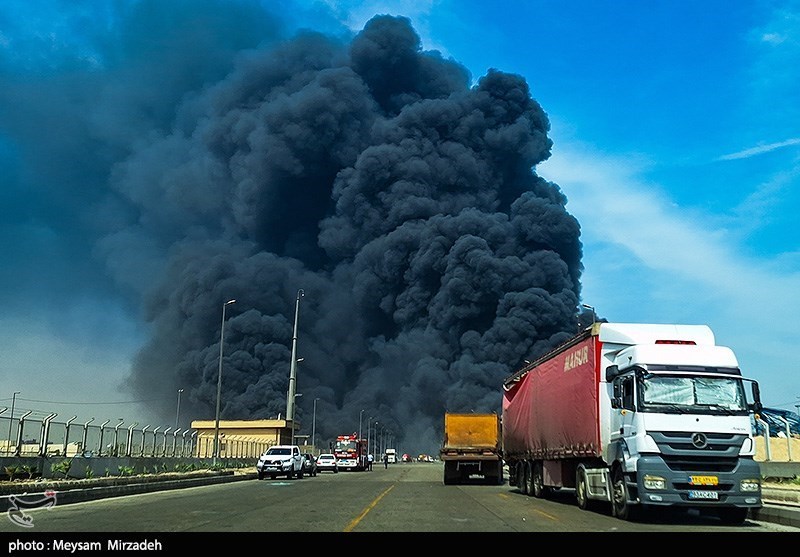
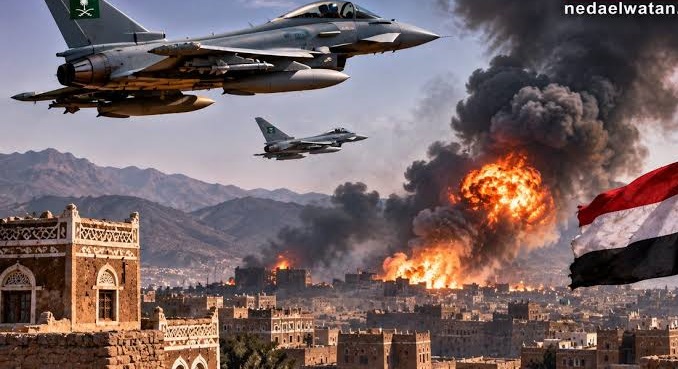
The key point is that the question of striking Hudaydah is no longer merely speculation about Riyadh's possible plans. On Saturday, after issuing evacuation warnings for civilians and port workers, the Saudi-led coalition announced it had attacked the facility, claiming it targeted sites used for arms smuggling and the transfer of ballistic missiles. Yemeni officials countered that the port remains operational and that the flow of goods will continue.
This development must be viewed against the backdrop of a shifting battlefield balance and mounting military and economic pressure on Saudi Arabia, because Hudaydah is not merely a commercial port but one of the most vital conduits for goods, fuel, and humanitarian aid into Yemen. Hence, the threat to target it, if sustained, could, rather than push Ansarallah back, expand the scope of confrontation and expose Saudi ports to a similar threat.
The events of recent days show that the confrontation on Yemen's western front has entered a more critical phase. The withdrawal of forces aligned with the Riyadh-backed government from positions around Bab-el-Mandeb and Dhubab, Ansarallah's advances in parts of the western coast, and reciprocal warnings about ports and vital infrastructure have created conditions in which any expansion of attacks on port infrastructure could drag the war's scope from Yemen's battlefields to the heart of Saudi Arabia's trade and energy network.
Hudaydah, the economic and humanitarian artery of Yemen
Hudaydah's significance cannot be explained by geography alone. Along with al-Salif and Ras Isa, the port is the principal gateway for goods entering northern Yemen's densely populated northern areas. According to the World Food Programme, imported foodstuffs account for roughly 90 percent of the region's food needs. UN data for 2025 likewise indicates that about 70 percent of Yemen's commercial imports enter the country through this port. In 2024, some 4.87 million tons of food and 3.04 million tons of fuel were discharged at Yemen's Red Sea ports. According to the same report, al-Salif specializes in food imports, while Ras Isa is used mainly for fuel.
An attack on the port, then, is not merely a military operation against infrastructure controlled by Ansarallah; it can directly affect millions of Yemenis' access to food, medicine, fuel, and other basic necessities. It was precisely this importance that made Hudaydah a centerpiece of the December 2018 Stockholm Agreement, a deal aimed at establishing a ceasefire in the city and the ports of Hudaydah, al-Salif, and Ras Isa, withdrawing forces, and facilitating the entry of humanitarian aid.
Viewed in this light, the renewed threat to attack Hudaydah must be understood as a move whose consequences extend well beyond Yemen's military geography, designed to apply economic and humanitarian pressure on Ansarallah-held areas.
In this regard, a Reuters report dated November 18 indicates that Saudi Arabia intends to prolong its new military campaign against Ansarallah for several more months, possibly up to six, stretching into 2027. That assessment suggests Riyadh is seeking to rebuild the position of forces aligned with it.
Shift in battlefield equation: War dynamics change with Ansarullah seizing control of west coast
The ground for Saudi threats should be sought in the military developments of recent weeks in west Yemen and the full shattering of Saudi military vision in Yemen. In recent weeks and days, the Saudi mercenary forces fled and left behind all of their reinforcements after sustaining meaningful defeats from Yemen forces. Their losses led them to retreat from west coast around Bab-el-Mandeb and Dhubab region to focus on saving Aden, the seat of the exiled government.
These developments unfolded after Ansarallah forces made advances along the Red Sea coast in September, seizing key positions along the Bab al-Mandab route. In the weeks that followed, Saudi-backed forces attempted a counteroffensive, briefly managing to slow Ansarallah's gains and even announcing the recapture of some positions in Al-Mokha, but ultimately they could not hold out for more than a few days.
As a result, Sana'a now enjoys the upper hand in exerting pressure on maritime routes in the southern Red Sea and on Saudi Arabia's maritime trade network.
Missile and drone power facilitate threats to vital Saudi infrastructure
One of Ansarallah's most important tools for altering the war's balance is its ability to strike infrastructure far from the ground fronts. Developments in recent months have shown that the reach of the group's missile and drone attacks has expanded to airports, oil facilities, economic centers, and key buildings in Saudi cities, to the point that one can now speak of Sanaa's full dominance over Saudi skies.
In recent weeks, Ansarallah have repeatedly demonstrated their drone and missile power, and their ability to thwart the most advanced air-defense systems at Riyadh's disposal, from Patriot to THAAD, by striking various Saudi infrastructure targets in major cities, including Riyadh airport, the airports in Dammam and Abha, oil facilities, and buildings linked to Aramco. According to data from the analytics firm Cirium, roughly 86 percent of scheduled flights at Riyadh's King Khalid International Airport, 4,07, of 4,736, were canceled between October 8 and 25. Repeated attacks on Saudi Arabia's East-West pipeline and its pumping stations have likewise laid bare the kingdom's inability to defend the economic lifeline that has grown even more important for Saudi oil exports since disruptions to transfers through the Strait of Hormuz.
The significance of this capability becomes clearer still when one considers that Saudi Arabia moves about four million barrels of oil a day through the East-West pipeline to the port of Yanbu to circumvent the constraints imposed by the Strait of Hormuz, a volume Reuters has described as equivalent to roughly four percent of global oil supply.
The postponement of the 2027 Asian Cup is another sign of how Sanaa's threats are affecting Saudi Arabia's international plans. The Asian Football Confederation, citing logistical problems and disrupted travel, deferred the tournament to a later date.
These pressures are bearing down on Saudi Arabia's economy at a time when the kingdom's budget was already running a sizable deficit before the conflict escalated. According to an official report from the Saudi Ministry of Finance, the budget deficit reached about 84.3 billion riyals in the third quarter of 2026. Oil revenues for the period plunged 23 percent year-on-year to 116.5 billion riyals. All told, Saudi Arabia's budget deficit for the first nine months of the year came to roughly 244.3 billion riyals.
Against this backdrop, the flagship economic and construction projects of Vision 2030 are also running into financial and operational headwinds. Reuters has previously reported that Saudi Arabia's Public Investment Fund is rethinking its strategy, with projects such as Neom and The Line facing downsizing, delays, or redesign. Analysts and observers of the Arabian Peninsula describe these shifts as a consequence of the costs of the region's newer conflicts, above all the fresh tensions between Riyadh and Sana'a.
Eilat equations: A pattern for pressure on Saudi ports
In such circumstances, widening the war to Saudi ports could impose a doubled cost, and deliver a final blow, to the kingdom's economy.
Ansarallah's warning about targeting Saudi ports recalls the equation the movement applied against the port of Eilat in southern occupied Palestinian territories during the Gaza war. Ansarallah's missile and drone attacks and maritime threats, combined with shipping restrictions in the Red Sea, severely disrupted operations at Eilat and plunged the port into an unprecedented slump.
Now Sana'a has threatened to apply the same logic against Saudi ports on the Red Sea coast should Hudaydah be attacked.
In a statement on November 20, General Saree named all Saudi ports on the Red Sea coast, alongside Jeddah, as potential targets, urging workers, shipping companies, and anyone near these ports to leave the area. He also warned airlines that Saudi airspace could be the scene of military operations in the coming hours, though he exempted the airspace over Mecca and Medina from the warning.
It should be noted, however, that there are important differences between Eilat's situation and that of Saudi ports. Eilat is a port with a different capacity and standing in the Israeli entity's trade network, whereas Saudi ports on the Red Sea are part of a broader network that supports the kingdom's imports, energy exports, and commercial ties to global markets. Any disruption to their operations could therefore carry far wider economic consequences for Riyadh.
Why is repeat of 2018 scenario impossible?
In 2018, the advances of the coalition forces to Hudaydah and the worries about fall of this port city made up one of the key factors leading to Stockholm talks. That agreement centered on halting hostilities and withdrawing forces from the city and the ports of Hudaydah, al-Salif, and Ras Isa, aiming to prevent a widening humanitarian crisis and to lay the groundwork for broader negotiations.
But today's conditions differ from that period. Ansarallah now has years of experience countering airstrikes and siege, and its missile and drone capabilities have become a means of carrying the war into the heart of Saudi territory. On the ground front, too, the recent withdrawal of Riyadh-backed forces from around Bab-el-Mandeb and Ansarallah's pressure along the coastal axes and in Taiz have shown that Saudi Arabia faces a problem far bigger than controlling a single port.
On the other hand, one of Riyadh's traditional tools of pressure on Sana'a has been backing rival Yemeni forces and keeping internal fronts against Ansarallah alive. But the withdrawal of forces aligned with the Saudi-backed government from Bab-el-Mandeb and their focus on defending Aden has rendered that lever useless as well.
In such circumstances, an attack on Hudaydah could, rather than creating one-sided pressure on Sana'a, set off a chain of countermeasures, one in which Jeddah and other Saudi coastal centers, oil facilities, airports, and energy export routes are exposed to threat. This is precisely where Riyadh's military calculation becomes entangled with economic and strategic costs.