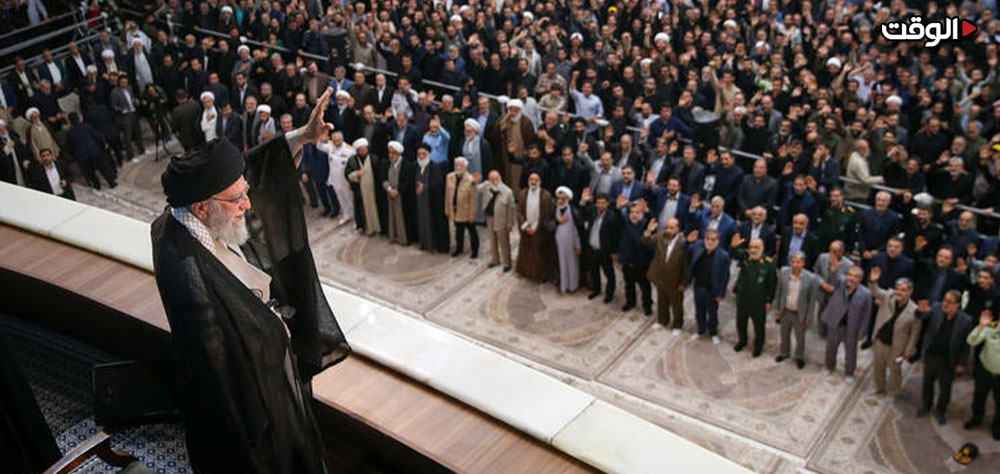








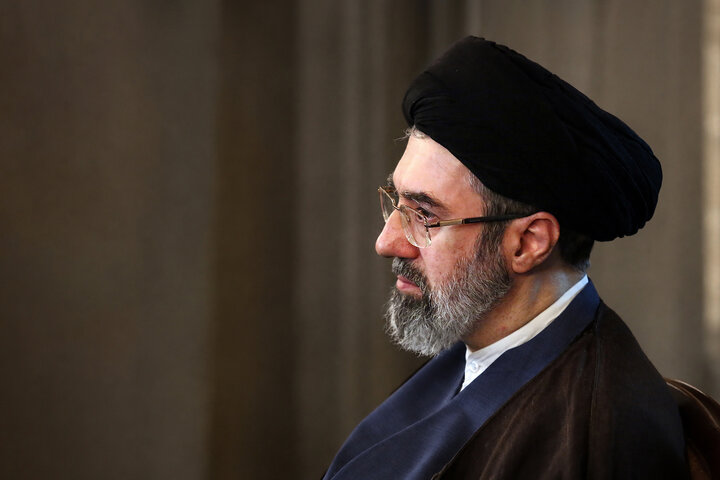


Alwaght- The new directive by Iran's Supreme Leader Ayatollah Sayyed Mujtaba Khamenei in his recent meeting with senior military commanders carried a central message and it was that any new American and Israeli threat or attack should be faced with swift, effective response that goes beyond geographic limits. The Leader also stressed the need for the armed forces to update their target bank and include all material and non-material American and Israeli assets in the list.
The order by the Supreme Leader on social media was described as a sign of change in Iran's deterrence level and possible expansion of the geographic scope of any new conflict. Many observers see this as signaling Tehran's readiness to counter any new aggression.
International Crisis Group's analyst: Diplomacy and military response ready together
Hamidreza Azizi, an Iran analyst at the International Crisis Group, argues that Tehran is pursuing two tracks at once: keeping diplomatic channels open while working to reshape the other side's military calculus.
"Right now, Iran's diplomacy and military readiness are advancing in parallel," Azizi wrote. According to the international expert, Iran's emerging position is that a deal remains possible, but if another war breaks out, it will be fought by different rules and on a far broader battlefield than before. Azizi added that Washington's reading of these signals, whether as credible deterrence or as a threat of escalation, could significantly shape what comes next.
American war studies institute: Push for maximum deterrence
Institute for Studies of war, an American think tank, in its assessment of the new order by the Leader suggests that ordering an expansion of the Iran target bank is part of Tehran's effort to push against any American and Israeli war.
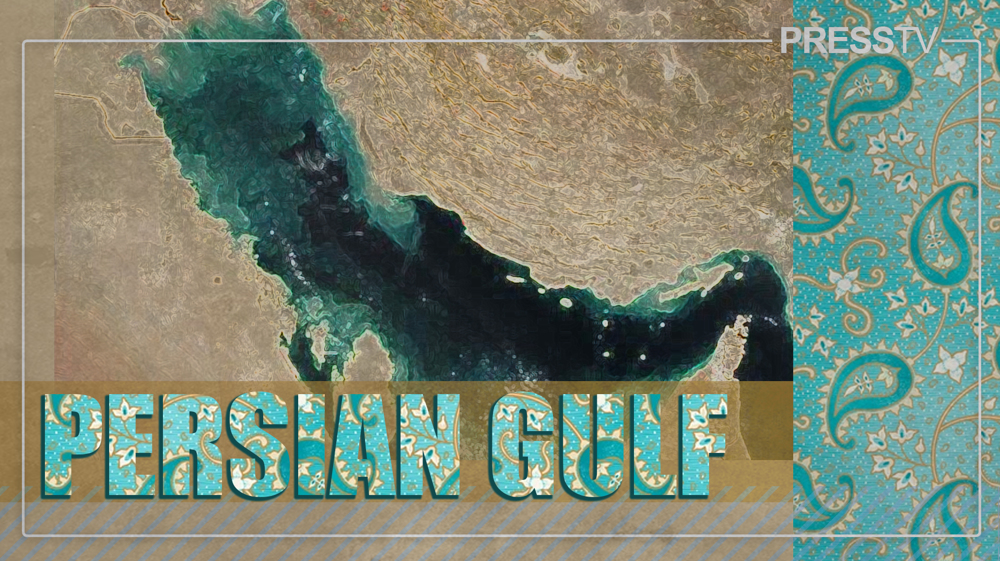
The think tank's analysis zeroes in on one key point and it is that by threatening to widen the scope of its response, Iran aims to raise the potential cost of any attack for the US and its regional partners. It also points to military commanders' emphasis on heightened readiness along the Persian Gulf coast, the Strait of Hormuz and the Sea of Oman, casting this as a sign of how central those areas are to Iran's defense and military calculus.
University of Tehran professor: Next war is determining
Mohammad Marandi, a prominent University of Tehran professor and international affairs analyst, said in an interview that the Supreme Leader's new directive sends a clear message to Washington, telling it that a short, limited operation against Iran is impossible. Interpreting the order, he said it would be a mistake for the US to imagine it could mount a three-, seven- or 10-day operation against Iran and then exit the battlefield. Marandi described the next phase of any conflict as decisive, adding that Iran would seek to break the siege and impose its demands. He also warned that any new war could have far-reaching consequences for Persian Gulf regimes and the global economy.
Legal expert: Breaking out of traditional geography of deterrence
Mohammadreza Farsian, a legal scholar and university professor, argued in a published note that the new directive goes beyond a military operational order, calling it a sign of a shift in how national security territory is defined. He wrote that in today's world, threats are no longer confined to geographic borders, information infrastructure, military support chains, operational bases and command networks are now part of the threat geography. In his view, a response without geographic limits means shifting focus from the site of an attack to its source and support network. He identified three core elements of the directive: the urgency of response, the effectiveness of response, and the refusal to confine deterrence options to any single geography.
National newspaper: Next war rules are changing
The English-language National newspaper, publishing experts' assessments, underscored that Iran, alongside continuing diplomatic efforts, is sending a message that any future war would be different. The analysis suggests the new directive cannot be dismissed as mere verbal warning, since it was issued in parallel with indirect Tehran-Washington talks and Qatari efforts to prevent a return to conflict.
Axios: Iran's message amid concerns over attack immediately after midterms
Barak Ravid, an Axios reporter, said that the new directive by the Leader comes as the US-Israeli attack threat looms large. He said that the message comes as Trump is mulling military options against Iran after Tuesday midterm elections.
Axios also highlights two key points. First, the order expands the target bank and places all the US and Israeli material and non-material assets within reach of Iran's armed forces. Second, commanders' reports stress a multifold increase in the production of various types of munitions and reconnaissance, support and combat weapons.
King's College London professor: Even nuclear deal does not ensure threat end
Speaking with Al Jazeera, Reader in Middle East Politics and Peace and Conflict Studies Craig Larkin pointed to a key concern in Tehran's calculations: Netanyahu's threats against Iran may reinforce the perception in Tehran that even reaching a nuclear deal with Washington would not necessarily eliminate the risk of another Israeli attack. He argues this is what complicates Iran's calculus. Actually, he says, Tehran must factor in the possibility of an Israeli attack even if it reaches a deal with the US.
The Financial Times: Warming about expanded list of targets
The Financial Times in its report has focused on a specific part of the Leader's directive, highlighting the expansion of domain of targets to material and non-material assets of the US and Israeli regime.
The newspaper also pointed to the message from the commander-in-chief of Iran's armed forces regarding Tehran setting the time and terms for ending a war. The report's assessment is that Iran wants to show that if a conflict breaks out, the other side will not alone decide when and how far it ends.
Bloomberg: Increasing readiness for renewed confrontation
Bloomberg correspondents Patrick Sykes and Eric Martin wrote in their report that the new directive from the Supreme Leader reflects a high level of Iranian preparedness against the possibility of renewed US and Israeli attacks. The report noted that, on one hand, Iranian military commanders are preparing for a possible confrontation, while on the other, sources speak of progress in diplomatic contacts and of Washington's positive efforts to open a path to dialogue.
Al Jazeera: Tehran is changing the rules of possible war
Bringing in spotlight the new order of the Leader, Al Jazeera says that Tehran no longer just talks about responding to any attacks, rather, it is calculating conditions in which even agreement with the US will not eliminate Israeli threats.
The Qatari news network also pointed to the recent remarks of Iran's Supreme National Security Council's chief General Mohsen Rezaei about the potential use of new weapons in the next war. Rezaei had told Al Jazeera that Iran in its response to fresh aggression will use "new arms."