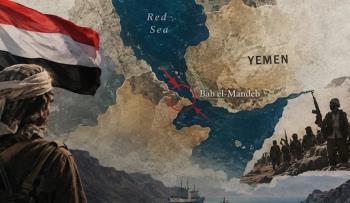










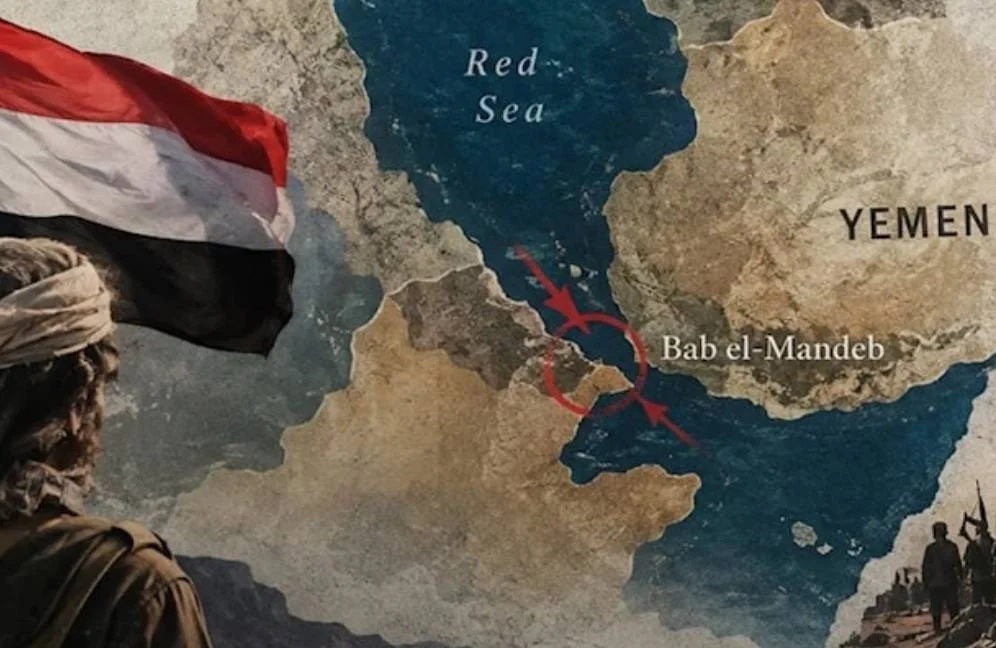


Alwaght- While the Strait of Hormuz in recent months has become one of the main points of military and naval flareup in the region, new developments in Yemen coasts and consolidation of Ansarullah's controlling position in Bab-el-Mandeb Strait have exposed a new stage of the geopolitical prospect of this conflict. The significance of this development lies in the fact that Bab-el-Mandeb and Strait of Hormuz are not two separate routes, but two linked rings in the chain of energy transit and world trade, so much so that their simultaneous disruption can seriously restrict the alternative shipping options.
Significance of dominating Mokha port and strategic islands in controlling Bab-el-Mandeb Strait
Yemen’s military and security equation, after years of stalemate and a ceasefire, was abruptly upended in mid-July when Saudi-backed proxy forces struck Sana'a airport. The fragile balance Riyadh had sought to maintain, keeping Yemen’s vital economic arteries under its thumb and sustaining unlimited pressure on Sana'a, collapsed overnight. After a high-level Sana'a delegation attended the funeral of the Islamic Revolution’s martyred leader, Ansarallah made a pivotal decision: to begin actual flights from the airport, formally declaring an end to Saudi control over Yemeni airspace. But the kingdom’s belligerent move handed Ansarallah the opening it needed. Drawing on the valuable experience of the maritime blockade on the Israeli regime during the Gaza war, the resistance movement seized on Riyadh’s ceasefire violation to announce a new equation, “siege for siege”, aimed at ending the cruel naval blockade.
The stakes could hardly be higher. With the Strait of Hormuz unsafe and effectively closed, Saudi Arabia’s maritime trade network, especially its oil exports, has become dependent on the Red Sea route through the Yanbu pipeline. The Saudis were shipping some 4 to 5 million barrels of oil a day through that corridor to global markets. Now Ansarallah’s attacks on oil facilities in eastern Saudi Arabia and on Saudi shipping in the Red Sea have placed the backbone of the kingdom’s economy under the blade of a siege at both ends: Hormuz and Bab-el-Mandeb. Unlike in past wars, it is now Ansarallah that holds the upper hand in the equation of sanctions and economic pressure against its enemy.
The result was immediate: the center of gravity shifted to the adjacent geographic zones that shape control over Bab-el-Mandeb, western Taiz, southern Hodeidah, and the city of Mokha.
Over the past 48 hours, Yemeni forces advanced rapidly along the western coast, routing Saudi-backed troops, particularly the so-called National Resistance led by Tariq Saleh, nephew of former dictator Ali Abdullah Saleh, and reinforced and consolidated their position in the coastal area overlooking the Bab-el-Mandeb strait. Mocha sits roughly 75 kilometers (47 miles) north of Bab-el-Mandeb, which connects the Red Sea to the Gulf of Aden. Controlling the city could give Ansarallah “a chokehold along Bab-el-Mandeb.”
It also severs the enemy’s critical supply lines, including the Mokha-Taiz road running south from Mokha and supply routes through the same port. The victory is a major gain for Ansarallah in Yemen’s internal balance of power and a heavy blow to the Aden proxy government, because Mokha’s fall laid bare vulnerabilities inside its defense lines.
defense policy analyst Wolfgang Putsay told Al Jazeera that this is a turning point in the war and may lead to the collapse of puppet Aden-based government's forces in southern Yemen.
Also, gaining control over Mokha is significant in creating a double defense layer to protect Hudaydah post city 150 kilometers into the north of the coastal region. Hudaydah is ann economic artery to Sana'a over years of the all-out blockade, and during tensions and clashes, the Saudis struck this port city to press Ansarullah and foist on it a balance of threat.
The importance of the islands overlooking the Bab-el-Mandeb, especially Perim island exactly comes from its location. Actually, it's significance lies in its geographical position. The security of its vicinity is still closely tied to the stability of one of the world's waterways.
Return of crisis to Bab-el-Mandeb
Bab-el-Mandeb, known as the Gate of Tears for its treacherous navigation, sits between Yemen and the African coast. It is vital for moving crude oil and fuel from the Persian Gulf to the Mediterranean and Asia, and it ranks as the world’s most important maritime trade route.
Roughly 12 percent of global trade and 30 percent of the world’s container traffic pass through the Red Sea and Bab-el-Mandeb. Any sustained instability there would therefore ripple far beyond the geography of Yemen and Saudi Arabia.
Bab-el-Mandeb’s energy significance is equally enormous. Crude oil and refined products from the Persian Gulf depend on this route to reach European markets and parts of Asia. Controlling the Strait, or letting it become unsafe, could pile added pressure on energy export flows, especially at a moment when the Strait of Hormuz is already facing severe constraints.
Hormuz, the top front of sea war
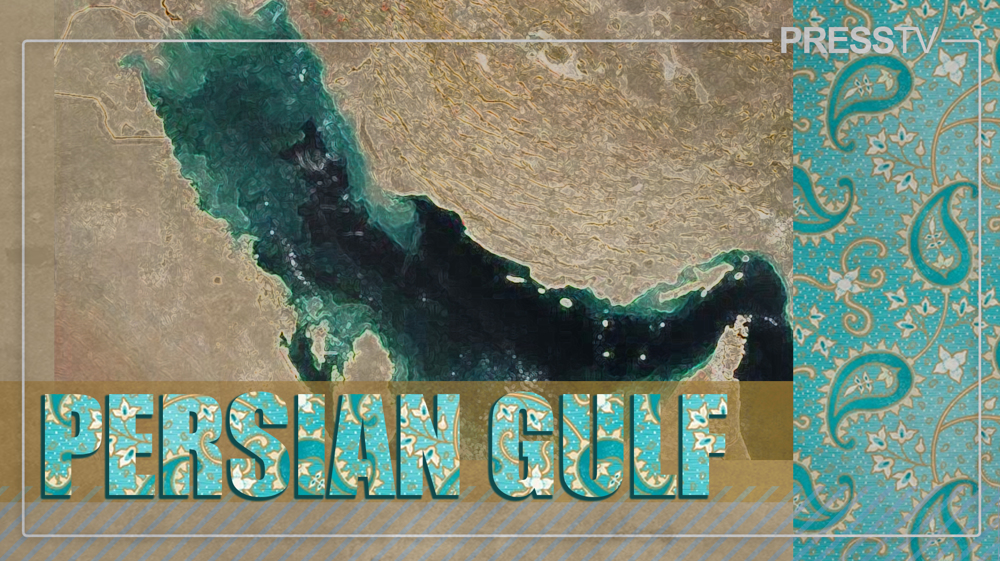
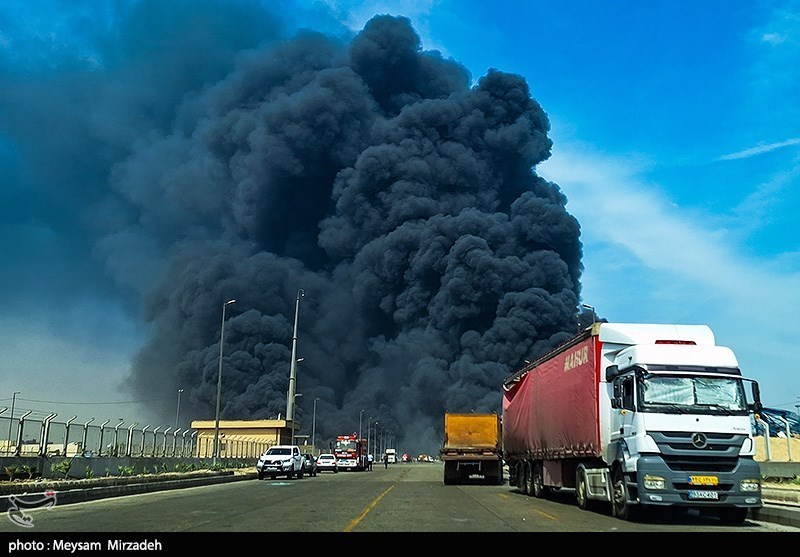
The Strait of Hormuz, meanwhile, has morphed over the past several months from a vital shipping lane into one of the most dangerous arenas of direct confrontation. What began largely as an air campaign has gradually widened into a broader maritime conflict, with ships and oil tankers now drawn into the cycle of attacks.
In recent days, American forces have targeted tankers linked to the Iranian government, and the IRGC have responded by striking vessels and tankers tied to the US. Iran’s use of anti-ship ballistic missiles fired from its own territory at maritime targets marks a new level of military capability in this confrontation and, alongside drones and mine-laying, has widened the arsenal of asymmetric naval warfare.
Even so, asymmetric naval capabilities remain the central pillar of the Iran-led Axis of Resistance’s security strategy. Rather than relying on traditional navies, these capabilities deliver effective offense and deterrence against its adversaries through modern, flexible tactics. With Ansarallah’s new advances in controlling the Red Sea, the sharpness and power of this asymmetric strategy at sea is expanding its reach across the region. The long-term effects of these developments will significantly reshape security and the geopolitical balance in the region.
The consequences are not confined to military actors, but also are challenging the global economy. A supertanker with a capacity of roughly 300,000 tons, or a large container ship, unlike a warship, has virtually no ability to defend itself against attacks. The most important security decision about such a vessel is made before it ever sets sail, by its owner: whether to enter the danger zone at all.
As a result, traffic through these straits has become extremely high-risk, driving up costs such as insurance and freight rates. At points during the year, insurance costs have reached about 10 percent of a ship’s hull value, and for a large tanker that can amount to millions of dollars.
Two chokepoints, one crisis
The weight of the current developments becomes clear when we see Bab-el-Mandeb and Hormuz within a single system. In the past, the shipping industry could shift to another route when one was unsafe. When the Red Sea grew unsafe in 2023-2024, the ships circumnavigated Africa and crossed the Cape of Good Hope managed to cushion part of pressure, though the route was longer and more costly. But if Hormuz and Bab-el-Mandeb become risky at the same time, that compensatory mechanism largely collapses. Oil tankers would face the problem of loading and transiting the Persian Gulf safely on one end, and, if they make it through, the peril of the Red Sea and Bab-el-Mandeb on the other. The only remaining option is to go all the way around Africa, and to do so at a moment when insurance costs, crew wages, and security risks are climbing across the region.
This is the point at which two regional crises can become a global one. If only one of these chokepoints is disrupted, the shipping industry can absorb part of the strain by rerouting. But simultaneous disruption at both would constrain the global shipping network’s capacity to adapt.
A cost directed to the world economy
Rising risk at Hormuz and Bab-el-Mandeb will ultimately become a cost that shipping companies do not bear alone. Insurance and freight costs are first passed on to cargo owners and buyers, then reflected in the price of crude oil, refined products, petrochemicals, and other goods that depend on fuel.
That is why a crisis at maritime chokepoints cannot be treated as merely a security or military matter. Higher energy transport costs can hit refineries, the petrochemical industry, transportation, and ultimately the price of consumer goods. In fact, the more alternative routes are constrained, the greater the share of geopolitical risk embedded in the final price of goods.
And even if a ceasefire is reached in the short term, the effects of this crisis will not fade quickly.
Shipping and insurance markets have entered a new baseline, not a temporary spike. Even a ceasefire tomorrow cannot fully undo the caution now baked into insurance models, crew bargaining agreements, and the risk appetite of transit companies. Markets that have caught fire twice in two years, the Red Sea, and now Hormuz and Bab-el-Mandeb, will set a permanent risk premium on the region for years to come.
So, the risk premium in this region may remain elevated well above past levels for years.
Replacement capacity limited
One of the most important outcomes of the new conditions is the exposure of the limited capacity for rerouting in the global trade. The shipping industry managed to bear the crisis in the Red Sea to some degree, But if both chokepoints are disrupted simultaneously, there is no longer any basis for expecting that large-scale rerouting can happen without clogging alternative ports, lengthening delivery times, and eroding the effective capacity of the global fleet.
Under such conditions, maritime security stops being a peripheral concern for shipping executives and becomes a core part of their business strategy. What happens at Hormuz directly shapes the value and significance of Bab-el-Mandeb, and vice versa. From this perspective, the two straits must be seen as a single, interconnected system of geopolitical risk, not as two separate dots on the world map.