

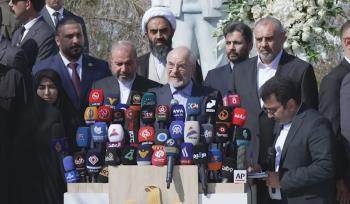













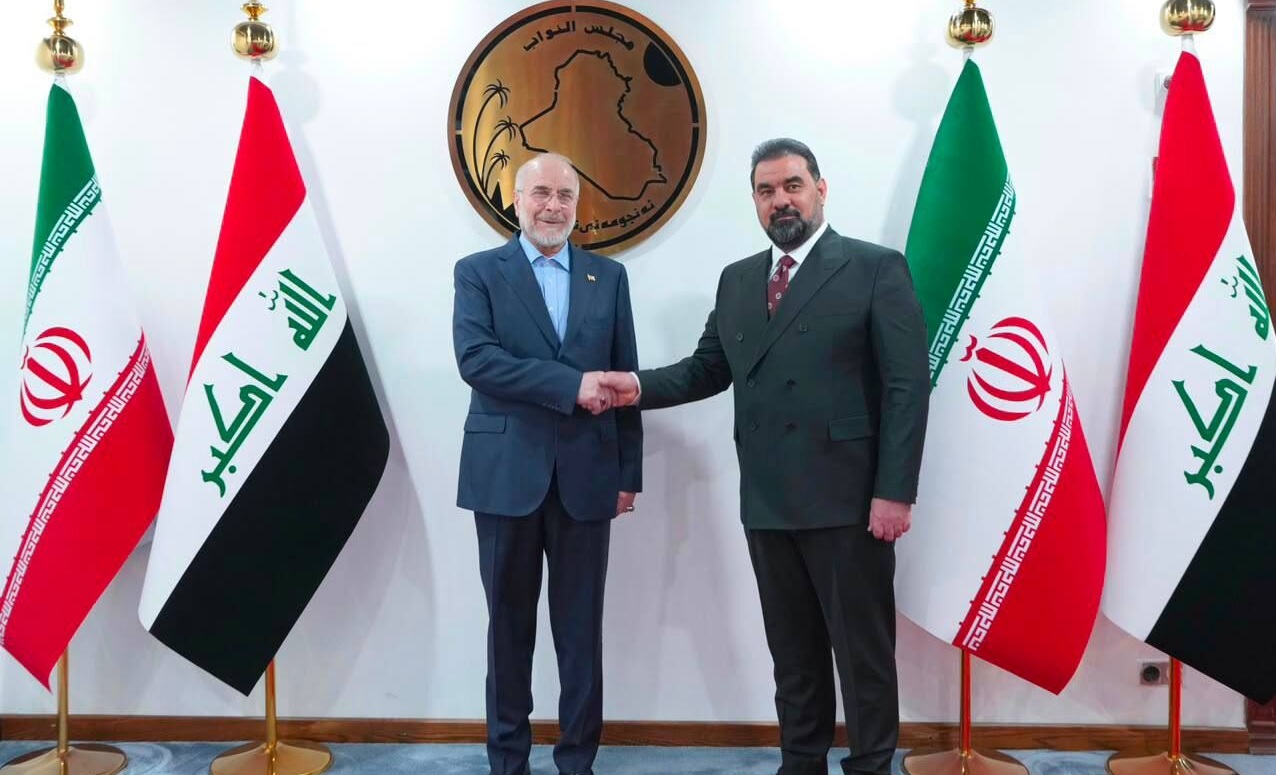


Alwaght- The visit to Iraq of the Iranian parliament speaker Mohammed Bagher Ghalibaf comes at a time the Iranian-Iraqi relations are under influence of an array of sensitive security, economic, and regional cases. Though his official schedule included meetings with senior Iraqi officials, discussing mutual cooperation, security of borders, fight against terrorism, and expansion of trade ties, the developments of the recent days suggest that both Iraq and Iran by managing some issues are trying to avoid some suspicious matters to become challenges in their bilateral ties.
Tehran and Baghdad jointly try to addres attack on Kurdish PM office
A recent drone attack targeting the office of the Kurdistan region Prime Minister Masrour Barzani has seriously impacted political atmosphere between Tehran and Erbil. Kurdish officials argue that the drones come from outside Iraq, calling the attack a gross violation of sovereignty of the autonomous region.
Iran’s foreign ministry strongly condemned the attack, with Foreign Minister Abbas Araghchi asserting that “no logic” could justify such an act and warning Iran’s Kurdish friends to remain vigilant against “false flag” plots designed to sow division among neighbors.
Tehran’s posture suggests the Islamic Republic is probing the incident not just through the lens of regional realities but also against what it views as suspicious moves by Tel Aviv aimed at stoking sectarian strife. Officials point to questionable actions by actors close to both Tel Aviv and Washington that appear designed to inflame tensions between Iran, Iraq, and the Kurdistan region, a dynamic from which Tel Aviv would undoubtedly benefit. Still, both Tehran and Baghdad are working to fully clarify the circumstances surrounding the attack.
Ghalibaf in Baghdad seeking to de-escalate with Erbil
So, one of the key aims of Ghalibaf's Baghdad trip is to follow up on the political and security probe into the incident. The rise of the allegations that Iran was involved in the attack on the Kurdish PM office can pave the way for distrust between Tehran, Baghdad, and Erbil and hit the relations that over years have grown based on political, security, and economic cooperation.
The visit of a senior Iranian official to Baghdad, just days after the attack, is shaping up as a bid to deliver Tehran's stance directly to Iraqi leaders and head off narratives that could widen misunderstandings between Iran and the Kurdistan region.
From Tehran's vantage point, the strike on Barzani's office had nothing to do with official Iranian policy, and officials are making clear they would not allow the episode to become a wedge driving Iran and Iraq apart or driving a rift between Tehran and Erbil.
Security of Strait of Hormuz and Iraqi oil tankers
Maritime security and the passage of Iraqi tankers through the Strait of Hormuz emerged as another key plank of the Iranian parliament speaker's talks with senior Iraqi officials. Iraq relies on oil exports for the bulk of its revenue, and shipments, particularly from southern terminals, remain heavily dependent on the Persian Gulf shipping lane and the strategic strait.
With regional military developments casting a shadow over shipping safety in the strait, Baghdad is hunting for mechanisms to keep its oil flowing. That makes coordination with Tehran all the more critical to secure safe passage for Iraqi tankers.
Against that backdrop, Speaker Mohammad Bagher Qalibaf's visit offers a window to deepen political and security coordination between the two countries on the transit of Iraq's crude. The stakes go well beyond economics, they cut straight to the security calculus of the Persian Gulf.
Iran views the Strait of Hormuz as one of its most vital security levers in the region, while Iraq, anxious to shield its oil revenues from disruption, is seeking firm guarantees for its tankers' safe transit. The talks in Baghdad could thus steer toward concrete arrangements for Iraqi vessel passage, maritime coordination, and intelligence-sharing on security threats.
Trade boost, a case beyond politics
During Ghalibaf's Baghdad visit, trade and economic ties served as the leading discussion cases. The neighbors' economic ties over the past years have been one of the key pillars of their ties, but banking problem, currency settlement, and other financial restrictions remain the barriers to unlocking full potentials.
In this regard, just two days before Ghalibaf's arrival, the governor of Iran's central bank was already in Baghdad, talking with his Iraqi counterpart and the finance and trade ministers to clear banking hurdles, ease fund transfers for merchants, unfreeze Iranian assets held in Iraqi banks because of American sanctions, and expand trade and investment ties.
The back-to-back visits underscore that Ghalibaf's trip is no mere political or parliamentary exercise. Tehran and Baghdad are moving in parallel to push economic cooperation to a higher level, seeking to tap deeper into trade, investment, engineering projects, and the full range of banking capabilities available to both sides.










