








Alwaght- Professor Igor Pankratenko, a historian and senior expert at Russia’s Center for Strategic Assessment and Forecasting, is the kind of analyst who tracks Central Asian geopolitical shifts with a sharp, unblinking eye. To him and his colleagues at Russian research institutes, the region has morphed into a high-stakes arena for great-power rivalry since the Soviet collapse in the early 1990s.
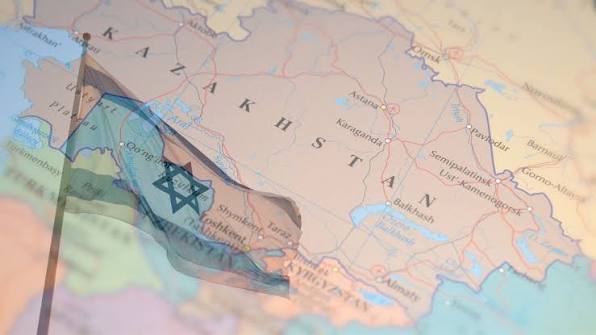
As a traditional heavyweight, Russia has always treated Central Asia as its strategic backyard, and any outside incursion as a direct threat to national security. But the war in Ukraine has drained Moscow’s military and financial muscle, opening the door for other players to maneuver. Among them: Israel, which until now had barely registered a presence there.
Israel’s push for influence into Central Asia is not just about trade or investment. It fits squarely into what strategists call the “New Peripheral Strategy”.
This is a doctrine dating back to the 1950s that aims to break Israel’s isolation in West Asia by forging alliances with non-Arab states and moderate Muslim communities on the Arab world’s fringes. Today, Central Asia and the Caucasus have become the strategy’s new frontier.
Israel’s core goals in the region include trying to curb Iranian influence by building a ring of partners to Iran’s north and east; expand economic and tech ties, especially in agriculture, water management, cybersecurity, and renewable energy; and, ultimately, burnish its international legitimacy by widening the circle of Muslim-majority nations having friendly ties to Tel Aviv.
The outcome of this policy is a hidden competition with Iran in the region which some observers dub "Cold War" of West Asia. It is a rivalry that is ongoing in the intelligence networks, trade corridors, and economic projects, rather than battlegrounds.
Russia and the Central Asian states are responding to this new Israeli footprint with a telling mix of wariness, pragmatism, and multi-vector policy.
Moscow is watching Israel's moves closely, and sizing them up as part of a broader competition that already includes Turkish and American influence. But Central Asia, led by Kazakhstan, has adopted a deliberate "multi-vector" playbook: engage with every major power, commit to none. Kazakhstan's signing of the Abraham Accords in November 2025 marked a turning point. That was not about joining an anti-Iran or anti-Turkey coalition. Rather, it was a strategic signal, aimed as much at Washington as at Moscow, that Astana's is growing independent of the Kremlin.
Joining the Abraham Accords is of minor cost to Kazakhstan as the country has had diplomatic ties with Israeli regime since 1992, and it can win American investments and Washington’s favor and at the same time boost independence of action of this country in the face of pressures of the Russians who want it remain within their orbit.
To experts, this is not really about Israel, Iran, or West Asia. It is about Astana's most consequential foreign-policy project: securing its sovereignty and room to maneuver in a world that is increasingly splintering between rival powers.
The trajectory of Israel's influence in Central Asia remains uncertain, moving in lockstep with broader geopolitical tremors. On one hand, Tel Aviv has made real inroads, winning trust through technology transfers and investment, cementing its reputation as a reliable partner. It would not be surprising if other countries, Uzbekistan among them, eventually sign onto the Abraham Accords.
On the other hand, the delicate balancing act that Central Asian states have struck between Iran, Russia, and the West could collapse under the weight of any major security or political shock, a serious escalation between Iran and Israeli regime, for instance.
As Russian experts like Pankratenko suggest, if Iran unravels, the security vacuum could leave Central Asia exposed to manipulation by players who see the region not as a priority, but as a lever against Moscow and Beijing.
What seems certain, though, is the end of Russia's era of monopoly in Central. The region is becoming a complex, multi-layered chessboard for regional and trans-regional powers alike, and Tel Aviv, resting on its peripheral strategy, is set to play a far more prominent role than it ever has before.