
















Alwaght- With the arrival of month of Muharram, mourning ceremonies for Imam Hussein, the grandson of Prophet Muhammad, have started across the Muslim world. In Afghanistan, this year like the past years, Afghanistan Shiites have faced vast restrictions imposed by the Taliban rulers on marking their religious ceremonies.
While this period should be a time for Muslims and free people worldwide, especially Shiites, to reflect on the values of justice, liberty, sacrifice, and resistance against oppression, in Afghanistan these religious observances are facing serious crackdowns, justified by flimsy security pretexts and biased interpretations of Islam.
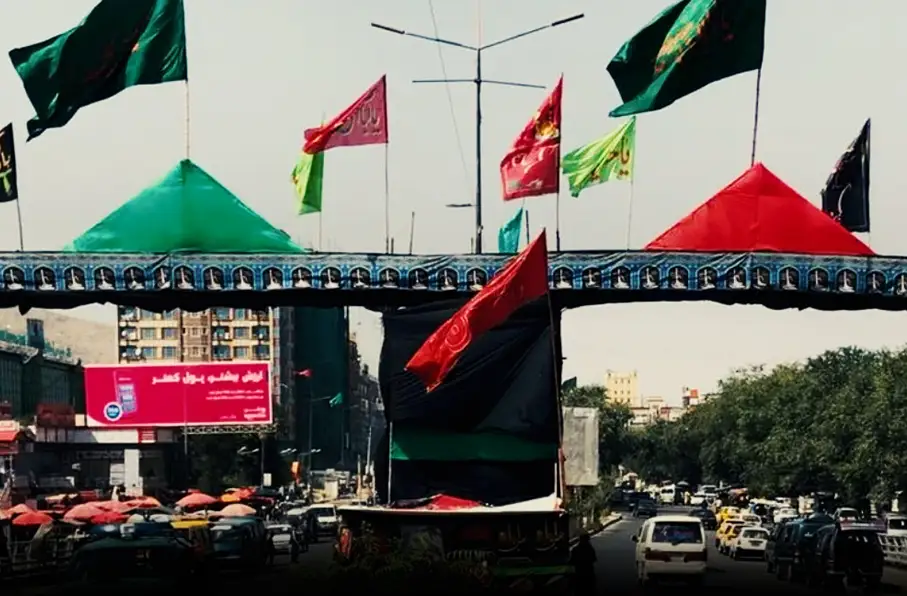
Multiple reports from Kabul, Ghazni, Herat, and other provinces show Taliban forces are forcibly removing, and in some cases tearing up, flags and symbols associated with Imam Hussain’s mourning rituals from homes, shops, and streets. These incidents have occurred in areas like Kabul’s Dasht-e Barchi, Herat’s Hajji Qurban town and Jabrael district, and Shiite-majority parts of Ghazni city.
ABNA, citing local sources, reported that the Taliban morality police have been showing up in these neighborhoods at night or in the evenings, forcing residents to take down their flags. Some reports also mention mistreatment, arrests, and even gunfire.
Accounts from residents paint a grim picture of the harsh treatment. A resident of Herat's Hajji Qurban town in the Shaidai area wrote: "Wednesday evening, Taliban officers came and forced us to lower our mourning flags. It was humiliating and insulting."
In Kabul, a Shiite resident of Dasht-e Barchi recounted: "On the second night of Muharram, a Taliban security officer came to the area, ripped the flags down from shops, tore them up, and took them away disrespectfully." Reports also indicate that the Taliban's "Ministry for Promotion of Virtue and Prevention of Vice" is deploying mobile patrols across the city to collect Muharram banners.
Social media users have reacted with outrage. One user on X wrote: "The Taliban are forcibly collecting Muharram mourning flags from people in Herat." Another added: "They're tearing down Hussaini flags in Ghazni and Herat—this is the continuation of discriminatory policies and suppression of Shiites." Yet another said today: "We had put up two flags on our house, but officers forced us to take them down this morning."
A Herat resident commented online: "This is an insult to the beliefs of millions of Shiite Muslims. The Taliban promised unity, but in practice they're targeting our mourning rituals."
A video emerged online from the city of Bamyan showing a number of young people setting up a big flag of mourning on a mountain. Another related post showed a number of people removing the flag, burning it, and throwing it down. The video did not mention the Taliban and it was unclear who was behind this insult to religious symbols.
These incidents have sparked a wave of anger and deep anxiety among Afghanistan's Shiite community, igniting fierce debates across social media platforms.
Activists and ordinary citizens alike view these measures as a blatant violation of religious freedom and a direct insult to the Shiite minority, a stark contradiction of the Taliban's own early promises of inclusive governance.
Notably, in previous years, the Taliban had already laid down restrictive rules: Shiites are barred from inviting Sunnis to their mourning ceremonies, and broadcasting elegiac recitations through mosque loudspeakers is strictly prohibited.
Empty security promises of the Taliban
The irony is that the Taliban's official justification for all this is "security."
On the second day of Muharram, Interior Minister Sirajuddin Haqqani actually called on his officials to take necessary security measures to protect mourners during the holy month.
His spokesman, Abdul Mateen Qane, issued a statement confirming that Haqqani had raised the issue at a ministry leadership meeting.
Afghanistan's Shiite Scholars Council had earlier urged the Taliban to secure Muharram ceremonies against threats from terror groups like ISIS-Khorasan, which has repeatedly targeted the Shiite community with deadly attacks.
Yet Shiite leaders and ordinary citizens keep asking the same question: What possible security risk could a mourning flag hung on a house, shop, or public space possibly pose to justify this crackdown?
These actions make one thing crystal clear: the Taliban are not just failing to provide security, they have become the very obstacle, the oppressors standing in the way of Shiite religious practices.
This clampdown on Muharram symbols is part of a systematic Taliban policy aimed at erasing religious diversity and imposing their own extremist interpretation of Islam on the entire society. Reports from international human rights organizations like Human Rights Watch confirm that under Taliban rule, Shiites and other religious minorities in Afghanistan live in an atmosphere of fear and insecurity.
Adding to the outrage, Ayatollah Waezzadeh Bahsudi, one of Afghanistan's top Shiite authorities, recently revealed that Taliban officials refuse to meet with Shiite scholars and would not even respond to their letters.
In his Eid al-Adha sermon in Kabul, he declared: "For these four years and eleven months, we take God as our witness, we have offered goodwill, we have advised, we have guided, we have consulted. But the Islamic Emirate's ears are deaf. In all this time, we have not been able to meet with top-level officials. Never in Kandahar."
Bahsudi added that Shiite scholars had sent a roughly 200-page letter to the Taliban leader's office, and it is been two years with no reply.
"Our letters go unanswered. Our meeting requests are rejected. And on top of that, they tell us not to speak in the media. But what are we supposed to do when people come to us? They come to us as their religious authority. They cry to us about the injustices of the Kuchi nomads. They cry to us about religious persecution. So what should we do? If we don't share their pain with you, then with whom? If we don't speak from the pulpit of Friday and Eid prayers, then where?"
Statement by Shiite Scholars Council
The Shiite Scholars Council of Afghanistan in a statement said that it expects the security officials to provide security of the Muharram and Ashura mourning ceremonies.
The statement reads: "We are calling on the security officials of the country to make ground for magnificent marking of the Muharram and Ashura and observe the religious rights of all of the citizens."
The council also called on the organizers of the mourning ceremonies to cooperate with the security forces and authorities for security of the ceremonies for the rituals to be held in a secure and calm atmosphere.
The council also advised the preachers not to raise issues or make remarks that cause divisions among the Muslims of the country.
"We call on esteemed orators, preachers, and elegy reciters to conscientiously and thoughtfully educate young people about the true messages and objectives of Ashura, namely, the pursuit of justice, social responsibility, and the defense of Islamic values. At the same time, we urge them to refrain from raising any topics or uttering any words that could sow division among the country's Muslim communities," the statement read.
Despite these pro-unity messages by the council, the Taliban over their five years of rule over Afghanistan have not attended any of the Shiite demands, rejecting to recognize Shiite faith, incorporate the Shiites in the political structure, and observe the basic religious and civil rights which are the core demands of Afghanistan's Shiite community.










