







Alwaght- The recent remarks by the US President Donald Trump about possibility of Syria playing a role in Lebanon to complete the mission the Israeli regime has started against Hezbollah are not simply tactical or media positions. Rather, they bear signs of a broader American plan to redesign the balance of power in the region.
The reality is that Trump in his words just contrary to Washington and its Arab allies' claims of returning power to the Lebanese government this time did not talk about Beirut’s government nor the role of the army of this country to manage the security case and the Hezbollah arms. This approach shows that in the eyes of Washington, Lebanon case is not a sovereignty case but part of a broader project to contain the Axis of Resistance. Within this framework, the main aim is not to strengthen the Lebanese government but to find an actor that can shoulder the political and human costs of disarming Hezbollah to pave the way for the large American project in the region.
But will Ahmad al-Sharaa, better known for his nom de guerre Abu Mohammad al-Jolani, who formerly fought Hezbollah in Syria will take revenge on the Lebanese movement? Will regional powers accept this scenario? Though al-Sharaa has openly denied claims of a plan to intervene in Lebanon, Iraqi resistance groups have warned they are ready to fight terrorist militias acting under the Syrian government. These stances were enough to inflame considerable concerns inside Lebanon about possible sectarian Shiite-Sunni confrontations. So, the very raising of such a scenario by the American president prompts important questions about his behind-the-scenes aims, the future of tensions in the region and position of new Syria in the regional dynamics.
Why is Trump eyeing replacing Israel with Syria in Lebanon?
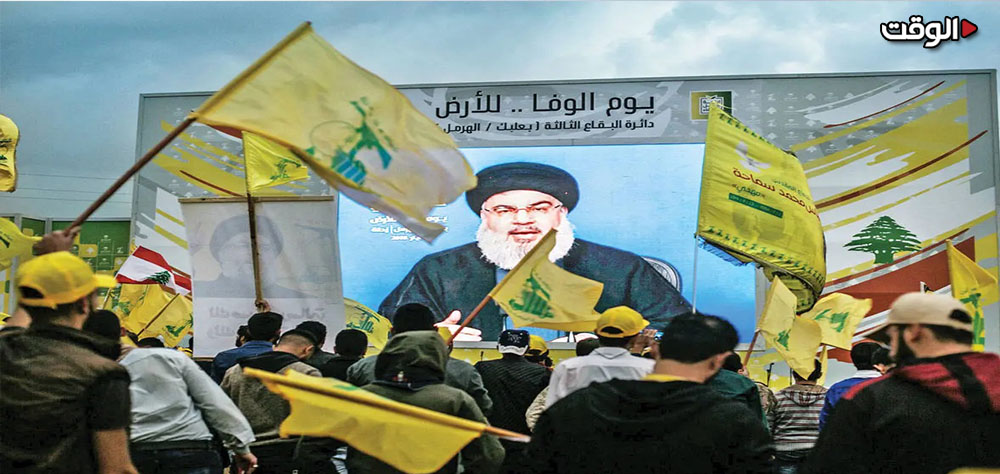
For the past two years, the Israeli regime has tried to use war and assassination to weaken Hezbollah’s military capacity. But experience has shown that completely destroying the movement through military means is not only impossible, but it has actually bolstered the resistance movement’s legitimacy inside Lebanon. On top of that, prolonging the war could push Lebanon toward total collapse and trigger a fresh wave of instability across the region.
At the same time, Hezbollah has maintained a constant security umbrella of attrition warfare against occupied territories, further destabilizing the regime’s already fragile foundations in the post-October 7 era. Washington therefore does not see Netanyahu’s continued bellicosity, which is widely viewed as a tactic to dodge domestic political challenges, as beneficial to the regime’s long-term stability. This is precisely what the White House hopes to achieve through its normalization push. As Trump reiterated on Tuesday, Israel "would have been blown off the face of the earth" if not for the US and him.
On the other hand, Trump, who is keen to preserve his regional deals, knows full well that an expanded Lebanon war could jeopardize any potential agreement with Iran. That’s why he’s publicly calling for Israel to stop the fighting, while simultaneously seeking an alternative way to advance the same goal: weakening or containing Hezbollah. In other words, Trump and Netanyahu do not disagree on strategic objectives for Lebanon, the White House just wants to achieve them at a lower cost to its own Iran deal.
Trump’s comments do not stop there. He goes so far as to say that Netanyahu is incapable of disarming Hezbollah without killing civilians, and suggests that Syria should take on that task instead, a job that takfiri terrorists demonstrated throughout the Syrian civil war they can do just as skillfully as the Israeli army.
In this framework, the new Syria looks like an attractive option from Washington’s perspective. It is a country that after fall of Bashar al-Assad government is desperate for Western and Arab political and economic support, and may prove more vulnerable to foreign pressure.
The project to revive Syrian role in Lebanon
At a deeper level, Trump's comments are reminiscent of the long years of Syrian sway over Lebanon. From 1976 to 2005, Syria was the key player of many security and political developments in Lebanon, effectively acting as its political guardian. Now it seems that some Western and regional circles are designing a new version of this role, indeed, not to support Hezbollah but to contain it.
The key difference, however, is that Syria ruled by al-Sharaa has neither the military power of al-Assad not the historical legitimacy to play a role in Lebanon. So, any push to get involved in Hezbollah case can trigger strong reactions inside Lebanon and revive the bitter days of the Lebanese civil war.
Risk of reactivating Shiite-Sunni fault lines
One of the gravest risks of this scenario is that Lebanon's crisis devolves into an outright sectarian confrontation. If the Damascus government, under pressure from Washington or regional players, moves against Hezbollah, that action would quickly be interpreted, and framed, as a Sunni-Shiite showdown.
This would not just destabilize Lebanon. It could spill over into Syria, Iraq, and even parts of the Gulf. The fact that certain Iraqi resistance factions have already declared their readiness to confront al-Sharaa if he acts against Hezbollah shows that such a scenario has real potential to expand into a regional crisis.
In other words, Washington may be looking to shift the dynamic from a direct Israeli-Hezbollah clash into an intra-regional proxy struggle, one where the political and military costs are borne by Arab and Muslim states, not Tel Aviv.
Two hard choices: Staying al-Sharaa or returning to al-Jolani
Ahmad al-Sharaa now finds himself in a complex bind. On one hand, he needs US, European, and Arab backing to consolidate his rule. On the other hand, he knows that any confrontation with Hezbollah could plunge Syria back into the quagmire of proxy warfare.
Damascus's behavior over the past few months suggests al-Sharaa has so far steered clear of joining military campaigns against Hezbollah. He is well aware that any move in that direction could destabilize his already fragile new government at home and undermine its tenuous legitimacy abroad. Moreover, given the Axis of Resistance's demonstrated capacity for a "unity of fronts" strategy, stretching from Tehran to Sanaa, and from Iraq to Lebanon, stepping into such a dangerous abyss could spell an early end to al-Jolani's rule.
Need for regional cooperation against Washington-Tel Aviv's chaos doctrine
The scenario to drag Syria into Lebanon and to continue the Israeli warmongering in the region should be blocked by a counterproject to force Tel Aviv stop its war and expansionist policy in the Levant.
In this connection, in addition to resolute Iranian support to the stability in Lebanon against the Israeli aggression in the interim deal with the US, Tehran is pressing ahead with these efforts diplomatically at regional level, to secure a key guarantee about Syria not intervening in Lebanon. Evidence suggests that the effort is underway among Iran, Pakistan, Saudi Arabia, Qatar, and Egypt.
While differences exist between Tehran's views and those of Saudi and Egyptian officials regarding Lebanon's internal developments, and while these countries want Hezbollah disarmed, they also do not see it as in their interest to provide cover for continued Israeli aggression and expansionism in Lebanon. Nor do they look favorably upon Washington's project to use the terrorists under al-Sharaa as an Israeli proxy force on Lebanese soil, fueling further regional instability.