














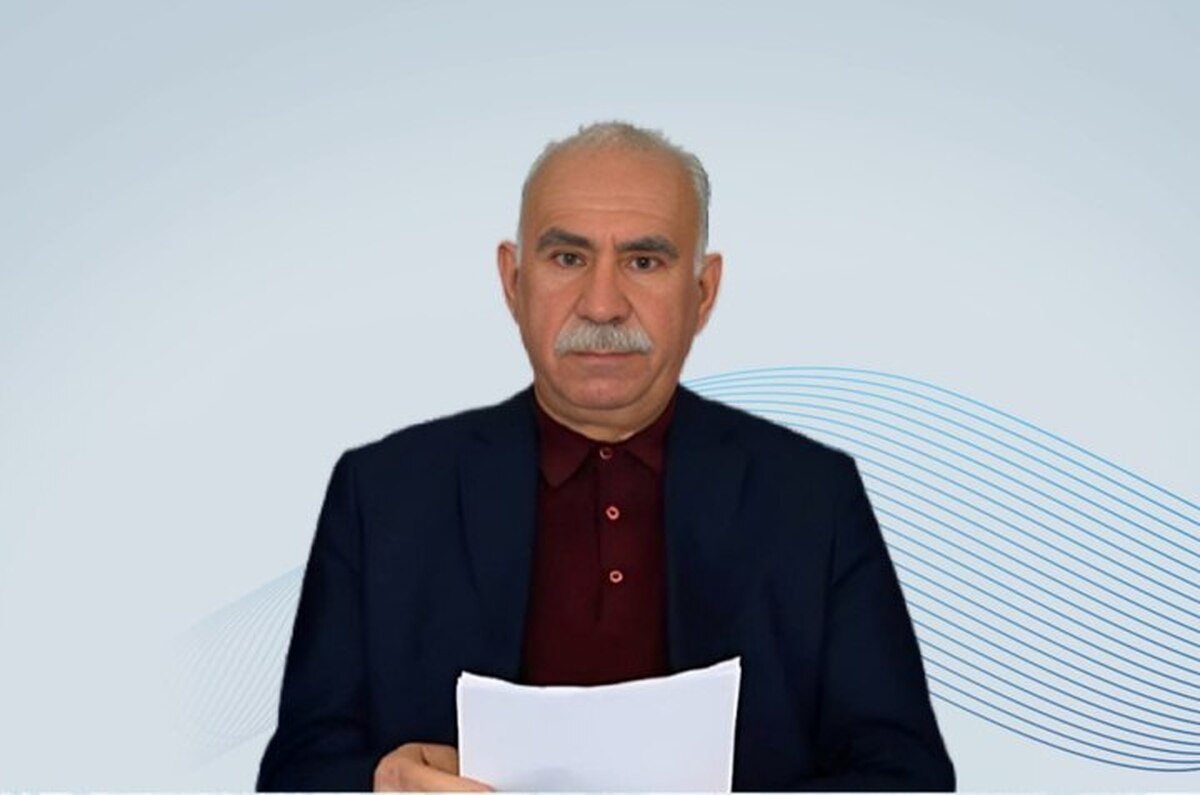


Alwaght- A year after historic letter by the imprisoned leader of the Kurdistan Workers Party (PKK), Abdullah Ocalan, in which he demanded his loyalist militias to put down arms and join a peace deal with Turkey, he has issued his second message to his forces from the prison.
In a message he released on Friday, he said that the violence-based policy should give place to a democratic process based on social integration. He described the party’s decision to dissolve organizationally and end its armed struggle with Turkey not simply a symbolic move, but a practical step to establish an "intellectual reconciliation" with Turkey and to open a new page between the Turkish government and Kurdish community.
Referring to the historical bonds among the ethnic groups living in Turkey, Ocalan said that Turks and Kurds are inseparable and the initial period of formation of new Turkish republic highlighted the concept of unity of the Kurds and Turks. He described his call of disarming as an attempt to revive the "spirit of convergence" and movement towards a "democratic republic."
In his message, Ocalan made it clear that the primary goal of this new phase is to break a cycle "fueled by bloodshed and conflict" and replace it with a process based on political development and social responsibility.
Ocalan further stressed that the aim is not to seize state institutions, but to enable equal participation for all citizens in the political process. The message also framed the "absence of democratic legal mechanisms as a root cause of current crises and tensions," adding that creating space for all groups to freely express their views is essential to overcoming historical rifts.
The PKK was founded in 1978 under Ocalan's leadership, initially seeking an independent Kurdish state through armed struggle. It launched a guerrilla war against the Turkish state in 1984, a conflict that over four decades became one of the longest-running in West Asia, leaving tens of thousands dead. Over time, especially after Ocalan's capture in 1999, the group's official discourse gradually shifted from full independence to democratic autonomy and political rights within Turkey's borders, setting the stage for dialogue and peace efforts.
In late 2024, a new peace process was initiated in Turkey with an initiative from the Nationalist Movement Party, led by Devlet Bahçeli. Following a series of meetings and ongoing talks, Ocalan in February 2025 called for the PKK's armed structure to dissolve and transition to political activity within Turkish law, a move seen as a potential turning point in reducing violence and expanding Kurdish political participation.
Following Ocalan's letter to his loyalists, the PKK declared a ceasefire in May and announced it would end its armed struggle and dissolve its organizational structure. Then in July, a group of guerrillas led by Besê Hozat, co-chair of the Kurdistan Communities Union (KCK) executive council, took the first practical step by symbolically burning their weapons. Just last week, they announced the complete withdrawal of guerrilla forces from Turkish territory.
Turkey is not backing down
Though Ocalan's message is an indication of the PKK's goodwill, Turkish officials have so far shown no flexibility in response and have held their tough security stances towards the party, labeled a terrorist organization by Ankara and a number of other countries.
New Turkish justice minister in his first official standing about "right to hope" for the freedom of the political prisoners including Ocalan has announced that such a right does not exist in current laws and any changes in this case are within powers of the party parliament.
This development comes even as Turkey's Parliamentary Commission on Democracy, Fraternity, and National Unity approved its final report on a "democratic solution to the Kurdish issue" during its February 18 session. Notably, the report makes no direct mention of the "right to hope," instead including only a provision regarding the implementation of European Court of Human Rights rulings, a clause some observers interpret as implicitly tied to discussions around Ocalan's potential release. This apparent lack of flexibility from Ankara is now casting a shadow over the peace process, leaving it fragile and fraught with challenges.
The 51-member parliamentary commission, which includes representatives from 11 of the 12 parties in the parliament, has so far held 16 sessions consulting with a wide range of figures and institutions.
Meanwhile, Turkish officials have held multiple meetings chaired by İbrahim Kalın, head of the National Intelligence Organization (MİT), to strategize negotiations with the PKK. However, due to diverging views between the government and parliament, these efforts have yet to reach a final consensus.
Serious challenge facing peace process
The PKK-Ankara talks, ongoing since the 1980s, have so far seen various ups and downs, amid complex peace efforts. But they have been marred by challenges that have blocked the warring parties' movement to permanent solutions.
In the early years of Erdogan's tenure as prime minister, Turkey showed greater interest in peace and reconciliation with the Kurds. However, mutual distrust, along with political and military pressures, prevented any real progress from being made.
In 2003, Ocalan called on the PKK to observe a new ceasefire. While it was occasionally violated, the truce largely held, and the period was marked by a reduction in violence and efforts to pursue political dialogue.
In 2009, the Turkish government under Erdogan launched formal peace talks with the PKK. Dubbed the "Solution Process" or "Peace Process," the initiative aimed to reduce violence and reach a political resolution to the Kurdish issue.
Throughout 2011 and 2012, the two sides held several rounds of negotiations. In 2013, the PKK called for its members to withdraw to northern Iraq, demanded the release of eight Turkish hostages, and declared a ceasefire. But in July 2015, the talks collapsed. As fighting resumed, the peace process effectively came to an unofficial end, and Turkey launched more stringent operations against PKK members and supporters, particularly in the country's southeast as well as in northern Iraq and Syria.
Over the past year, some PKK-affiliated groups have responded affirmatively to Ocalan's message by handing over their weapons in a show of good faith, signaling a willingness to join the peace track. Still, no tangible breakthrough has emerged in relations between the PKK and Ankara.
Contrary to the wishes of PKK leaders, Turkey has not only refused to back down but has reinforced its positions near PKK strongholds. The CPT team in the Kurdistan Region of Iraq recently reported that despite the peace process and a halt in clashes between Turkey and the PKK, the Turkish army continues to build new military bases, reinforce old ones, construct military roads, blast mountains, and cut down forests in the Kurdistan region, raising concerns about the future of the peace process in Turkey.
As a result, Turkey's hesitation and insistence on maintaining the status quo may prompt the PKK to delay handing over its remaining weapons or halt disarmament altogether, a move that would further erode mutual trust and heighten political and security tensions in the region.
The implications extend far beyond bilateral ties. Heightened distrust and a slowing disarmament process not only limit opportunities for cooperation but also increase the risk of security and humanitarian crises in border areas near Syria and Iraq. Recent experience shows that after clashes between Hay'at Tahrir al-Sham and the Kurdish-majority Syrian Democratic Forces (SDF), some Kurds in the Kurdistan Region called for deploying to northern Syria to support their Kurdish brethrens.
Any further escalation between Ankara and the Kurds could therefore trigger similar local movements against Turkey, including volunteer mobilization, stronger logistical and intelligence networks, and mounting security pressure along Turkey's borders.
On the other hand, domestic pressures inside Turkey, ranging from nationalism and inter-party rivalry to public sensitivity over national security, have prevented Ankara from softening its hardline stance. This conflict between the need for compromise and internal constraints has made the peace process protracted, fragile, and uncertain. In the end, achieving a lasting peace will require concrete changes in Turkey's legal and political frameworks, without which the PKK may well return to armed options.
Though Ocalan's message is a crucial step towards de-escalation and return to the negotiating table, it cannot alone untie the four-decade-long disputes given the existing challenges. Ocalan's message and the recent PKK measures show that true peace goes both ways. So, any unilateralism and Ankara’s resistance to amending the political and security mechanism in the country can yield further tensions and disrupt disarming, and carry serious security and strategic consequences.
In the absence of flexibility and political will, the reconciliation path will not only be long and tough, but also potentially risky and fragile, strongly impacting the future of security and stability in southeastern Turkey in particular and the whole region in general.










