














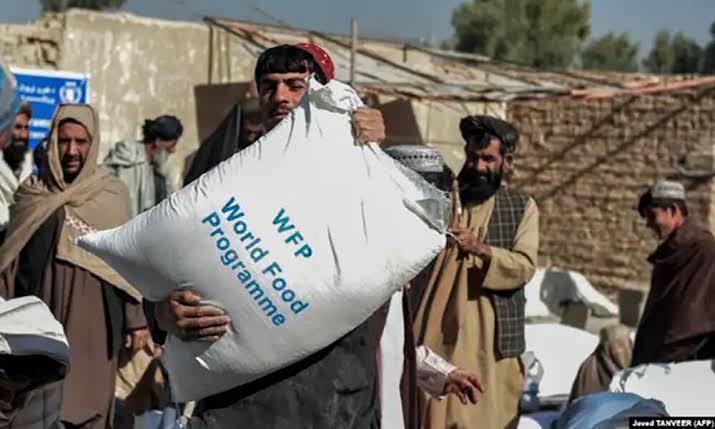


Alwaght- The World Food Programme warns that over 17 million in Afghanistan are facing "acute food insecurity" this winter, up about 3 million from past year.
"New food security figures from the latest Integrated Food Security Phase Classification (IPC) report for Afghanistan indicate that three million more women, men, and children face acute hunger or worse (IPC3+) compared to the 14.8 million last year," the WFP adds.
The report further maintains that around 22.9 million in 2025 have been in need of humanitarian aid, but the decrease in the aid has limited access of millions to food.
For its part, the International Committee of the Red Cross estimates that 22.9 million, almost half of the population, have been in need of aid this year.
Consequently, child malnutrition rates are also projected to rise, with close to four million children expected to be affected in the coming year.
John Ayliff, the WFP's director for Afghanistan, said: “For months we have been warning of an intensifying humanitarian crisis in Afghanistan, and the latest data confirms our worst fears. Our teams see families skipping meals for days and resorting to extreme measures to survive. Child mortality is rising, and there is a risk the situation will worsen in the coming months.”
Multifaceted crisis
Afghanistan is facing multiple crises. Drought is affecting half of the country and has destroyed agricultural products. Struggling economy and falling employment rates have severely sent the people's income and living vulnerable. Adding to Afghanistan challenge is the recent earthquake that has left many homeless.
The return of refugees from other countries is further squeezing the country. Since the start of this year, 2.5 million Afghans have returned home mainly from neighboring countries, many grappling with malnutrition and poverty. Abdul Kabir, the Taliban's Minister of Refugees and Repatriation, has announced that over the past four years, more than 7.1 million refugees have returned to Afghanistan. Approximately the same number are expected to return in 2026.
Tom Fletcher, the UN Humanitarian Coordinator, told the Security Council in mid-December: "Afghanistan is facing multiple simultaneous shocks, including a collapsed economy, consecutive droughts, deadly earthquakes, and restrictions on humanitarian operations. With reduced funding, the UN in 2026 will only be able to focus on 3.9 million of the most vulnerable people, while nearly 22 million will still require assistance."
Humanitarian aid dropping
The WFP has warned that roughly no large-scale international food distribution plan is laid for this winter. In the current year, only around 1 million recent food aid, down from 5.6 million in last year. This drop in aid comes while Afghanistan is grappling with collapsing economy, recurrent droughts, deadly earthquaked, and return of refugees.
Ayliff emphasizes that "we have to once again make Afghanistan crisis a media headline for the most vulnerable Afghans to get the attention they deserve. We have to stand with the people of Afghanistan that depend on vital aid to survive. We have to apply proven solutions to ensure improvement of hope, dignity, and welfare."
The WFP urgently needs $468 million to provide life-saving food assistance to six million of the most vulnerable people in Afghanistan and help them survive the winter.
Ayliff added in a statement: This is Afghanistan's moment of greatest need. Donors have partnered with WFP for decades to save countless lives, especially during critical periods like winter when hunger peaks."
Food crisis at world level
The WFP warns that hunger crisis is not limited to Afghanistan. According to the WFP's global vision for 2026, 318 million people are predicted to face levels of hunger or worse conditions, two times more than the recorded number in 2019.
For the first time this century, simultaneous famines have been confirmed in Gaza and Sudan. The WFP identifies four primary drivers of the global food crisis: conflict, climate change, economic shocks, and displacement. Approximately 70 percent of people facing acute food insecurity in 2025 lived in conflict-affected or fragile countries.
Resilience and crisis coping efforts
The WFP has taken measures to create resilience, adaptation to climate change, and promotion of proper nutrition. For example, this organization and local communities have turned barren lands into agricultural lands and pastures in five Sahel countries. In addition, the WFP's Climate Insurance Programme and the Rural Resilience Initiative (R4) had covered approximately 550,000 households across 18 countries in Africa, Asia, and Latin America by 2023.
The WFP is partnering with governments of 83 countries to strengthen or establish national immunity networks and social support sensitive to nutrition to cover more people in need for urgent food aid. However, severe funding shortages have forced aid efforts to be scaled back and focused only on the most critical needs.
"Unless resources are made available and unimpeded access is granted, the price will be paid in human lives and the undoing of hard-won development gains," WFP warns.