
















Alwaght- In a climate where Trump administration officials speak of prioritizing the option of maintaining the naval blockade to chase the mirage of forcing Iran's surrender, citing neighboring countries' fears of the devastating fallout from launching a new war, the American press landscape still considers it more likely that Trump will pick war at the end of the road.
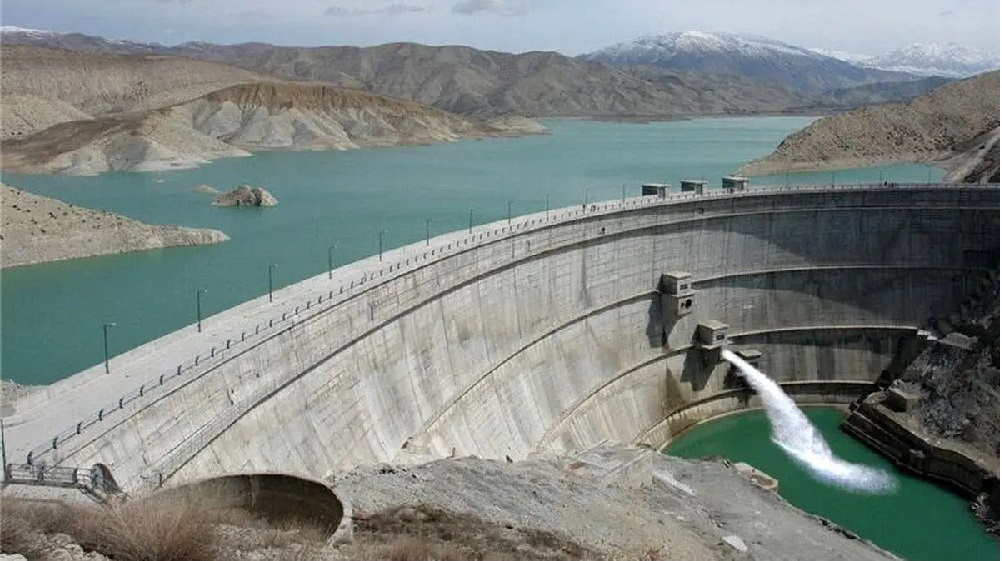
Amid all this, a recent New York Times report casting doubt on the use of dams, one of the country's key energy infrastructure assets, sparked a backlash and prompted Mohammad Baqer Ghalibaf, the parliament speaker and head of the negotiating team, to threaten retaliation in kind.
The authors of the report, through this illogical fear-mongering—asking, first, why Iran has built so many dams across different parts of the country, each accompanied by networks of roads and energy transmission lines, and second, why the US and Israel bombed areas adjacent to dams in many of their strikes during the 12- and 40-day wars, drew a convoluted and utterly wrong conclusion from these questions, suggesting that the dams must serve military and paramilitary purposes. This baseless and unfounded claim, given Trump's previous threats to target Iran's infrastructure, leads analysts and any reader alike toward the notion that dams may be on the list of potential US and Israeli infrastructure targets in a future conflict, and that the report was therefore written essentially to prepare and steer global public opinion toward making it easier to justify such a crime. This inference about the report's probable purpose is by no means unusual, just as the Americans, before invading Iraq in 2003, mounted a media campaign accusing the Baathist regime of stockpiling weapons of mass destruction.
Reacting, Ghalibaf wrote on X: "While laying the groundwork for the next round of attacks on civilian infrastructure: 'Dams near Iran's missile sites have dual-use (military-civilian) purposes.' Very well. New rule: any dam, port, or power plant located near an American or Israeli base has dual-use purposes. We are simply applying your own logic, exactly as it is, without modification."
In rejecting this report, which many dismiss as baseless, it is necessary to recall a few points:
First, the report's foundational assumption—a link between dam construction and military use—is meaningless from both a geographical and an engineering standpoint. A dam is built only in a riverbed, where it is possible to impound water and where economic feasibility, agricultural benefits, fisheries, and power generation justify it; one cannot first build a missile base and then conjure a river for it. Moreover, the report itself concedes that Iran is a hot and arid country; in such a climate, dam construction is an undeniable necessity for confronting years-long droughts and preventing the waste of surface water. Road-building, too, is unavoidable not because of military use but because transporting excavation equipment, materials, and turbines to a dam site is impossible without roads. Put precisely, the sun is its own reason for shining.
Second, the report's assumption that missile cities depend on the power grid and dam water contradicts the logic of Iran's defense engineering. The very thinking that made it necessary for missile cities to be independent of urban networks must inevitably have also accounted for not relying on dam-generated electricity, and independent arrangements, within the structures and the missiles themselves, have been devised to supply the needed power and water.
Third, if the US and the Israeli regime targeted areas adjacent to dams in the past two rounds of attacks, that does not mean the dams are military in nature; rather, it is yet further evidence of the numerous instances of violation of international humanitarian law in war concerning the immunity of civilian places and infrastructure, violations pursued from the very first moments of this savage aggression, with the bombing of a girls' school and the massacre of dozens of children, to the last day of the war.
Fourth, the report is in fact an implicit admission of the failure of the enemy's war strategy: targeting conventional infrastructure such as bridges, railways, and ports did not bring about Iran's military surrender, and now it is the turn of crimes against the lives of citizens. Targeting dams is an act that even ISIS terrorist group in Syria and Iraq refrained from; but it is not far-fetched from the Israelis and Americans whose record includes the Gaza crime and the Minab school. Iran's defense capabilities, and especially its missile cities, proved in the past two wars that they were designed with an asymmetric strategy, threat anticipation, indigenous engineering know-how, and the necessary fortifications; the two aggressors, having despaired of destroying Iran's missile and drone capabilities, have resorted to the filthiest form of infrastructure warfare, namely targeting dams.
Therefore, the publication of such a report can be seen as a message aimed at whitewashing the reckless act of targeting dams and hydroelectric plants. But Ghalibaf's response showed that Iran's strategy of reciprocal and beyond-the-region response will not waver or change in any way. The host countries of American bases must now worry not only about blackouts but also about water shortages resulting from the targeting of desalination facilities and water transmission lines, and even about being submerged by water behind the dams.