








Alwaght- Having failed in the 40-day war to advance its agenda against Iran, the US over the past months has embarked on a strategy of blockade and economic pressure, and in its latest effort, it is expanding its ban to the northern parts of Iran.
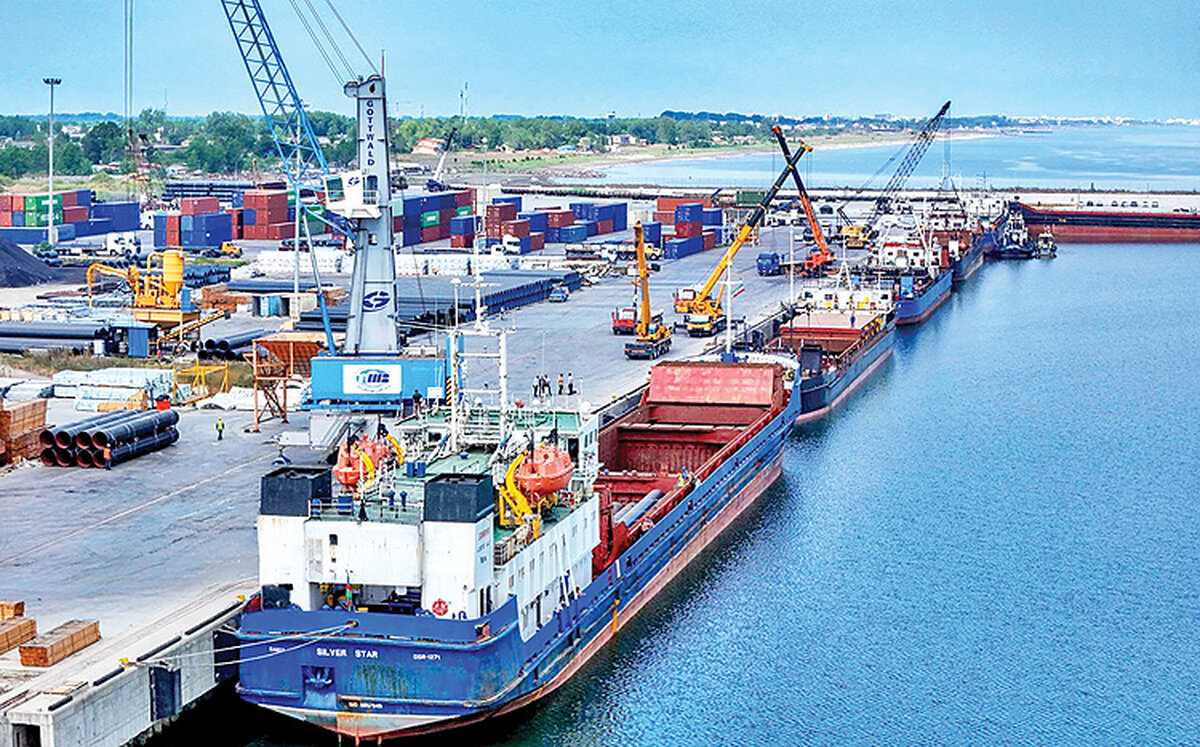
In this regard, the US Central Command (CENTCOM) announced on Sunday the formation of a task force called "Iron Gate", a move signaling that Washington intends to extend the reach of its pressure campaign against Tehran beyond maritime routes and place Iran's land borders and the Caspian Sea at the center of its new efforts.
The task force will operate with both military and civilian US personnel, and its core mission is described as coordinating with other government agencies to prevent the transfer of advanced weaponry, dual-use technologies, and sanctioned goods via Iran's overland routes and the Caspian Sea.
According to CENTCOM's statement, 20 military and civilian personnel are assigned to the task force, which is headquartered at CENTCOM's main command center in Tampa, Florida. The statement says the Iron Gate task force is responsible for coordinating among various US government departments to carry out this mission.
American limits in Iran's north
Despite the propaganda blitz mounted by Washington officials, putting this scenario into practice faces a host of challenges and constraints.
To enforce its new sanctions, the US government needs cooperation from a number of countries and is counting on Russia's backing as well. Yet Moscow, given its close ties to Tehran, has refused to go along with the US on either the naval blockade of southern Iran or previous air and land restrictions. It is therefore unlikely that Russia would bend to Washington's wishes at this stage and join an economic campaign against Iran, especially since the Caspian route is part of the strategic North-South Corridor, where Russia holds considerable commercial interests.
Azerbaijan and Turkmenistan, by virtue of bordering the Caspian Sea, could also be on the list of participants in this land blockade, but they too are unwilling to enter such a campaign out of good-neighborly considerations, particularly since Tehran has repeatedly warned regional countries about the consequences of cooperating with Washington's policies.
Because Iran serves as the linchpin connecting Central Asia and the Caucasus in overland trade, Baku and Ashgabat will not step into Washington's dangerous game at the expense of their own economic interests, since doing so would also sever interactions across the two shores of the Caspian Sea.
Reliance on military power
Given the refusal of Caspian Sea littoral states to align with the blockade policy, Washington has only two options before it to advance this difficult plan.
One option for Washington is to use Turkish and Ukrainian territory. As for Turkey, it can be said that because of its neighborly ties with Iran and its concern over the political and security fallout of heightened tensions, Ankara will not take part in such an operation or allow its soil to be used by the US to attack Iranian ships in the Caspian. Turkey likewise declined to go along with Washington's policies during previous air and land restrictions against Iran.
Washington may, therefore, turn to Ukraine as its only available option to advance this scenario, hoping Kyiv will disrupt Iran's trade and exchanges by launching missile strikes on Iranian commercial vessels in the Caspian Sea. It is worth noting that Ukraine targeted an Iranian ship in the Caspian on July 24, but subsequently was forced to apologize amid concerns over Tehran's reaction.
Given Iran's firm stance against any infringement on its national interests, it is far-fetched that Kiev would again accept the risk of entering such a confrontation, especially since Ukraine is currently embroiled in a war of attrition with Russia, and opening a new front with Iran could impose fresh military and political costs on the country.
That being the case, to advance such a scenario, America will be forced to rely directly on its own military power. Washington would have to use its fighter jets to target Iranian commercial vessels in the Caspian Sea, an option that, given the absence of a US military base near the sea, would come with serious operational and logistical difficulties.
All this comes as any direct attack on Iranian commercial vessels would effectively mean the start of a new round of military confrontation with Tehran.
Preventing Russian arms supply to Iran
Although Washington is trying to give the impression that the new plan had long been on the agenda, the unveiling of this initiative appears not unrelated to the important Moscow trip by Major General Mohsen Rezaei, secretary of Iran's Supreme National Security Council.
The significance of the visit grows when one considers that American media have claimed one of the topics under negotiation was the delivery of S-400 air defense systems, and that, according to these outlets, 90 advanced launchers have also been delivered to Iran. If these reports are accurate, the deployment and operationalization of the S-400 could significantly bolster Iran's air defense capabilities against advanced American and Israeli fighter jets.
On the other hand, according to American media, the launchers in question are designed for use with Russia's lightweight multirole guided missile known as the LMUR or Izdeliye 305, a precision missile that can also strike moving targets.
Despite the circulation of these unofficial reports, Iran has no need for Russian launchers and has achieved full self-sufficiency in the missile manufacturing and launch industry, producing hundreds of such systems based on indigenous capabilities and stockpiling them in its missile cities. From this standpoint, it is plausible that Moscow's potential cooperation on delivering advanced air defense equipment is tied less to supplying missile launchers than to strengthening Iran's defensive capacity against possible American attacks, particularly on Pickaxe Mountain facility.
Washington has therefore focused on blockading the Caspian Sea as Iran's link to Russia, hoping to control this strategic waterway and prevent any potential transfer of Russian weaponry to Iran by ship. The stated goal of halting arms shipments as one of the new plan's objectives reinforces this hypothesis.
Taking all of the above into account, Washington is seeking to tighten the ring of encirclement around Iran through its new "Iron Gate" initiative, in the hope of crippling its economy and forcing Tehran to capitulate.
However, months of blockade in the Strait of Hormuz demonstrated that such scenario does not bear the result favorable to Washington. As Iran has managed to export its oil and other products in defiance of the US naval fleet, in the Caspian Sea, which is way beyond the American reach, Tehran will continue to circumvent the sanctions.