
















Alwaght- While the US President Donald Trump over the past few weeks has been campaigning for the citizens to vote Republican in the midterms and he did so to the last hours and even, citing his support, confidently predicted landslide win for the GOP, the election outcome turned exactly against him, and the Republicans lost both the Senate and the House of Representatives.
With most votes now counted, Democrats have captured majorities in both chambers, holding 231 House seats to the Republicans' 144 and 54 Senate seats to their 44, with uncounted ballots in several states likely to expand their advantage.
The outcome took shape against a backdrop in which the war with Iran, soaring living costs, surging energy prices and discontent with the Trump administration's performance had become the defining themes of the election.
As a result, many internal media outlets and analysts argue that the war with Iran played a pivotal role in the Republicans' defeat; that Americans, by withholding their votes from Trump's co-partisans, registered their opposition to his hawkish policies and delivered a resounding "no" to the war with Iran.
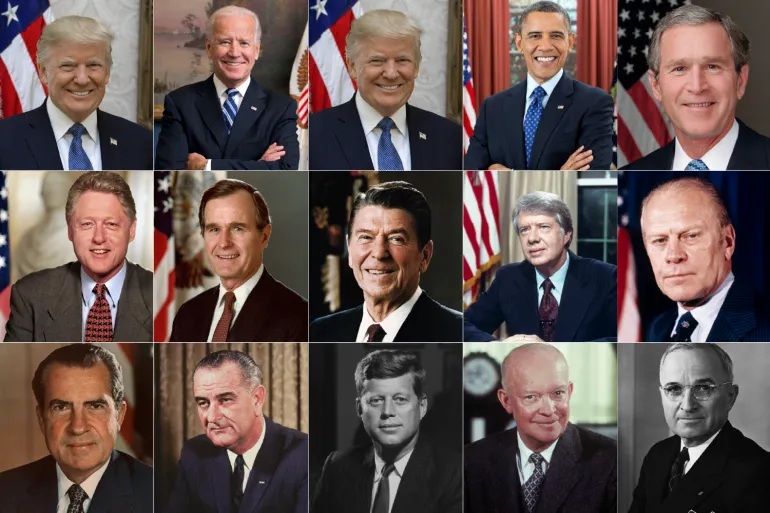
The defeat echoes a recurring pattern in American political history: a president who enters the White House promising military swagger and an aggressive foreign policy can, in time, see his political capital erode under the human, economic and political costs of war, and his party pays the price at the congressional ballot box.
In 18 of the 20 midterm elections held between 1946 and 2022, voters stripped congressional seats from the party holding the White House, an average loss of 26 House seats. Only Bill Clinton's Democrats in 1998 and George W. Bush's Republicans in 2002 bucked the trend.
Democratic presidents have absorbed the heaviest midterm losses since 1946. On average, their party has shed roughly 29 House seats in a midterm cycle, compared with about 23 during Republican presidencies.
Before the current cycle, in which Trump inflicted one of the Republicans' heaviest defeats, the biggest drubbing came in 2010, two years after Barack Obama became the first African American elected president. Democrats lost 64 House seats and Republicans seized control of the chamber. Democrats under Truman lost 56 seats in 1946 and under Clinton lost 54 in 1994, surrendering the House both times.
The Republicans' worst midterm losses came under Dwight Eisenhower in 1958 (50 seats) and Gerald Ford in 1974 (48 seats). In the first Trump midterm, in 2018, Republicans lost 42 seats and control of the House.
In Senate races, the president's party has lost control of the chamber in only six of the 20 midterms since 1946: 1946, 1954, 1986, 1994, 2006 and 2014.
Vietnam War and start of erosion of political power of Lyndon Johnson
One of the most instructive historical examples of a foreign war shaping the electoral fortunes of an American governing party is Lyndon Johnson's presidency during the Vietnam War.
Johnson swept to power in the 1964 presidential election with a landslide victory over Republican Barry Goldwater. At the time, the Democratic Party also commanded a substantial majority in Congress. Yet as America's military intervention in Vietnam expanded, the American death toll mounted, the war's costs ballooned and the administration proved unable to articulate a clear vision for victory, public support for the government steadily eroded.
In the 1966 congressional midterms, Democrats lost 47 House seats and four Senate seats. Though they retained majorities in both chambers, 248 to 187 in the House and 64 to 36 in the Senate, the defeat marked the end of an era of political dominance and easy legislative wins for the Johnson administration.
The war's political consequences became starker still in 1968. Anti-war protests spread across American campuses and cities, and a deep rift opened within the Democratic Party, so deep that Johnson announced he would not seek reelection. In that year's presidential race, Democrat Hubert Humphrey lost to Republican Richard Nixon. Research on the 1968 election identifies the Vietnam War as a primary driver of the collapse of intraparty trust among Democrats and of the weakening of their nominee.
Congress's most important response to the legacy of the Vietnam War was to rein in the president's war powers: in 1973, lawmakers passed the War Powers Act, requiring the administration to notify Congress within 48 hours of deploying military forces into foreign hostilities and to end the deployment after 60 days absent congressional authorization, with a possible 30-day extension for withdrawal.
Richard Nixon vetoed the measure, but Congress overrode him with a two-thirds vote in the Senate, one of the most significant historical examples of a president being overruled by congressional will on war policy.
George W. Bush's struggle with Afghanistan and Iraq war results
A clear and closer example to today's conditions is presidency of George W. Bush who waged two wars, one against Afghanistan and one against Iraq. The US invasion of Afghanistan came in October 2001, in the wake of the September 11 attacks. In March 2003, the Bush administration launched its assault on Iraq, citing the alleged presence of weapons of mass destruction and the need to counter security threats, but after Saddam Hussein's regime fell, no such weapons were ever found. Iraq then slid into a period of insecurity, armed insurgency and sectarian violence, while Afghanistan, despite the toppling of the Taliban, became a protracted battlefield.
Rising American military casualties, spreading insecurity, mounting war costs and the Bush administration's failure to establish stability steadily eroded public support for both wars.
The fallout became unmistakable in the 2006 congressional elections: Democrats picked up 31 additional House seats, bringing their total to 233, while Republicans, hemorrhaging seats, were left with 202 and surrendered their majority to the opposition.
In the Senate, Republicans lost six seats; Democrats posted a net gain of five, with one seat going to an independent. The chamber ultimately split 49 Democrats, 49 Republicans and two independents who caucused with the Democrats, handing Democrats the majority.
Exit polling from ABC News stations laid bare the scale of the discontent: 56 percent of voters disapproved of how the Iraq War was being handled, and 57 percent did not approve of Bush's job performance.
The Republican defeat was more than an electoral verdict, it put direct pressure on the Bush administration's decision-making structure. Three days after the election, Defense Secretary Donald Rumsfeld, one of the chief architects of the Iraq War, resigned.
A more consequential moment came in 2007, when Bush, defying a large swath of Congress and public opinion, ordered roughly 20,000 additional troops to Iraq under the so-called "surge" strategy. In February 2007, the House passed a nonbinding resolution opposing the decision; the Senate then passed legislation funding the war that would have required a phased withdrawal of US forces, but Bush vetoed it, and Congress could not muster the votes to override.
Defeat pattern repeats itself for Trump
Now, Trump finds himself in circumstances that in some respects echo the experiences of Johnson and Bush, and many analysts read the 2026 election results as tracking that same historical pattern, except that this time the central issue is the war his own administration launched against Iran.
A post-election report from Northeastern University identified dissatisfaction with the Iran war, rising gasoline prices and living costs, immigration policy and economic anxieties as key drivers of the Democratic victory. The report also stressed that the outcome does not necessarily amount to a full endorsement of the Democrats' political agenda, but was in part a negative reaction by voters to the sitting administration's performance.
The core problem for Trump, in effect, is that his aggressive foreign policy is now entangled with economic pain and domestic discontent.
Beyond direct military costs, the war feeds through to energy prices, markets, transportation costs and the purchasing power of American households, which is why even citizens who do not directly oppose the administration's foreign policy may feel the war's costs in their daily lives.
The Democrats' sweep of both chambers, particularly given that Republicans controlled the Senate and House going into the election, severely weakens Trump's political standing. House committees can investigate military decisions, the costs of the Iran war, defense contracts, the Pentagon's performance and the legal basis for military operations.
Subpoenaing administration officials to testify and demanding documents and information can likewise become instruments of political pressure, and this defeat in the presidential and congressional elections may repeat itself in 2028, with Democrats capitalizing on public discontent with Trump's policies to seize power in both the White House and Congress at once.