














Alwaght- Cairo began to face a key question about future of its regional policy when recently Egyptian President Abdel Fattah el-Sisi declared the country's readiness to take actions in defense of Saudi Arabia should Riyadh requested. The president also called on the parliament to issue authorization for such an action.
Here is the question: Is Egypt about to enter the Yemeni war more seriously? Or is this position a soft effort to back Saudi Arabia and contain fallout of an unfolding crisis in the Red Sea rather than a prelude to a military intervention against Yemen?
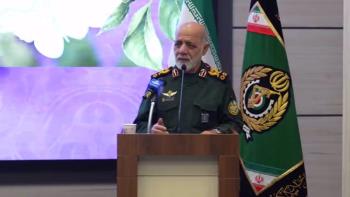
Addressing the graduation ceremony of cadets in Cairo, el-Sisi said on Saturday Egypt does not approve of damage to the Saudi security and stability, but it does not intend to attack any party or participate in a war. He said that potential military action needs go-ahead of the parliament and called for an emergency session for the lawmakers to approve such an authorization. The Egyptian parliament said it will discuss the president's request on Sunday.
This positioning comes as Ansarullah's escalating maritime and aerial pressure on Saudi Arabia has fueled mounting concerns in Riyadh over the security of critical facilities, maritime trade networks, and the kingdom's oil exports. Saudi Arabia now confronts a multifaceted challenge: on one front, it must shield military bases, government infrastructure, and oil installations scattered across the country; on another, it is seeking to broaden regional support to ease the fallout from disrupted sea lanes and security threats.
Against this backdrop, Riyadh's gaze toward Cairo takes on added significance. Egypt commands considerable political and military weight in the Arab world, and its control of the Suez Canal, coupled with the direct link between its national security and the Red Sea and Bab-el-Mandeb Strait, makes it a pivotal player in the region's power equations. Yet, this very strategic dependence on Red Sea security places Cairo in a bind: entering the war might strengthen cooperation with Saudi Arabia, but it simultaneously raises the risk of the conflict spilling into the very corridor on which Egypt's economic security depends.
From this dimension, el-Sisi's declared readiness cannot by itself be read as a definitive signal that Cairo has decided to enter the war directly. Understanding Egypt's trajectory requires weighing three factors in tandem: its experience with limited participation in the Saudi-led coalition against Yemen in 2015; Cairo's track record with Sanaa and the impact of the Gaza war on Red Sea dynamics; and, finally, Egypt-Saudi economic and security ties, which have grown more consequential amid recent developments and the question of the Mecca Pact, an agreement signed between Pakistan, Saudi Arabia, and Turkey on August 7, in a bid to protect provide collective protection to members.
2015 experience: Why's Egypt avoiding direct involvement in Yemen war?
The first factor in assessing the possibility of Egyptian military intervention in Yemen is direct bond between Red Sea and Bab-el-Mandeb Strait security with economic and strategic interests of Cairo. Suez Canal is one of the central routes of international trade and a key lifeline to the Egyptian economy, and indeed any instability in southern Red Sea can undermine the route's significance and the transit incomes of Egypt. So, Egypt cannot solely view the consequences of war within the framework of its ties to Saudi Arabia or regional rivalry. Actually, any shock in Bab-el-Mandeb directly passes to the Egyptian economy.
This same consideration has been one reason for Egypt's caution toward Saudi Arabia's aggressive policies in Yemen over the past years. Cairo formally joined the Saudi-led coalition in 2015, but its participation never rose to the level of a direct and extensive role in the war, remaining largely confined to political and propaganda support. That experience demonstrated that political alignment with Riyadh does not necessarily mean accepting the costs of a protracted military intervention.
Now, that same consideration confronts Egyptian decision-makers once again, only under more complicated circumstances. The experience of US and Israeli confrontation with Ansarullah's naval and missile capabilities since the Gaza war began has shown that military engagement with Sanaa can have repercussions far beyond the Yemeni battlefield. From this standpoint, Egypt's entry into the war is not only no guarantee of ending Ansarullah's pressure on Saudi Arabia, it may open a new front in the Red Sea against Cairo's own interests.
For this reason, even if Cairo undertakes military action at Saudi Arabia's request, a distinction must be drawn among the various forms of participation. Strengthening Saudi air defenses, cooperating on Red Sea navigation security, and providing military and logistical support are options distinct from deploying troops or directly participating in strikes against Sanaa's positions. Under current conditions, Sisi's mere declaration of readiness cannot be equated with a definitive choice of that last option.
Cairo's calculation also rests on the assessment that military operations may yield short-term gains but will not necessarily produce lasting security and stability. From this perspective, escalating the conflict with Ansarullah could drive up Egypt's military and economic costs without offering any guarantee of long-term protection for shipping lanes.
In this regard, Cairo sees the Yemeni case, at least currently, open to separation from broader confrontation with Iran. This approach rests on the assumption that escalation between Saudi Arabia and Yemen, without root settlement of crisis, only instigates further instability in the region rather than enhancing Arab security, a situation that can play into hands of Israeli regime.
Egypt's position regarding creation of a Saudi-led sea coalition is also part of this reservation. On July 30, Riyadh announced an international meeting to discuss a coalition aimed at protecting shipping in the Red Sea, days after Ansarullah resistance movement of Yemen announced a maritime ban on Saudi Arabia in response to 11-year Saudi blockade on Yemen. Egyptian Foreign Minister Badr Abdelatty, noting his country's participation in relevant meetings, stressed that agreements on military commitments must be carefully scrutinized so that the appropriate decision can be made. These remarks, alongside Cairo's earlier positions, show that Egypt draws a distinction between the necessity of security cooperation with Saudi Arabia and accepting direct military commitments.
Merit Mabrouk, a researcher at the Middle East Institute in Washington, likewise told AFP on September 14 that Mohammed bin Salman is seeking guarantees that Egypt will intervene if necessary to protect Bab-el-Mandeb. Still, she described Cairo's stance as cautious, saying Egypt will not enter a military confrontation that does not serve its interests and that can be avoided.
As a result, the 2015 experience remains essential to understanding Egypt's current behavior. Cairo may raise the level of its security cooperation to prevent further erosion of Saudi Arabia's position and to protect maritime routes, but that in itself does not mean it is prepared to enter a direct and grinding war.
Sana'a-Egypt relationship: From mediation to Gaza war reservations
To understand the caution Egypt exercises regarding Yemen war, we should not just see the security and economic concerns of Cairo. We should also take into account the record of Cairo ties to Sana'a and the developments that followed Gaza war in the Red Sea. This record shows that Egypt's relations with the Yemeni side cannot be assessed solely through the lens of the Saudi-Ansarullah alignment or regional rivalries.
One notable example is the developments following the April 2022 ceasefire agreement between Yemen's warring parties, brokered by the United Nations. Under the two-month truce, military operations halted and commercial flights from Sana'a airport were permitted, an airport that had been closed since 2016 under the blockade imposed by the Saudi-led coalition.
At that time, Egypt emerged as one of the few routes available for Yemeni flights. This can be read as a sign of space for engagement and a more flexible approach in Cairo's policy toward Sana'a, though it is not sufficient on its own to conclude that a political agreement or strategic cooperation exists between the two sides.
The significance of this history today lies in the fact that Egypt, contrary to the image that might be presented of a fully aligned ally of Saudi Arabia on the Yemen case, has in practice maintained independent considerations. To safeguard its interests in the Red Sea, Cairo needs de-escalation and to prevent the conflict from widening, a goal that at certain junctures may be pursued not through military confrontation but by keeping communication channels open and through mediation.
From this perspective, one option before Egypt could be to leverage its communication capacity to mediate between Saudi Arabia and Ansarullah. Mohammed Mujahid al-Zayat, a former Egyptian intelligence official and strategic affairs expert, has raised this possibility, saying Cairo could draw on its channels with Tehran to facilitate dialogue with Ansarullah. The meeting between Abdel Fattah el-Sisi and Iranian President Masoud Pezeshkian on the sidelines of the BRICS summit in New Delhi is noteworthy in this context as well, though the available information is insufficient to conclude that a specific mediation initiative has taken shape.
Gaza and Egyptian public opinion: A variable that cannot be ignored
Another factor in Cairo's calculations is the place of the Palestinian cause in Egyptian public opinion and how Egyptian society reacts to Ansarullah's role in the Gaza war. By entering into confrontation with Israel in support of the Palestinians, unlike the approach of many Arab governments, Ansarullah sought to link support for Gaza to military action and pressure on maritime routes. That approach, alongside the long-standing blockade of Yemen and its humanitarian fallout, can shape how segments of Egyptian public opinion read current developments.
Throughout the Gaza war, Egyptian society has witnessed the vast scale of the siege, the destruction of infrastructure, and the suffering of Palestinian civilians. In such an atmosphere, any military action against Ansarullah may run up against the question of why a country that has taken a stand in support of the Palestinians and against the blockade of Gaza should now be a target of attack, particularly when the blockade of Yemen has for years imposed heavy humanitarian consequences on its people.
The Palestinian cause and public sensitivity to the Gaza war are therefore variables Egyptian decision-makers cannot ignore.
On the other side, Egypt itself has been harmed by the expansion of the Gaza war and the insecurity of the Red Sea. The decline in ship traffic through the Suez Canal shows that the regional crisis, even without the war spreading directly onto Egyptian soil, can squeeze the country's economic interests. Cairo thus faces two imperatives at once: preventing insecurity from spreading across maritime routes and avoiding any action that would intensify the war and drive up its security and political costs.
This duality makes mediation an option worth examining for Egypt. Cairo can, while declaring that it maintains defense cooperation with Saudi Arabia, use its communication channels with Tehran and the Yemeni side to reduce tensions. Such an approach would allow Egypt to preserve its role in the Red Sea equation without entering the war directly, though realizing it depends on the will of the parties involved and the emergence of the necessary political groundwork.
Overall, Egypt's track record of engagement with Sana'a and the Gaza war's impact on the region's political climate show that Cairo's policy toward Yemen is not simply dictated by Saudi requests. Alongside its alliance considerations with Riyadh, Egypt must weigh the potential costs of confrontation with Ansarullah, public sensitivity toward Palestine, and the imperative of protecting the Suez Canal. These very factors could push the range of Cairo's options toward limited support, defense cooperation, and mediation, not necessarily direct participation in strikes against Yemen.
Egypt and riddle of Mecca Pact: Is Riyadh seeking to buy Egypt's military backing?
To analyze Egypt's behavior, we should not turn a blind eye to a crucial development in Cairo-Riyadh relations, which is the absence of Egypt from the trilateral Mecca Pact. This raises a fundamental question: why has Saudi Arabia been unable, or unwilling to bring Egypt, one of the Red Sea's key players, into a shared framework when shaping regional security arrangements? And on the flip side, does Cairo still lack the appetite to bind itself to Saudi military commitments on the Yemen file?
The announcement of a trilateral Pakistan-Saudi-Turkey agreement in Mecca, meant to serve as a deterrent by extending a nuclear and military defense umbrella over Saudi Arabia, was a bombshell that quickly proved ineffective and performative in its first real test. Despite the three parties' declared commitment to joint military defense, the Saudis have found their expectations of this military alliance unmet during the war with Sana'a.
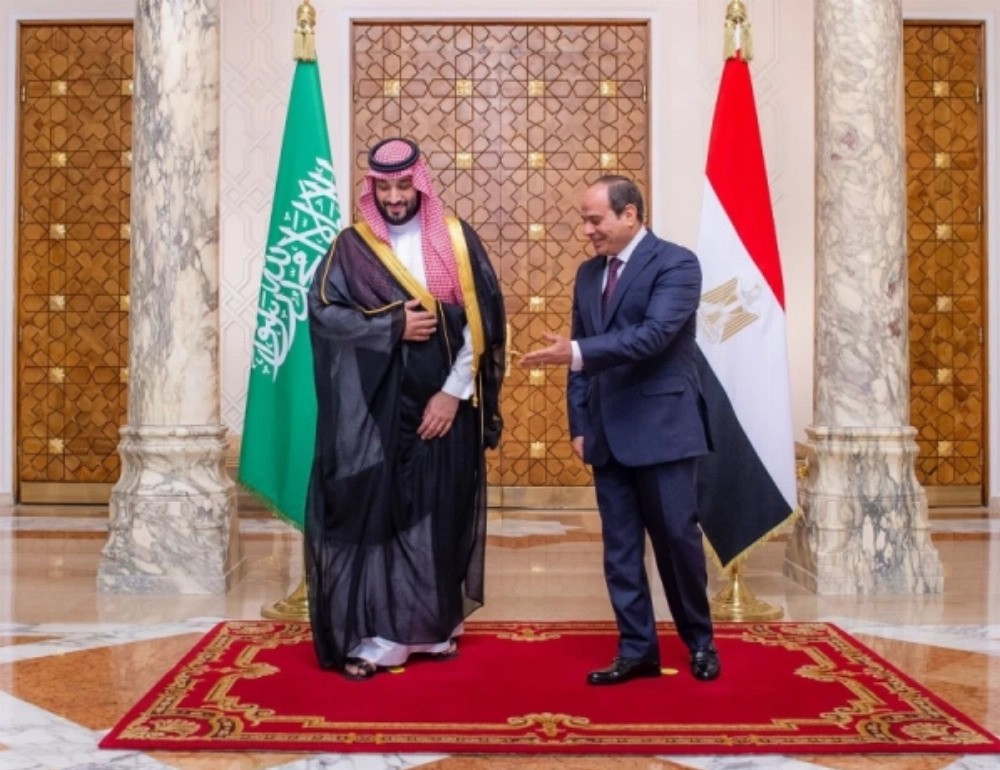
That is what prompted Mohammed bin Salman, Saudi Arabia's crown prince, to travel to Egypt on September 15, just five days after Ansarullah seized control of Yemen's western coast and consolidated its hold on the Bab-el-Mandeb Strait and surrounding islands, to enlist the support of one of the most important Arab players in the Red Sea.
One notable dimension of these relations is the timing of bin Salman's trip, which coincided with the approaching maturity of Saudi Arabia's $5.3 billion deposit at the Central Bank of Egypt. Al-Masry Al-Youm published a report on September 16 about the imminent repayment date of the deposit, a matter that was known in advance, but whose reemergence at the time of the crown prince's visit fueled speculation about a possible link between the two countries' financial and security relations.
The next day, a senior source at Egypt's Ministry of Finance told the Al-Mansah website that a preliminary agreement had been reached to extend the $5.3 billion Saudi deposit and inject $10 billion in new Saudi investment into Egypt. The report, however, was not officially confirmed and cannot be treated as a definitive agreement between the two countries.
According to Central Bank of Egypt data in its "External Position of the Egyptian Economy" report, Saudi Arabia's medium- and long-term deposit, with an original value of $5.3 billion, was due to mature in October 2026. Total obligations related to the deposit by the end of its maturity period in the second half of 2026 were estimated at about $5.434 billion, $5.3 billion in principal and roughly $134.8 million in accumulated interest.
The deposit is part of Arab countries' long-term deposits at the Central Bank of Egypt, which total about $9.3 billion, a figure that includes $5.3 billion from Saudi Arabia and $4 billion from Kuwait.
The maturing of foreign debt has coincided with a shortfall in Cairo's revenue from the Suez Canal. According to available data, Suez Canal revenue in the 2025-2026 fiscal year reached about $4.67 billion, roughly half the figure recorded before the Red Sea shipping crisis began. Data from the IMF's PortWatch platform also shows that average daily transits through the Suez Canal remain below half their level before the Gaza war began in 2023.
Egyptian Foreign Minister Badr Abdelatty said on September 14 that losses from the decline in ship traffic through the Suez Canal had reached about $11 billion. That figure shows the Red Sea security crisis, despite unfolding outside Egyptian territory, has imposed a heavy economic cost on the country.
Therefore, with Egypt under economic pressure and in need of financing, extending the Saudi deposit and the possibility of new investment could have been a lever to encourage Cairo to play a more active role in the Yemen war.
Yet despite speculation about the aims of bin Salman's trip, published assessments indicated that the public results of the meeting went no further than Egypt's political and moral support for Saudi Arabia. This underscores the gap between Riyadh's urgent need for military support and Cairo's desire to avoid direct intervention.
Saudi air defense shortage: Egyptian defense umbrella on Saudi sky?
In their reports on bin Salman's visit, Western media mainly talked about possible deployment of Egyptian air defenses and missiles to the kingdom.
On September 16, The Washington Post, citing regional officials, reported that bin Salman's visit was aimed at seeking support from allies as Riyadh's air defense missiles have been depleted during war with Yemen.
The AP also reported the same day that Saudi Arabia was weighing regional defense options and seeking military assistance from countries including Egypt, France, Britain, and Pakistan. According to the agency, the Saudi crown prince's trip to Cairo was part of an effort to expand a regional defense support network, though Egypt, despite its regional weight, was seen as unlikely to send its forces to Yemen.
Reuters likewise reported on September 14 that Egypt and Saudi Arabia were strengthening defense coordination as part of Riyadh's broader effort to explore security and military support, but its report made no mention of an actual deployment of Egyptian forces.
In general, these reports indicate that Saudi Arabia is seeking to ease the pressure on its military systems by broadening defense cooperation and to reduce its reliance solely on domestic capabilities or support from extra-regional powers. Under such conditions, Egypt can play a role in areas such as air defense, intelligence sharing, logistical support, and protection of shipping lanes, without necessarily entering ground operations or direct strikes against Ansarullah positions.
Still, a distinction must be drawn between strengthened defense coordination and the formation of an operational coalition for war. The available reports point to increased contacts and Saudi efforts to rally regional support, but they do not on their own show that Egypt has accepted a commitment to deploy forces or take part in strikes against Yemen.
Consolidating the Egypt-Saudi axis in response to the changing security environment of the Gulf and the Red Sea matters to both countries, but it remains unclear whether this cooperation will take shape as a clear, binding military mechanism. In the absence of such a mechanism, Egypt's support for Riyadh is likely to remain largely confined to political positions, limited defense cooperation, and efforts at security coordination.
In the meantime, the option of Egypt mediating directly with Ansarullah remains on the table. Cairo, on one hand, enjoys close political and economic ties with Saudi Arabia; on the other, thanks to its channels with Tehran and its stake in Red Sea security, it could, if conditions allow, play a role in reducing tensions. Such a role would at least strategically allow Egypt to be present in shaping regional security arrangements without entering the war directly.
On the other hand, any major military obligation can put Cairo in a difficult condition that includes involvement in a war unclear when to end, increased possibility of attacks on Egyptian interests in the Red Sea, and bearing economic and political costs. That is why even though Saudi call for support was met with positive response of Cairo, the form and range of this support remains a determining issue.