
















Alwaght- Land transportation routes and border terminals and crossings as key pillars of regional security and international trade play a growing role in the Iranian economic bonds with neighboring states. Therefore, any disruption of these trade arteries can fast impact foreign trade, something showing itself on the Iranian-Iraqi borders these days.
Iraq closed its land borders with Iran on Saturday, shutting down the Shalamcheh and Chazabeh crossings and suspending flights from Basra to Iran.
Iraq's Security Media Center announced that relevant security agencies have launched administrative and security restructuring operations at several border crossings, necessitating their temporary closure.
According to the center, a series of required legal measures has been taken, and intelligence, investigative and inquiry efforts have been intensified to determine the circumstances behind violations that occurred at these crossings and to develop appropriate remedies. Two crossings, Zurbatiyah and Al-Mundhiriyah, remain open to travelers.
The deputy governor of the Iranian border province of Khuzestan for security and law enforcement announced that, according to Iraqi authorities, the Shalamcheh and Chazabeh borders are closed to pilgrims and traders until further notice. Accordingly, merchants, drivers and passengers have been urged to refrain from heading to these border terminals until an official reopening is announced.
Economic significance of Shalamcheh and Chazabeh
While the closure of Iran-Iraq land borders may prove short-lived, the weight of Baghdad's decision comes into sharper focus when you consider the role the two crossings play in trade between the two neighbors.
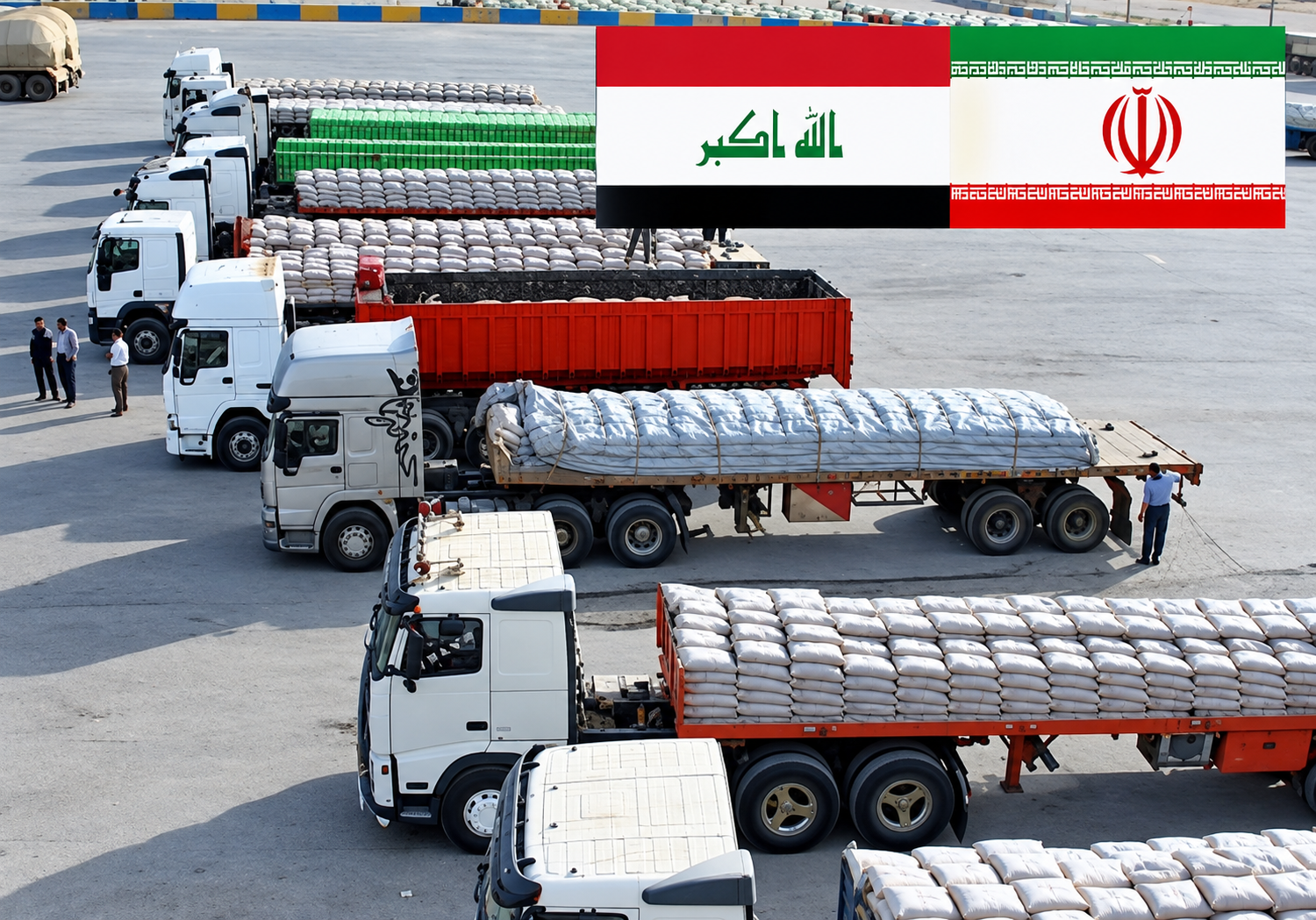
Shalamcheh is one of the most important land crossings between the two nations, and its closure has left exporters, importers, truckers and transport companies grappling with stalled shipments and rising trade costs.
Iran and Iraq share extensive, multi-layered commercial ties, with everything from foodstuffs and agricultural products to construction materials, steel, petrochemicals, consumer goods and energy moving across these same land borders.
Baghdad has put the two countries' trade volume in 2025 at roughly $12 billion. Iranian customs figures show non-oil exports to Iraq at about $11.9 billion, meaning Iraq accounts for roughly one-fifth of Iran's non-oil exports. Under current targets, annual trade is meant to climb to $30 billion in the coming years.
The importance of these two crossings is also evident in the sheer volume of goods passing through them. Between March 2025 and March 2026, more than 4 million tons of goods moved through Shalamcheh and Chazabeh. Shalamcheh accounted for about 2,522,000 tons and Chazabeh roughly 1,521,000 tons. Over the same period, nearly 80,000 trucks passed through Shalamcheh and more than 69,000 through Chazabeh.
Put simply, the two crossings have handled over 4 million tons of goods in a single year, an average of about 11,000 tons a day. That figure does not mean a steady daily flow; trade volumes fluctuate month to month depending on market conditions and the pace of exports and imports.
A considerable share of Iran's exports to Iraq consists of food, agricultural products and consumer goods, many of them perishable. A prolonged halt at these crossings could therefore pile pressure on various segments of the Iraqi market.
Trucks carrying fruit, vegetables and other agricultural products cannot wait indefinitely in border queues or parking lots on either side, and each day of delay can erode quality, drive up spoilage and ultimately raise prices for consumers.
Drop in supply in Iraqi market will impose higher and additional costs for meeting needs from alternative sources and even can lead to waves of public discontentment should the supply rates drop further.
Yahya Aleh Eshaq, the head of the Joint Chamber of Commerce of Iran and Iraq, highlighting the need for the settlement of the problems fast, said that disruption will be short, however warning about downplaying its consequences.
Saying that a significant portion of the trade is food and other perishable products, Aleh Eshaq added that several-day stop will perish the shipments and consequent costs to the producers and exporters.
In April, Reuters had reported on the temporary halt of Shalamcheh crossing activity, describing the crossing as one of the main routes of imports of vegetables and good from Iran to Iraq. The outlet said that lengthy disruption of its activity will impact supply of goods to the Iraqi local markets.
Construction materials and industries to take impact
The fallout from the border closure is not limited to food. The Khuzestan-to-Iraq trade corridors also carry steel, rebar, cement, tiles, petrochemicals and other industrial goods.
Unlike fruit and vegetables, these goods do not spoil, but stalled shipments can still drive up production and construction costs. If both crossings stay shut for just a day or two, the first effects will show up in truck queues, delayed deliveries and higher transport costs. But if the closure stretches to weeks, what began as a simple logistics snag becomes a full-blown supply chain disruption.
Iraqi industries and construction projects that depend on imports of Iranian steel, cement, tiles, ceramics, petrochemicals and other industrial products will face delays in securing raw materials, along with higher transport and substitution costs.
Therefore, if the border remains closed for several days, the Iraqi market can partly meet its needs from existing stockpiles. But as the situation drags on, Iraqi importers will be forced to seek alternative supply routes, through Turkey, Persian Gulf states or by sea.
The longer the closures last, however, the harder it becomes to replace the Iranian route for goods that can not be quickly sourced elsewhere. A product shipped by truck directly from an Iranian factory to Iraq may, via alternative routes, first have to be moved to a port, then unloaded and reloaded, and finally delivered to the Iraqi market by another path, and every extra step means higher costs, longer transit times and the likelihood of a higher final price.
With this in mind, if the closures persist, the first consequence won't necessarily be outright shortages in the Iraqi market. Rather, rising prices, slower deliveries and higher transport costs will be among the most immediate effects.
Nor is Iraq alone in bearing the cost. Iranian exporters, truckers, transport companies and manufacturers who have made the Iraqi market their primary destination will also face falling sales, stalled shipments and rising operating costs.
Past experience shows that prolonged closures of land borders between the two countries can inflict significant losses on exporters and importers on both sides and disrupt the flow of trade and goods.
For example, Iraqi government closed several border crossings with Iran in March 2020 in response to the COVID-19 outbreak. Shalamcheh, Chazabeh, Mehran and Khosravi crossings faced serious restrictions on commercial and passenger traffic at various points, and on some routes truck movement was capped at set numbers on designated days.
The restrictions affected trade directly. S&P Global reported in March 2020 that Iraq's closure of five land borders with Iran had disrupted the steel trade, with some Iraqi traders holding off on signing new contracts amid uncertainty over the border situation.
Finally, Iranian-Iraqi borders are not just lines on the map, but are crucial trade arteries that link the two neighbors' markets, production, and transit networks, and their short-term halts are bearable and manageable, but continued restrictions for weeks or months can have impacts going beyond the border crossings and raise the costs and press the prices higher in the Iraqi market.










