
















Alwaght- The pressures of the failure in war with Iran these days impact the behavior of the White House with its allies, and while its European allies are uninterested to join Washington’s risky adventures, Trump in the absence of friends has launched a heavy campaign of pressure against South Korea to join its sea blockade against Iran, a pressure that has proven a big challenge and headache for this not so strong East Asian country.
In his reaction to Seoul's decline of call to join anti-Iranian aggression, the US President Donald Trump has recently warned that Washington may review its security commitments and military presence in this country. Saying that South Korea turned down the call for assistance, Trump said: "when they're not willing to go for you, you just can't be a stupid person and help them."
Since Korean presence in the Persian Gulf would be a declaration of war, Iranian officials have issued a strong-toned threat.
In this connection, the Iranian Foreign Ministry Spokesperson Ismail Baghaee on Monday addressed South Korea, saying:" At a time the Iranian nation is defending itself against aggressive actions and is decisively responding to the American war crimes against children and women, any operational participation or military presence in the Persian Gulf and the Strait of Hormuz will mean direct support to the aggressors and will bear serious consequences."
Earlier, a security official had called for Seoul to avoid contribution to the aggressive policies of Washington, warning that international interests and credibility of South Korea should not be victim to Washington's pressures since Iran's stark warning is indicative of Tehran's readiness to defend the Strait of Hormuz and confront any foreign threat.
Seoul's dilemma
South Korea is walking a diplomatic tightrope, caught between Washington’s heavy-handed demands and its own security anxieties. On Saturday, the presidential office pushed back against President Trump’s pressure to join the anti-Iran campaign, saying no final decision had been made, though it left the door open to dispatching search-and-rescue units to the Strait of Hormuz.
One official suggested that if Seoul does sign on to international efforts to safeguard shipping lanes, any military contribution would be carefully calibrated to avoid undermining the country’s own defense readiness. “When people hear ‘troop deployment,’ they automatically think combat operations,” the official said. “But that’s not necessarily the case.”
For all the arm-twisting from Washington, South Korea’s leaders have yet to commit. They remain deeply wary of the fallout, above all, the risk of being dragged into a direct confrontation with Tehran.
Outwardly, Seoul appears to be bending to US pressure, hoping that throwing Trump a bone might ease the broader squeeze. But back home, the public is not on the same page.
According to the Financial Times, 55 percent of South Koreans oppose sending naval vessels to the Strait, with only 30 percent in favor. That domestic opposition adds yet another layer of complication for a government already wrestling with a high-stakes decision.
Seoul’s officials know full well that Iran controls the strait, and as Tehran’s security and political leaders have made clear, it will not reopen until the US naval blockade and attacks cease. Any deployment, however limited, would do little to resolve South Korea’s own vulnerabilities: the country relies on the Persian Gulf for roughly 70 percent of its crude oil and 20 percent of its liquefied natural gas.
Analysts are warning of serious consequences for ties between Tehran and Seoul. As the Financial Times noted, some experts believe that if South Korea sends military assets to back US operations, Iran may no longer view it as a neutral party. Even if Seoul’s role is confined to support, logistics, or non-combat missions, the political and economic costs could still be steep.
In these conditions, South Korea finds itself squeezed between two imperatives: preserving its strategic alliance with Washington and answering the US calls, versus avoiding an unnecessary clash with Iran and safeguarding its energy security and economic interests. With public opinion firmly against a naval deployment, the path forward for Seoul’s leaders is anything but easy.
Why South Korea?
Trump's pressure on South Korea to join the operations in the Strait of Hormuz cannot be regarded as a purely pro-security call, with the Americans seem to be following several aims.
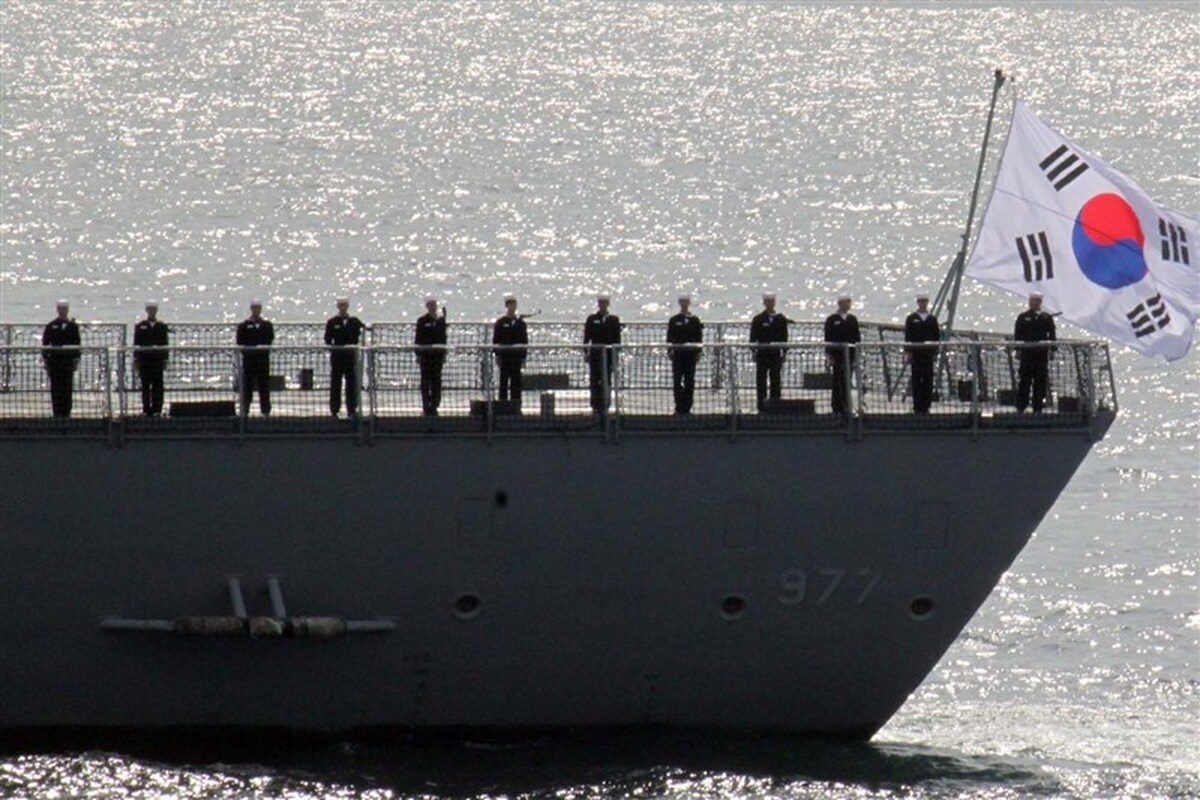
First, Washington wants to, through making coalitions, unload part of the military costs on the shoulder of others. Reuters reported that Seoul is mulling options like dispatching sea patrolling aircraft, logistics ships, and mine-clearing units, and that such a participation can happen without direct involvement of this country in combat operations and help shoulder part of the US military and logistical burden.
For Washington, bringing allies like Britain, France, and South Korea into a naval mission serves a bigger purpose and actually it helps recast the narrative from a bilateral US-Iran showdown to a multilateral effort to protect shipping, a diplomatic veneer of international legitimacy for what is, in effect, a military campaign. That calculus gains urgency as the conflict grinds on and the Strait of Hormuz becomes not just a strategic objective but a personal test of image for Trump.
Additionally, security and economic pressure on Seoul seems to be part of the White House's calculations. The Financial Times notes that Washington’s demand for South Korean participation comes amid broader friction over Seoul’s investment commitments in the US and the cost of hosting American troops, suggesting Trump may be using the Hormuz mission as leverage in a wider financial squeeze.
Seoul stuck in cycle of Washington's crisis generation
Under the Trump administration, South Korea has found itself ensnared in Washington's crises more than ever, now caught between American pressure and its own national interests. Trump has already linked the scaling back of joint US-South Korea military drills to Seoul's reluctance to back Washington's Iran policy.
Add to that Trump's recent push to arrange another summit with North Korean leader Kim Jong-un by this fall, a move that underscores how the Korean Peninsula case remains a convenient lever for Washington to squeeze Seoul. Seoul knows all too well that any reduction in US military support against the Pyongyang could carry a steep price tag. By playing up the North's threat and highlighting the necessity of the American troop presence, Washington is effectively holding Seoul's security hostage to extract greater alignment with its regional agenda. The Hormuz deployment request, in that light, looks like just another piece of that same puzzle, where South Korea's security becomes a bargaining chip.
Generally, though Seoul's name has surfaced among potential contributors to a Hormuz mission, no final decision has been made on deploying naval vessels or troops. That choice, in the end, hinges on the the intensity of Washington's arm-twisting, the shifting security landscape in the Persian Gulf, and Seoul's own calculation of the risks and repercussions of presence in the strategically-significant Strait of Hormuz.










