







Alwaght- Russia is mulling construction of a new railway linking it to the Indian Ocean, Tass news agency cited Russian Deputy Prime Minister Marat Khusnullin as sayin on Thursday. The new railway is aimed at reducing the risks to transportation caused by possible disruption to navigation in the Hormuz and Bosphorus straits. This alternative route could cross Turkmenistan, Iran, Afghanistan, and Pakistan, he added.
A corridor that started from 2000
The comments of the Russian deputy PM are not about a new project. Rather, they are about a project that falls under International North-South Transit Corridor (INSTC). The project was signed by Russia, Iran, and India in 2000. According to Tass, this corridor, roughly 7,200 kilometers long, starts from St. Petersburg to Mumbai Port. It links the two countries via a network of railways, land routes, and sea ways crossing Iran, Azerbaijan, and the Caspian Sea.
It seems that the remarks by this Russian official are more about developing the already planned corridor through adding a land route in its eastern part through the Central Asia to reduce its full dependence on the current route crossing Iran and Azerbaijan.
Why now?
The significance of such projects for Russia has grown enormously since the West imposed sweeping sanctions after Ukraine war. According to the Moscow Times, the Kremlin views these corridors as a way to offset the collapse in trade with Europe and deepen economic ties with Asian markets, particularly India, one of the world's fastest-growing economies.
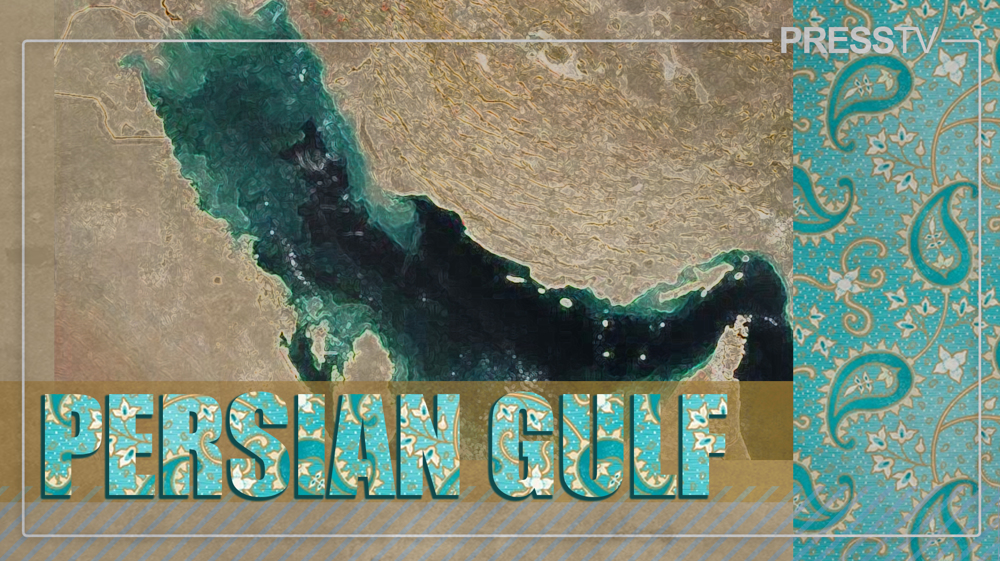
Khusnullin's pointed reference to the Bosphorus and Hormuz straits underscores a strategic anxiety. The Bosphorus is Russia's only maritime outlet from the Black Sea to open waters, and Turkey has restricted the transit of warships through the waterway since the war in Ukraine began. The Strait of Hormuz, meanwhile, is one of the most vital chokepoints for global commerce and Persian Gulf energy exports, and it remains perpetually vulnerable to regional security flare-ups. Moscow, therefore, is pushing to develop an overland alternative, one that would minimize its dependence on these two geopolitical bottlenecks.
Obstacles still standing
Despite the advances made, the INSTC is yet to go fully operational. According to Gulf Research Center, this project has progressed around 75 percent. The biggest obstacle is the Rasht-Astara railway in northern Iran having not been completed; a route Russia's Asia Corridor outlet calls the "missing ring" of the INSTC.
In 2023, Iran and Russia signed a deal to construct this railway between the cities of Rasht and Astara near Azerbaijani borders, but the project is yet to finish as it is hit by delays.
The delays are mainly driven by funding and technical factors. According to Stimson Center's report, delay in completing the Rasht-Astara railway deprives Iran of revenues of transit of around 7 million tons of good and 600,000 passengers annually. Furthermore, nearly 900 freight and passenger wagons are out of service due to shortage of spare parts.
A full build-out of the North–South corridor would cost upward of $38 billion, according to an analysis published in The National Interest, with completion targeted for 2030. Yet Western sanctions, scarce foreign investment, and unfavorable financing conditions inside Russia have thrown serious obstacles in the path of both the corridor and the development of Caspian Sea port infrastructure.
In this climate, the proposed extension of the route toward the Indian Ocean via Turkmenistan, Afghanistan, and Pakistan looks less like an active project and more like a distant aspiration. Not only is the original corridor far from finished, but Afghanistan, a critical link in this chain, lacks developed rail infrastructure and remains mired in deep political and security turmoil.
Need for constant funding
Pointing that Russia's construction sector is in need for long-term financing, Khusnullin announced that this sector is capable of attracting new investments, around 1 trillion ruble, in a year. He adds that if this funding is guaranteed to flow for five years, the country can increase its production capacities and accelerate implementation of construction projects. These remarks suggest that these tremendous infrastructural projects, including the proposed railway to the Indian Ocean, are mainly pending for continuing long-term financing.
Strait of Hormuz, an opportunity to revive geopolitical advantage of INSTC
This renewed push for INSTC comes as security crises in the Strait of Hormuz and the Red Sea have ushered in a new phase of competition among major transit corridors. In recent years, every spike in military tensions across the Persian Gulf or the Bab-el-Mandeb has thrust the vulnerability of global supply chains back into the spotlight. Seen through this lens, Russian officials' insistence on alternative routes is far more than a technical or economic calculation. It is a bid for leverage in the geopolitical contest over who controls the world's trade arteries.
Within that framework, Moscow is positioning the INSTC as a credible counterweight to the India–Middle East–Europe Corridor (IMEC), a US-backed project championed by the European Union, India, Saudi Arabia, the UAE, and Israel, designed to link India to Persian Gulf ports and then, via rail networks, to Mediterranean terminals and Europe. In Russian eyes, a successful IMEC would not only undercut the traditional role of the North–South route but also redirect a significant share of Asia–Europe trade through channels beyond Moscow's reach.
In this environment, any fresh bout of instability in the Strait of Hormuz, while driving up shipping and insurance costs across the board in the short term, also sharpens the incentive for countries to develop diversified overland alternatives and reduce their reliance on maritime chokepoints. Russia, for its part, is betting that by expanding new branches of the INSTC, including the proposed route through Turkmenistan, Afghanistan, and Pakistan, it can make the corridor more flexible and, in turn, a more compelling option for Asian partners, particularly India, in the face of IMEC's challenge.
Still, Russia's strategic advantage does not just lie in creating an alternative route. Rather, it rests in taking advantage of Iran's geographical position. Just contrary to common thought, the INSTC does not merely rely on Persian Gulf ports, rather, the oceanic Chabahar Port in the Makran Sea, which is outside the Strait of Hormuz, can link this corridor to the Indian Ocean without crossing the Strait of Hormuz. This is especially important in the context of security tensions in the Persian Gulf and can reduce the geopolitical risk of this route compared to the rival options.
On the other hand, if Iran, responding to security flare‑ups or rising naval protection costs, decides to impose higher transit fees for passage through the Strait of Hormuz or hike charges for maritime safety and servicing, the cost of shipping on routes dependent on the southern Persian Gulf ports will rise. That would directly hit the IMEC, whose maritime leg relies on ports in the UAE and Saudi Arabia along the Persian Gulf shoreline, driving up its operating expenses. The INSTC, by contrast, leverages Chabahar and its direct access to the Gulf of Oman, a positioning that could turn that cost differential into a strategic advantage. Seen this way, Moscow's latest plan is not merely about expanding a transport project. It is a calculated bid to sharpen the INSTC's geo-economic edge over IMEC, and to turn the Persian Gulf's security volatility into a comparative asset in the broader race for global trade routes.