










Alwaght- The recent development in Lebanese Hezbollah’s standings regarding new Syrian rulers should not be seen as a tactical shift or political retreat; it falls under a tendency to redefine Lebanon's security environment after the 40-day Iran war and an effort to prevent opening a new front against the resistance movement.
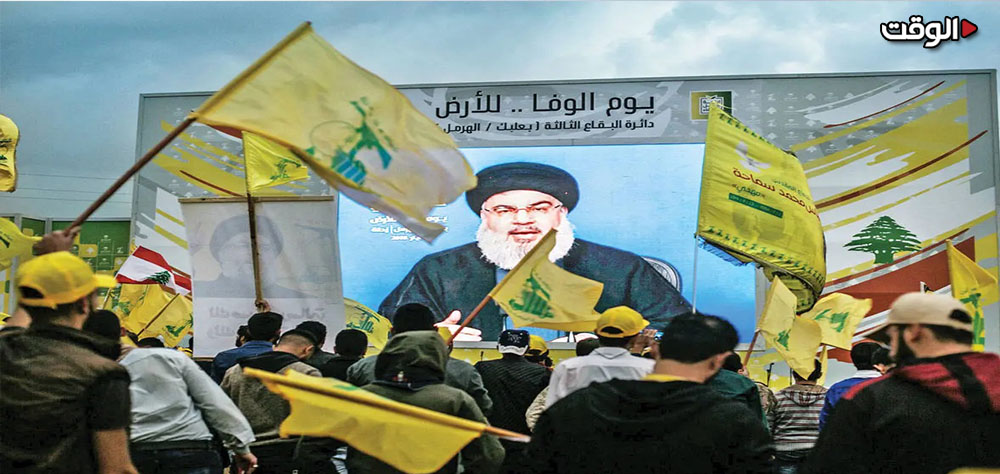
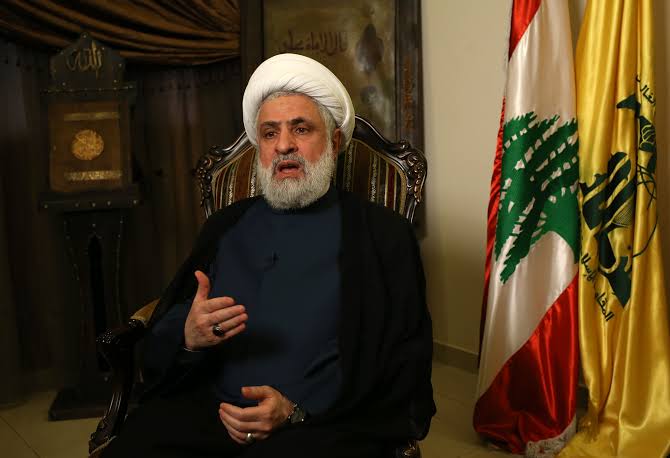
In a televised address marking Arbaeen commemoration of Imam Hussein, Hezbollah Secretary-General Sheikh Naim Qassem declared that the movement has “no objection to holding a public meeting with Syria’s leadership whenever both sides deem it appropriate,” while stressing “the importance and necessity of a fraternal, positive, cooperative relationship between Lebanon and Syria.”
But Qassem’s remarks were far more than a diplomatic message. They amounted to a security strategy, one aimed at managing ties with Damascus and neutralizing US and Israeli efforts to turn Syria into a lever against Hezbollah.
The statement came as Donald Trump has repeatedly pressed Syria’s interim President Ahmad al-Sharaa, in recent weeks to play a role in Lebanon and help contain Hezbollah. The overture rests on a clear assumption: that a new Syria could shoulder some of Israel’s security burden on its northern front — without Israeli troops ever crossing the border.
So far, however, Damascus has resisted White House pressure, striking a relatively measured and farsighted posture on wading into such a quagmire, and insisting it will not intervene militarily in Lebanon. Even al-Sharaa, while not denying deep differences with Hezbollah, has refused to rule out dialogue altogether.
In a televised interview in June, asked whether he would sit at the same table with Hezbollah, he replied: “If it serves Lebanon and guarantees Syria’s interests, why not?”
He added: “We have a profound problem with that movement. But we do not want all of Lebanon to perish,” underscoring his belief in dialogue even with opposition factions.
Against that backdrop, Qassem’s message reads as an effort to lock in that very approach, keeping the channel open and preventing old grievances from becoming fuel for yet deeper crisis.
The primary driver behind this Hezbollah’s standing is to prevent Syria from becoming a field for implementation of American and Israeli security projects.
Over the past months, Washington has repeatedly pushed to insinuate that Israeli security challenges in Lebanon can be settled with Syrian participation and without direct presence of the Israeli regime. In such a policy, any tensions between Hezbollah and Syrian government can play into the hands of Washington. So, Hezbollah’s political flexibility is more about closing the way of abuse by the foreign players than about a shift in the movement's principles.
At the same time, these signals carry another message, for both Lebanese public opinion and the wider Arab world. Hezbollah is working to show that, contrary to the image its opponents paint, it is not averse to dialogue or diplomacy, and that wherever disputes can be resolved through engagement, it will welcome the chance.
That, indeed, does not mean the movement has softened its stance toward Israel. From Hezbollah's vantage point, the past years' experience, particularly the November 2024 ceasefire, has shown that Tel Aviv not only fails to honor its commitments but has violated that agreement thousands of times, and has even refused to withdraw from five points it was obligated to vacate under the deal. For the resistance, then, military deterrence remains irreplaceable when it comes to the Israeli regime. But that logic does not necessarily apply to Syria, and dialogue with Damascus, in fact, could be part of a broader threat-reduction strategy.
There is another critical factor: Syria's geopolitical weight in Lebanon's equations. The relationship between the two countries is not confined to political calculations. It is a tangle of border security, counter-smuggling operations, refugee returns, trade, transit routes and economic cooperation, all of which bind their futures together. No government in Lebanon, regardless of its political stripe, can afford to ignore that geopolitical reality. And Hezbollah knows full well that stability in Lebanon is unthinkable without at least a baseline level of coordination with Damascus.
On another level, this tonal shift should also be read through Hezbollah's longer-term lens on Lebanon's political future. Contrary to the image Washington tries to project, of an isolated, rogue movement stripped of political legitimacy, Hezbollah remains a major player in Lebanon's domestic arena and sees itself as very much part of the country's future governance. The group's diminished footprint in the current government is less a symptom of weakness than the fallout from a deliberate, costly and calculated decision taken after the assassination of Sayyed Hassan Nasrallah, a strategic decision aimed at pulling Lebanon out of political gridlock. That move cleared the path for a presidential election and cabinet formation, and prevented a total collapse of the political order. At that critical juncture, Hezbollah ceded ground on some of its political demands to smooth the way for postwar reconstruction, economic crisis management and the ceasefire file with Israel, all of which needed fewer obstacles to move forward.
Finally, this shift must be understood against the broader reshaping of the region's security order following the 40-day war of Israel and the US against Iran, an unwavering Hezbollah ally. Today, Hezbollah, as part of the Axis of Resistance, and the new Syrian government, now embedded in the Arab fold, share at least one common interest: steering clear of crises whose only beneficiary is Israel. At this moment, Tel Aviv needs regional turbulence more than ever to deflect attention from its own domestic political and security fractures. Many Arab states, after the latest war's hard lessons, have grown more attuned to the new realities of power in the region, and are increasingly wary of being drawn into destabilizing scenarios.
So, Hezbollah’s readiness to talk to Damascus should not be read as a sign of departing from its principles or of ignoring the past disputes. This new approach is part of the policy of managing the differences with Syria, a policy aimed at preventing a new front from being opened against Lebanon, keeping dialogue channels with the strategic neighbor, and neutralizing plots that aim to invest in existing chasms to reformulate anti-Axis of Resistance front.