






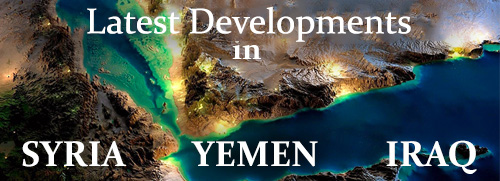



Alwaght- These days, the Red Sea has become one of the world's top hot spots. On July 20, Yemen's Ansarullah after an attack on Sana'a International Airport by Saudi Arabia formally announced a martime blockade on Saudi Arabia, practically reactivating a front that was roughly dormant following a 2022 ceasefire deal.
Only two days later, two oil tankers, Encelia and Layla, were struck by rockets and drones, attacks that forced the international shipping companies to issue new security warnings about transiting Bab-el-Mandeb. What makes the blockade different is that this time Saudi Arabia is not announced a side player but a direct target.
It was against this backdrop that Riyadh and Washington expected Beijing to leverage its economic weight, as Iran’s top oil buyer and the broker of the 2023 détente agreement between Saudi Arabia and Iran, to press Tehran into reining in the Houthis. That did not happen. And perhaps more telling: it was never meant to.
The reality is that Beijing did not take a single concrete step in that direction. On April 7, just one day before a ceasefire took effect, China vetoed a UN Security Council resolution, drafted with Persian Gulf state backing, aimed at compelling Iran to reopen the Strait of Hormuz. This is not new behavior. According to a Reuters report from January 2024, during the first Red Sea crisis, when Washington asked Beijing to lean on Iran to contain the Houthis, Chinese officials offered little more than tepid warnings about possible damage to trade ties—with no clear, forceful threats attached. Newsweek around that same time described the approach as superficial, while noting that Beijing fundamentally sees no upside in undercutting Iran’s regional influence.
The point is that China never accepted the role of regional police for anyone, and unlike the United States, it does not pursue such a policy. That was a fantasy that both Riyadh and Washington were eager to believe.
Behind this self-restraint, however, lies a fully calculated logic: the principle of non-interference is not mere diplomatic rhetoric for China. By refusing to pressure its partners, Beijing implicitly expects the same in return, no outside meddling in its own internal affairs, from Taiwan to Xinjiang. It is an informal understanding that underpins every cautious Chinese statement. This is the same pattern that explains China’s hands-off approach to Venezuela.
Perhaps, it can be said that in this strategy, the Chinese officials do not want to act like the Soviet Union, sinking themselves in political and security swamps. Meanwhile, all news reports suggest that China is providing security and intelligence assistance to Iran to counter the US aggression in a bid to create some balance in intelligence war.
This strategy of inaction has had consequences more tangible for Saudi Arabia than for Iran, and they show up plainly in the oil-market numbers. The International Energy Agency, in its May monthly report, put Saudi exports at roughly 3.9 million barrels a day that month, down from 7.3 million in February, a drop to historic lows. Meanwhile, China’s expected Saudi crude imports for June fell to just 600,000 barrels a day, half the April level. At the same time, the price spread for Arab Light surged from about $2 a barrel in March to $16–$20, making Saudi oil prohibitively more expensive for Asian refiners than rival grades.
The outcome of this situation is the considerable shift in the combination of Chinese oil imports. According to Energy Intelligence later in June, the Russian oil exports to China have reached about 29 percent while those of Saudi Arabia were only 5 percent, a figure that compared to the whole 2025, in which according to China customs Russian share was 17.4 and Saudi Arabia's 14 percent, shows that the recent war has accelerated an already-unfolding trend.
Indeed, this decline should not be written off as permanent, since part of it stems from temporary export route disruptions and Saudi pricing missteps. But the damage to Saudi Arabia's image as a reliable supplier would not be repaired anytime soon. When a country's oil exports can be cut in half within weeks by a blockade or a war, Riyadh can no longer confidently present itself as Asia's primary energy guarantor.
These developments also illuminate a much larger question: Is oil still the decisive factor in China's West Asia policy? The answer lies in Beijing's unprecedented strategic stockpiling by 2025.
According to an April 2026 report from Columbia University's Center on Global Energy Policy, China's strategic reserves have given it the cushion to absorb short-term disruptions without panic, framing crises less as energy-security concerns and more through the lens of competition with Washington. This capacity allows Beijing to adopt a wait-and-see strategy, something Washington cannot easily do. And that effectively kills any Persian Gulf hope that China might step in as an alternative to US's security and military umbrella. What the current conflict has laid bare, then, is that behind all its tactical political calculations, China is ultimately playing a larger game: one of confrontation and rivalry with the US.