









Alwaght- For four decades, the US security strategy in the Persian Gulf has rested on a promise telling the Arab monarchies that if they align with Washington, accept American military bases on their soil, buy billions in arms from its companies, and partner to the project of "containing Iran", it guarantees their security.
The recent war, however, collided head-on with a hard reality. Not only did the US fail to deliver absolute security; for many Persian Gulf states, it was the first time they realized that being part of the US security umbrella does not guarantee immunity from the fallout of war, and that, under certain circumstances, it can even turn them into part of the battlefield.
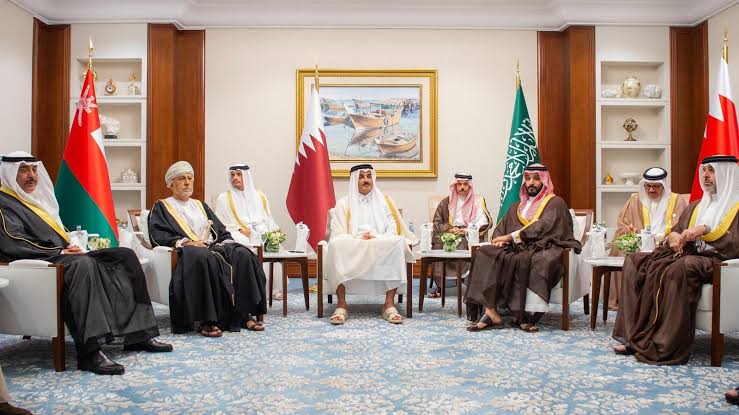
In this context, Oman’s Foreign Minister Badr al-Busaidi’s recent essay in Le Monde should be read as more than just a political statement. He openly challenged one of the most fundamental assumptions of US policy in the region: that Iran is the primary threat to the Persian Gulf security and must be contained through sanctions, pressure, and the threat of military force.
He asserted that he recent war proved that Iran is not the root cause of regional insecurity, and that four decades of containing Tehran have not only failed to bring stability, but also they have actively fueled the very crises they were meant to prevent. His words carry weight because they come from a senior official of a country that has long played the mediator and the balanced actor in Persian Gulf politics, one that has watched security dynamics up close, from the inside.
The containment doctrine, born in the wake of Iran's 1979 revolution, rested on a single premise that the Islamic Republic, which ousted the corrupt pro-Western monarchy in Iran under Imam Khomeini, posed the gravest threat to regional order and Western interests. On that basis, the US built a sprawling network of Persian Gulf military bases, inked billions in arms deals with Arab states, cobbled together security coalitions, and turned economic sanctions into a permanent cudgel against Tehran. In short, the Iranian threat was not just a security assessment, it was the very backbone of the American-designed order in the Persian Gulf.
Today, however, the region's realities have drifted far from that narrative, and Persian Gulf Arab capitals are waking up to the costs of years of uncritical adherence to such an unrealistic strategy. What we are seeing now in Arab states' behavior is less a matter of choice than a forced reckoning. The latest war shattered decades of security assumptions, confronting Persian Gulf monarchies with facts they can no longer brush aside.
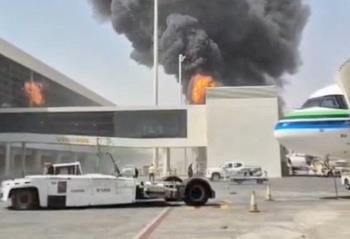
The first hard truth is crumbling faith in the US security guarantees. For years, they were told that the Fifth Fleet, the missile defense systems, the thousands of US troops, the sprawling bases, all of it would repel any threat. But the recent war laid it bare that this vast military infrastructure not only failed to deliver genuine security, but also it became a threat vector in its own right. When Iran made clear that any US base used to strike its territory would become a legitimate military target, many Arab governments realized for the first time that the American military footprint could become not a shield, but a lightning rod, one that could drag the war onto their own soil.
In other words, what shifted in many Arab leaders' minds was not a sudden embrace of a new world order, but it was a deep crack in their confidence in the existing one. They watched, firsthand, as even the most sprawling network of US bases failed to insulate them from crisis. Washington's security pledges, they now realize, are nowhere near as ironclad or cost-free as four decades of messaging had led them to believe.
The second blow is the containment doctrine flat-out failed in practice. The whole strategy assumed that ramping up political, economic, and military pressure would gradually weaken Iran and erode its deterrent power. But the latest war, regardless of how different capitals spin its outcome, made one thing unmistakably clear: Iran still retains the capacity to shape the region's security calculus.
This reality raises a question: If after decades of sanctions and American military presence in the region there is still possibility of such crisis erupting, was the very strategy of containing Iran resting on right pillars?
From this lens, stepped up diplomatic moves by Arab countries and welcoming mediation is more a reaction to failure of a security calculations and less about an ideological shift. They, actually, have found out that continuing logic of confrontation is likely to impose heavier costs directly on them. That explains why in the 40-day war and the current clashes, the Arab countries have chosen diplomacy and mediation to end the war rather than encourage Washington for escalation.
This shift, of course, does not mean an imminent US exit from the region. Arab states will continue to maintain broad strategic and military ties with Washington. But the critical difference is this: their perception of that presence is no longer what it used to be.
Where American bases were once seen as symbols of security, today a new question has emerged: In a moment of crisis, could those very bases become amplifiers of the threat instead?
That is why the future of Gulf security now hinges, more than ever, on a fundamental reassessment of four decades' worth of assumptions. What is changing is not merely a political alignment, but is the unraveling of the notion that security can be built on foreign power while remaining insulated from the blowback.
Perhaps one of the most crucial outcomes of the recent war came not in the battleground but the security calculations of the Arab capitals. The dream of containing Tehran which for years was sold to Arab rulers as the defenite security prescription in the Persian Gulf has for the first time faced a serious doubt.
Al-Busaidi’s essay is, thus, about gradual wakeup of the Persian Gulf rulers to the reality that security cannot be bought by lavish arms purchases, hosting foreign bases, and setting hopes on guarantees made by trans-regional powers, especially that the same mechanisms and promises can turn the region into a conflict scene.