
















Alwaght- The Strait of Hormuz over the past 400 years, namely since Iranian Savafid military commander and politician Imam Gholi Khan powerfully expelled the Portuguese colonialists from southern Iran, has not undergone a more influential and decisive situation than today's. What we can grab from the debates and speculations before the US February 28 war on Iran is that the American side had not seriously taken into account the variable of the Strait of Hormuz in the war. This came while the martyred IRGC Navy's commander Alireza Tangsiri two weeks before start of war in a naval exercise had expressed the force's readiness to close the key waterway if the need arised. Anyway, it seems that the entire Israeli-American war, called Ramadan War in Iran, has now become centered on the Strait of Hormuz, with the strait encapsulating the entire meaning of the conflict. On this matter, there are several noteworthy points.
1. Iran's comprehensive, deep, and precise vision: Iranian officials, especially IRGC and Army commanders, since years ago and with a deep comprehension of the remarks and guidelines of the martyred Leader Sayyed Ali Khamenei concluded that they have to prepare for a certain war with the US and Israeli regime. As a result, they embarked on preparations for the day of war, working nonstop to get to proper levels. Developing a comprehensive and inclusive understanding of what was needed for this confrontation were positive and important aspects of this approach. So, along with upgrading the military equipment, they focused on other advantages of Iran, including territorial and geographical ones, with the Strait of Hormuz at the very top. While the US had grown complacent about the strait, Iran had a meticulously calculated plan with a long-term vision for it, a course of action that subsequent events would prove right.
2. US arrogance and self-deception: The strategic position of the Strait of Hormuz, the vast array of goods and cargo passing through it, and the impact of those goods on people's daily lives and the global economy are such that even military novices know one thing for sure: if war ever breaks out in this region, the strait will instantly become a powerful weapon and leverage for whichever side controls it and exercises sovereignty over it.
Despite this clear and crucial role, the US either lacked a necessary plan for the Strait of Hormuz or its plan turned out to be fundamentally flawed, both failures rooted in the very same arrogance that led Washington into self-deception. On one hand, the Americans dismissed the likelihood that the strait could be closed. On the other, confident in their naval power, they assumed that if it were closed, they could easily reopen it. But after failing on the field of analysis and assessment, and consequently falling into Iran's shrewd and intelligent trap, they realized they had been caught in the most dangerous point of the confrontation, with no way out unless Iran allowed it.
3. Degrading from strategy to tactic: Contrary to the view that suggests the US has had no certain strategy for Iran war, it must be said that Washington has had a clear and precise one that could knock down any powerful country. But this strategy has a big weakness when it came to Iran that enjoyed a multilayer source of power: A limited knowledge radius. This major weakness, against a country endowed with multi-layered sources of power, deep strategic vision, and wide-range surveillance capabilities, allowed Iran to dismantle the pillars of American power one after another. By activating the leverage of the Strait of Hormuz and shutting it down, Iran turned the tables in a way that for the US, reopening the Strait, against its own primary strategy, meant degrading from a grand strategy down to a mere tactic.
Actually, Iran humiliated the US so thoroughly that, as many experts now believe, Washington would pay any price today to avoid trading away its past strategic war for a tactical move, namely, reopening a waterway that had been open before the war. That would be war and an exorbitant cost for nothing. And that is without even factoring in the negative fallout on the US economic, social, and political fronts.
4. A red line the color of blood: The Ramadan war gave the Iranians a gift, enabling them to hunt the biggest and most precious pearl of the Persian Gulf after centuries. This war paved the way for materialization of the Strait of Hormuz values to Iran. Perhaps at no point in its contemporary history has Iran been able to assert its rights over the Strait of Hormuz with such confidence and clarity. This war removed all the mental and practical barriers to exercising a new form of sovereignty over the strait and freed Iran’s hands to enforce it. Reaching this historic turning point, one capable of unleashing massive changes, did not come cheap. The great nation of Iran has before it a long list of those who sacrificed their lives on this path: from the martyred commander to innocent schoolchildren of the Shajareh Tayyebeh Elementary School in Minab in Hormozgan province.
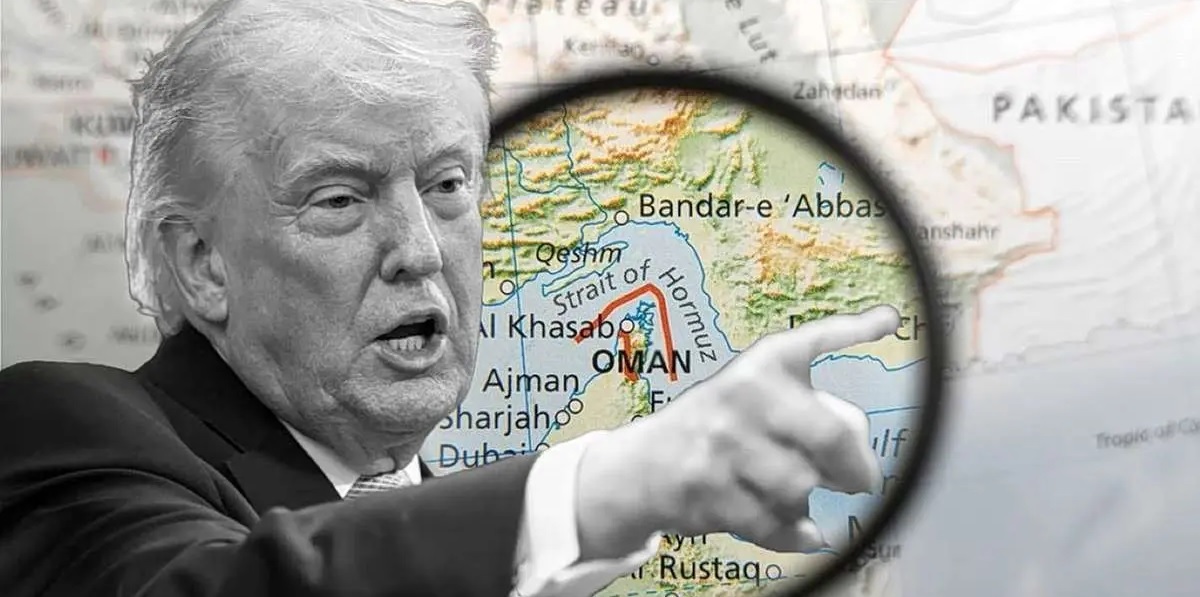
Therefore, in gratitude for the pure yet simmering blood of these dear martyrs, a blood still waiting for vengeance, and in order to reap the benefits of the Strait of Hormuz, the Iranian nation, carrying forward the martyrs’ path and cause, has declared the strait and the new exercise of sovereignty over it as a red line of the Islamic Republic. This red line represents a value and a position so significant that defending and solidifying it can be intensified to the point of bloodshed. Perhaps that is why the US president, usually slow and hard-pressed to grasp simple matters, broke with his own habit and understood this message quickly, halting much-vaunted Project Freedom for what he called “liberating” the Strait of Hormuz in less than 48 hours.










