















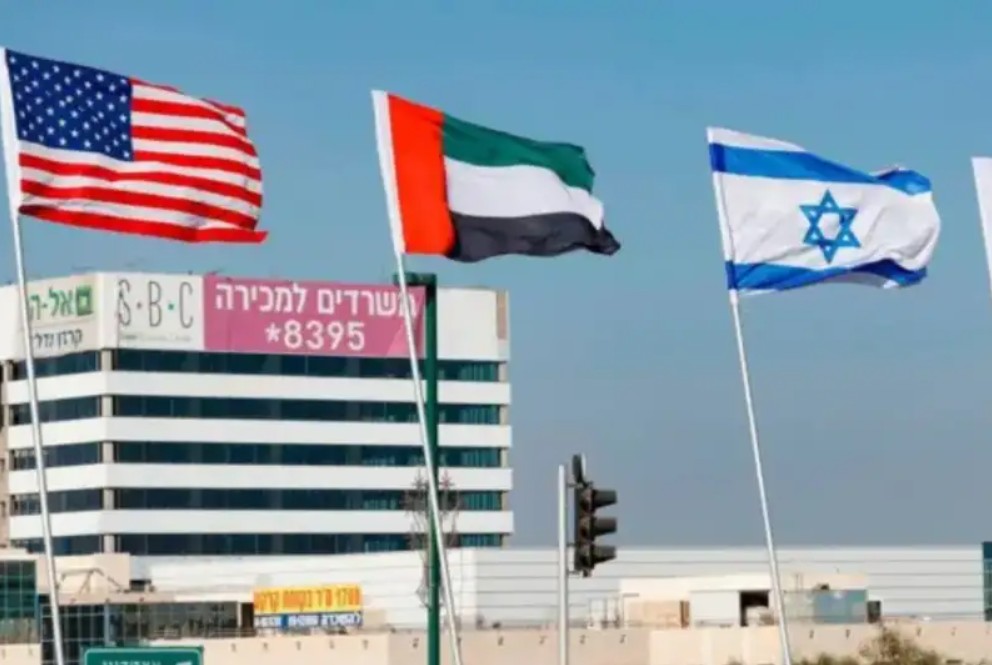


ALWAGHT- Backed by the US and the Zionist regime, the UAE has doubled down on a path that fuels regional tensions—a trajectory likely to trigger miscalculations, domestic crises, and widespread security fallout.
In recent days, the UAE has reemerged in headlines not for constructive regional engagement but for escalating tensions—reportedly citing Iranian threats and leaning on the United States and Israel. Analysts suggest this approach stems from internal crises and strategic miscalculation, as the UAE seeks to preserve its fragile power structure by aligning with unreliable partners. Given that US support has proven inconsistent and Iran has warned that its strategic patience has ended, this path risks heavy and potentially irreversible consequences for the Emirates.
A rare, candid statement by Mohamed bin Zayed on social media—warning that officials who prioritize personal success betray their trust—points to deep governance fractures, elite divisions, and fears of fragmentation. Against this backdrop, the UAE may be constructing external enemies (including renewed Yemen tensions and OPEC withdrawal) to divert public attention from domestic instability. Experience suggests, however, that incoherent structures lacking popular support tend to collapse faster under heightened tension.
Reports indicate that the UAE continues to cooperate militarily with the Zionist regime, including the deployment of Israeli interception systems on its soil—an act framed as a betrayal of regional and Islamic solidarity. Iran views any such collaboration as legitimizing punitive measures and making the UAE a legitimate target. With Iran’s security as a non-negotiable principle and asymmetric response capabilities proven, the only stable path forward for Persian Gulf states is to end reliance on the US-Israeli axis, move toward indigenous regional security cooperation with Iran, and accept Iran’s management of the Strait of Hormuz as a stabilizing force.










