












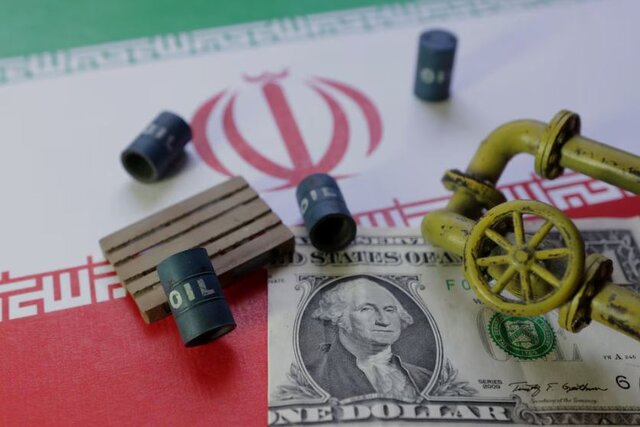


Alwaght- The world oil prices keep establishing new price records, and under the impact of war the global markets are tumultuous. According to a report by Macquarie Group, if the war on Iran continues until June and the Strait of Hormuz remains closed, oil prices could soar to a record $200 per barrel. Analysts at the energy and markets consulting group, including Vikas Dwivedi, outlined a scenario with a 40-percent likelihood, stating that a conflict extending into the second quarter of the year would lead to historically high prices. They noted that an alternative outlook with a 60 percent chance suggests the war could end by the end of this month.
As the US-Israeli aggression against Iran plunges the oil-rich Middle East into chaos, Brent oil prices are on track for an unprecedented monthly surge in March. This illegal assault on Iran has severely disrupted traffic through the Strait of Hormuz, critically limiting the vital energy flow crucial for the global economy.
“If the Strait of Hormuz remains closed for an extended period, prices must rise high enough to eliminate a significant portion of global oil demand, which would be historically unprecedented. The timing of the reopening of the straits and physical damage to energy infrastructure will be the main factors determining long-term impacts on commodities," Macquarie analysts remarked in their latest report.
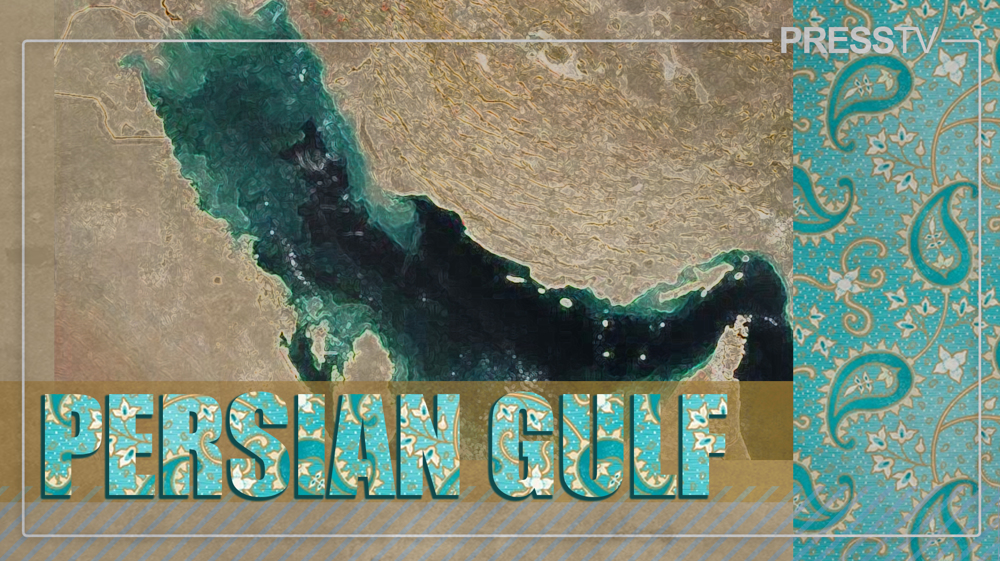
Macquarie analysts highlighted that before the war, the Strait of Hormuz witnessed the transit of approximately 15 million barrels of crude oil and 5 million barrels of petroleum products daily. They stated that the closure of this route due to severe disruptions has sharply increased the prices of both crude oil and petroleum products.
Trump’s tactic to avoid oil price skyrocketing
As the Strait of Hormuz remains closed and oil prices keep rallying, the US President Donald Trump has embarked on a new trick. Claiming to be holding talks with Iran, Trump is trying to force the oil prices down, or slow the pace of the price rise. Since about a week ago, the US president has been threatening that if Iran does not reopen the Strait of Hormuz, the US will strike Iranian energy and electricity infrastructure.
However, a look at Trump’s threats about attacking Iranian electricity reveals a fixed trend and a gradual retreat:
48 Hours: Trump’s initial threat to Iran regarding the reopening of the Strait of Hormuz was a 48-hour ultimatum, claiming that after this period, if the strait was not opened, the US would strike Iran’s power plants.
5 Days: Before the expiration of Trump’s 48-hour deadline for attacking power infrastructure, he introduced the notion of negotiations with Iran, asserting that if these talks did not yield results within 5 days, he would target Iran’s power plants.
10 Days: A day before the 5-day deadline for Trump’s attack on Iranian power plants was due, he presented a new 10-day ultimatum to Iran, further postponing the execution of his warning by another 10 days.
Trump’s gradual retreat from threats to attack Iran’s power infrastructure indicates a clear pattern. It suggests he is attempting to temper the upward trajectory of global oil prices by claiming negotiations with Iran and the possibility of reopening the Strait of Hormuz. Each time he mentions negotiations, there is a short-lived drop in global oil prices, which tends to rebound sharply when Iran denies any negotiations are taking place.
Trump’s retreat as seen by American press
The Financial Times newspaper in a report suggested that Trump walked back from his threat for the fear of the crash of the stock markets. The newspaper added that Trump announced the 10-day extension after fears were rose about bigger Middle East crisis that led to fall of the Wall Street in its worst day since start of the war.
Wall Street Journal reported that Trump claimed he postponed destruction of Iranian power plants until April 6 at the Iranian request, adding that talks to end the war are underway and “going very well.” Bit it seems that his main fear is about the US stock markets.
According to the Financial Times, a statement released by Trump just 11 minutes after the close of trading on Wall Street reflects the latest shift in the White House’s stance in the war against Iran, as Asian stock markets opened with significant declines on Friday.
The announcement of an extended negotiation deadline with Iran came at the end of a tumultuous and tense session for US financial markets on Thursday, when stocks experienced their worst one-day drop in two months.
The S&P 500 index fell by 1.7 percent, reaching its lowest point in six months. The tech index Nasdaq Composite dropped 2.4 percent, falling more than 10 percent from its peak in late October.
Brent crude oil was traded on Friday at approximately $107.17 per barrel, down 0.8 percent.
Furthermore, the Organization for Economic Cooperation and Development (OECD) on Thursday warned that the Middle East crisis, and particularly Iran war, will push the US inflation rate for this year 4.2 percent, the highest among the G7 economies.