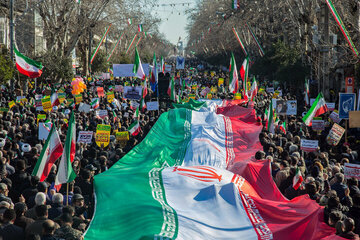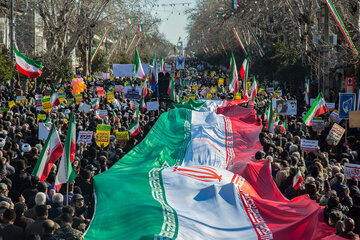




Alwaght- Years of planning for riots in Iran and then toppling of the Islamic Republic by the Israeli regime and the US were shattered by a big popular move on Monday. Reports suggest that during the pro-government rallies held on Monday in the capital Tehran millions took to the streets to condemn terrorist actions by the rioters. People chanted ant-terror, anti-Israeli, and anti-American slogans.
Images from Tehran suggested that crowds formed lines reaching several kilometers before and after Enghlab Street in downtown Tehran and the population was so large that traffic was stopped kilometers away from the street.
The images and chants on Monday afternoon in Enghlab Street and other Iranian streets focused on condemnation of the Western interference in the Iranian affairs and the American threat of military intervention in support of terrorists. People held effigies of the Israeli Prime Minister Benjamin Netanyahu and the US President Donald Trump, condemning their interference in the Iranian affairs.
Regime change plan runs into impasse
In the recent Iranian protests at the worsening economic conditions that very soon turned violent with intervention of rioters, the role of the Israeli and American intelligence service became clear to all immediately. Statements by Netanyahu and Trump showed that these riots and violent actions targeting civilians and infrastructure and public service facilities were directed by Israeli and Western services.
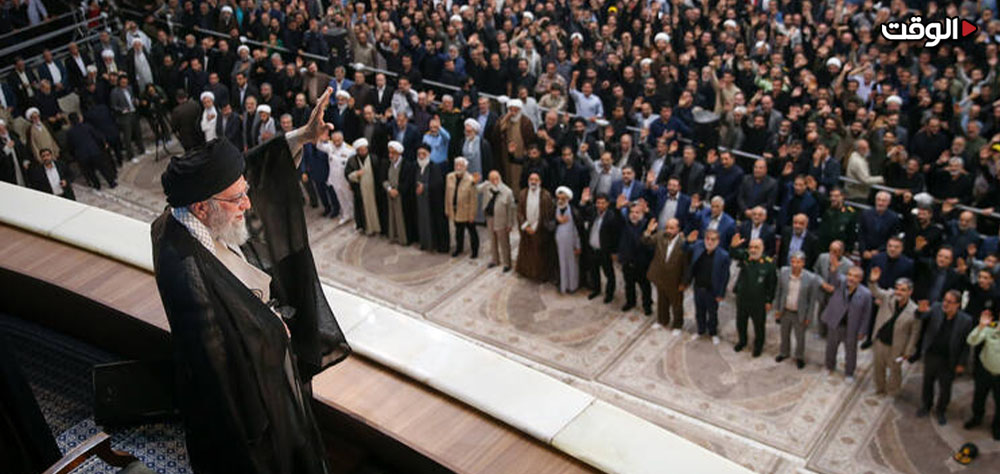
Both Netanyahu and Trump had earlier voiced their support to the unrest in Iran and some American news outlets reported that with the culmination of the violence in Iran on Friday, Washington has once again put off its agenda the negotiations with Iran. This unofficial report made one thing clear: Trump and his team are substantially counting on the conclusion of the riots and subversion of the Islamic Republic. But as the violence largely subsided on Sunday and the people in Tehran and other cities held large-scale rallies in support of the political system, Trump administration, other Western governments, and Israel look clearly unsuccessful in realizing their aim.
Trump walks back from his previous positions
Publishing a report about the US role in Iran riots, an American think tank says that the Trump first thought that the Islamic Republic is fragile and so he started his verbal attacks. But now he is seeking a way to justify his stance. Trump’s record shows that he prefers interference that are less risky and when the outcome of a military action is unpredictable, he backs down on his position. The think tanks gives Yemen case as an example. When Trump’s promise of win over the Ansarullah resistance group met its failure and when he nearly lost his warships and warplanes, he shifted his course.
The think tank added that Iran will display a more complicated confrontation scene and it had already shown its response is not surrender. The US president has shown over and over that when his previous stances do not work in his interests, he easily forsakes them. His recent claim that people are killed and left in the streets displayed how easily he reshape the narratives to justify his inaction regarding Iran.
What actions does Western-Israeli camp support?
The riots in Iran on Thursday, Friday, and Saturday witnessed their harshest terrorist actions, and following Netanyahu and Trump’s support, many Western countries backed the acts of violence. Part of Israeli and Western-backed terrorist actions included following actions:
Cutting the throat to firing at civilians and security forces: Iran’s forensic services chief Abbas Masjedi reported that during the recent unrest, just unlike their precedents, trained terrorists mostly “attacked vital organs” of the people. Masjedi added that a considerable number of the dead lost their lives by throat cutting, knife attacks, or direct shooting by shotguns from a very close range. Some others were killed by shooting from rooftops.
Rioters captured with raw materials for making bombs: General Kiyasat Sepehri, the commander of border guard of Kermanshah Province commented on the local situation during the riots, adding that during the recent unrest, the border guard command of Kermanshah focused on identifying and capturing the leaders of the riots. The general added that during these operations, the arrested rioters were captured with assault rifles, bullets, a hatchet, and six cold weapons including knifes and machetes. Other items discovered included alcoholic drinks, 3 smartphones, about 400 liters of gasoline, and a camera for shotguns. The general said that raw materials were discovered for use to make handmade bombs.
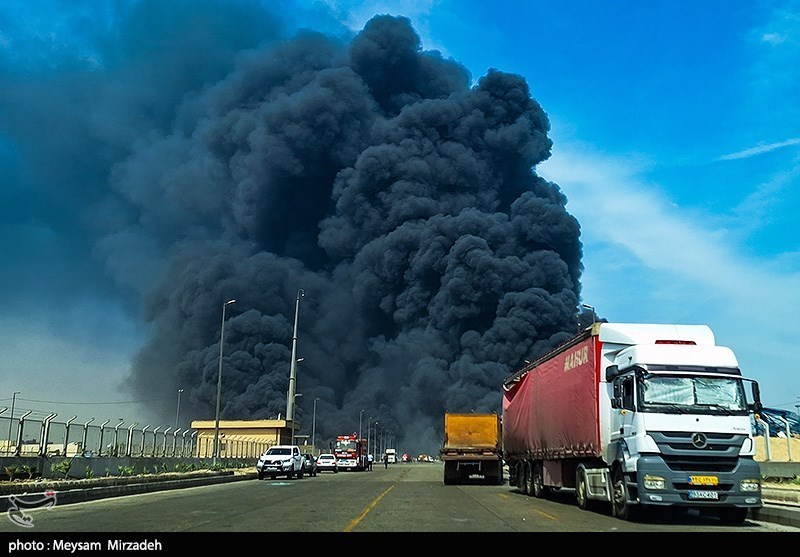
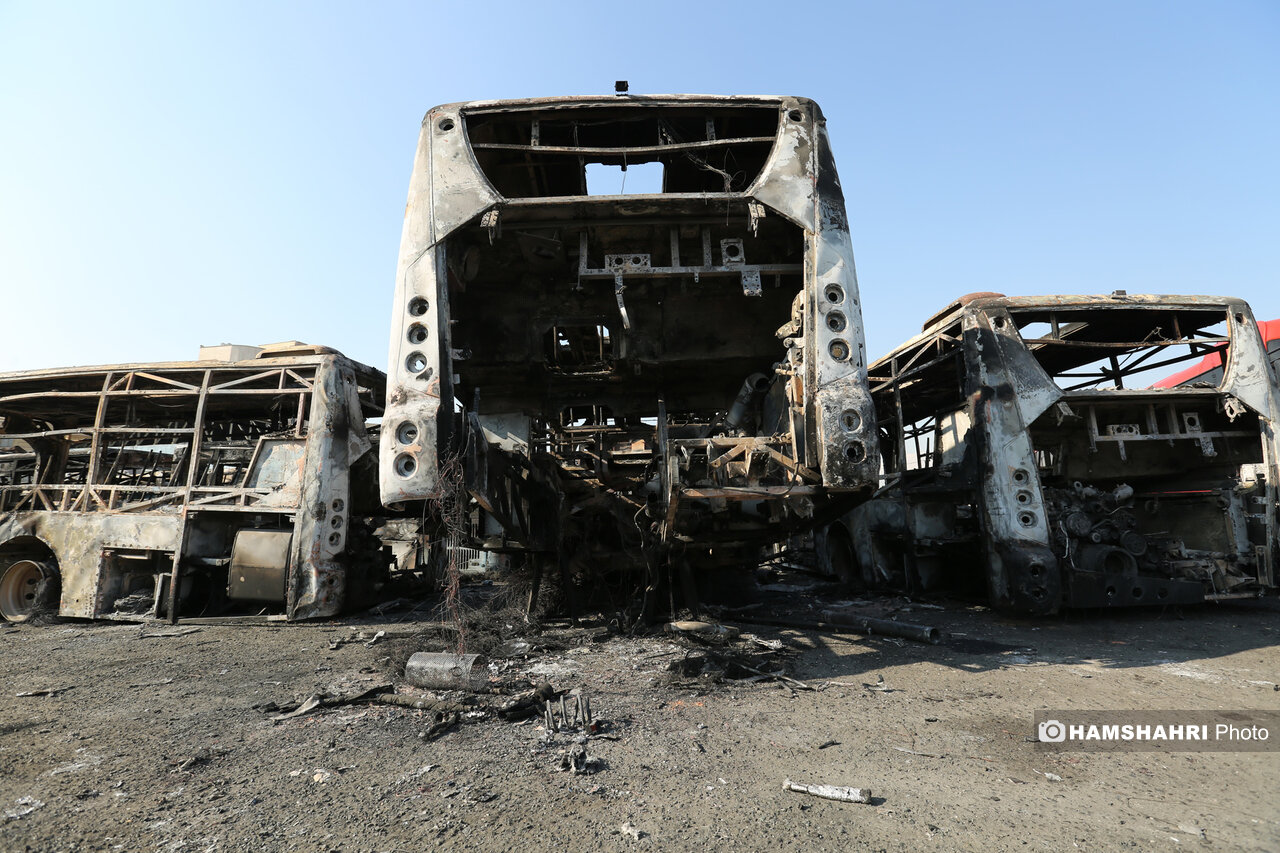
Massive damage of terrorists to public planes and utilities: Governor of Tehran Mohammad Sadegh Motamedian told national television about the damage inflicted on public services and utilities in Tehran by the terrorists, saying that they torched over 50 bank buildings, over 50 busses, and over 1,000 private cars. They, he added, vandalized and destroyed over 50 ambulances deployed for rescue operations. Their drivers and staff were hit hard, he said.
“54 fire engines, purchased by money of taxpayers, were destroyed during the riots. 34 mosques were set fire to. In Tehran, we have mosques, churches, and synagogues, and everyone worships based on their religion. But some have torched Husseinyahs, torched mosques. This is not protest,” Motamedian went on.