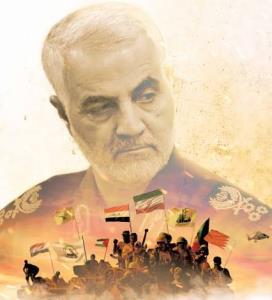
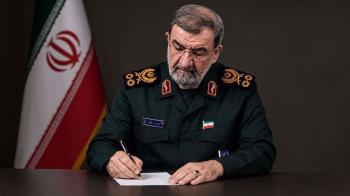






Alwaght- As the sixth anniversary of assassination of General Qassem Solemani of Iran draws closer, West Asia and even the international community are in a point where many call a "historic juncture", a point where the old orders are eroding and new power models are being born. In such juncture, re-reading the transformation General Solemani caused to the regional and trans-regional equations is not just a historical reminder but an analytical necessity to understand the present and the future. The reality is that many processes that have brought the world and the region to this point are unfathomable without consideration of the fundamental changes, ones that General Solemani created not just through using military means but through re-engineering the popular wills, identies, and capacities.
Defeat of ISIS project; birth of a modern model of resistance
The first, and perhaps most decisive turning point, was General Solemani's central role in thwarting a project that the US and the Israeli regime had pursued in the wake of ISIS’s rise. ISIS was not merely a terrorist group, it was the instrument of a grand geopolitical project aimed at redrawing the regional map, weakening central governments, fueling sectarian wars, and ensuring lasting security for the Israeli regime. Countering such a project was impossible through the logic of conventional armies alone. General Solemani understood this clearly. Rather than relying solely on hard power, he turned to popular mobilization.
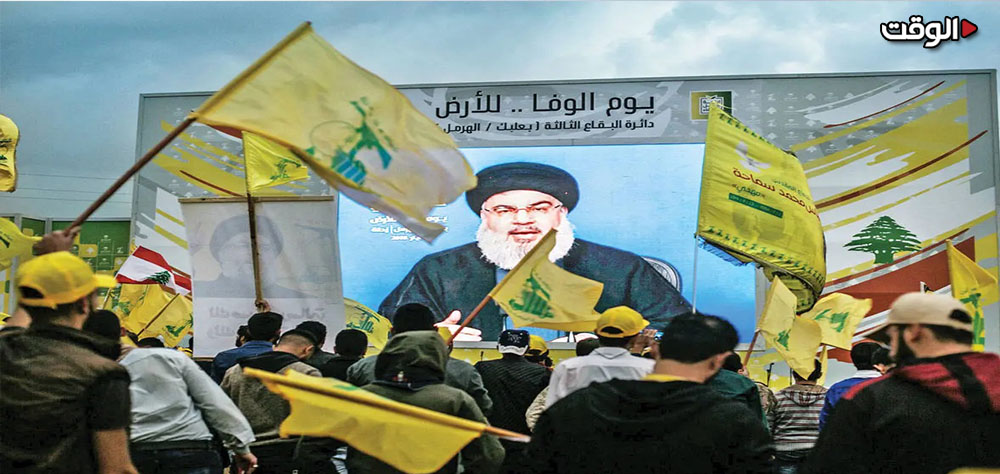
He managed to unite the scattered will of nations, regardless of religion, sect, or ethnicity, around a “common and imminent threat.” From Iraq and Syria to Lebanon and beyond, a network of popular forces emerged, neither mercenaries nor proxies of occupiers, but defenders of their homes, identity, and future. This model defeated ISIS on the battlefield, and, more importantly, dismantled the social and psychological legitimacy of the project. Beyond that phase, this organized popular force then redirected its focus toward a greater cause: defending the oppressed Palestinian nation and confronting the Israeli regime.
Resistance structure's bonds to historical and identity roots of the region
The second transformation was the "structural" nature of what became known as the Axis of Resistance. Contrary to the assumptions of Western think tanks, it was neither a temporary alliance nor a purely military coalition that would collapse with the removal of a single commander. The anti-terror general built this structure upon the deep historical, sociological, and identity-based roots of the region's peoples. The Resistance camp reflected a public conviction: that resolving the Palestinian issue and ending the historical suffering of Muslim nations is impossible without eradicating the "cancerous tumor" of Israel as an imposed colonial project.
This discourse, while confronting Western interventions in Islamic countries, also erected a formidable barrier against the growth of takfiri extremism. Its distinguishing feature was its emphasis on "endogenous security", relying on the innate capacities of local peoples instead of foreign security umbrellas. Inspired by the discourse of the Islamic Revolution and the movement of Imam Hussein at Karbala, this logic provided a common language for all dignity-seeking and oppressed nations, a language that is understandable and acceptable even beyond the geography of Islam.
Resistance, a firm barrier to Balkanization of the Muslim world
The third transformation is the role of the Axis of Resistance in preserving the region's geopolitical stability. The Western-Israeli project of "fragmenting" Islamic nations has been pursued for years under various guise, from proxy wars to inflaming ethnic and sectarian divides. Syria, Iraq, Yemen, Lebanon, and Palestine have all been active stages for this scenario. In the face of this trend, the Resistance camp has become the primary bulwark, preventing the map of regional fragmentation from being fully realized.
With the return of Donald Trump's second administration, signs of a renewed push for what Washington calls "new Middle East" project and the Balkanization of the region have become increasingly apparent. It is a scenario that places securing the interests of the Israeli regime at the absolute forefront of American foreign policy. In such an environment, the importance of the structure Haj Qasem built has not diminished; it has become more critical than ever.
General Solemani after martyrdom still alive in current developments
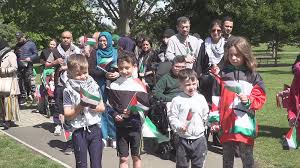
Washington and Tel Aviv we're thinking that with assassination of the commander of the IRGC’s Quds Force the structure General Solemani established will immediately collapse. But the field realities have proven otherwise. On the sixth anniversary of his martyrdom that came with direct order from Trump at the Baghdad International Airport, General Solemani's discourse can be tracked in any political and social pro-resistance actions: From Hamas’s Operation Al-Aqsa Storm to 12-day Israeli-Iranian war in June, to the fierce resistance of the Lebanese to the Israeli aggression, to the rise of Yemen in support of Gaza, to Iraq where people voted for pro-resistance factions in November parliamentary elections, and even to the US where pro-Palestinian student protests were organized in many cities.
In this sense, a Quranic verse, [Al Imran, 169], is a clear description of this reality: "And never think of those who have been killed in the cause of Allah as dead. Rather, they are alive with their Lord, receiving provision." General Solemani is present today not just in memories but in the power dynamics, on the resistance battlegrounds fields, and in the awakened conscience of the nations. Perhaps it is this living presence that is rattling his enemies more than ever and has brought the region to this critical and decisive juncture.