
















Alwaght- Following the intensification of the Russian strike jets' air campaign, and the Lebanon's resistant movement Hezbollah as well as the Syrian government's ground operations, which tipped the balance of power in favor of the Syrian government's forces, the US, in an explicit shift of strategy, has announced that it has plans to send ground forces to northern Syria.
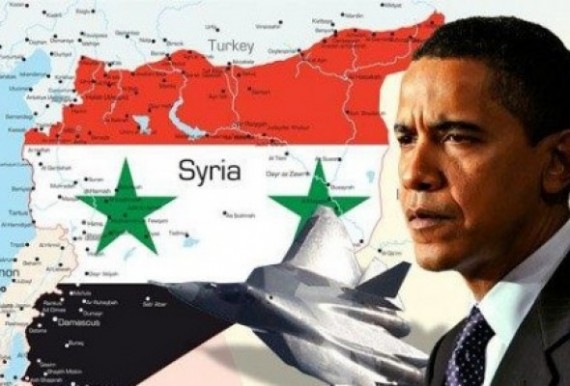
The US President, Barack Obama, during his seven years in office has always come against sending troops to West Asia, however, on October 30, the White House, moving away from Obama's policy, said that dozens of American special forces would be dispatched to Syria's north next month to advise the Syrian opposition forces in their fight against the ISIS terrorist group.
According to the White House, the tasked American Special Forces are over 50 in number, and their mission is to train, advise and help the Syrian opposition forces. Reuters has described the move as a big change in US policies on Syria, which could result in an increase in the US forces' tolls, though the US officials have noted that their special task force would not be positioned in the front lines, as they are not planned to involve directly in the clashes.
The US move comes a month after Russia, Iran, Iraq, Syria and the Lebanese Hezbollah have launched a new joint operation in Syria to fight and uproot the terror groups there. Following these developments, specifically Russian massive military entrance to the Syria's crisis scene, the rules of game have entirety transformed in favor of the forces loyal to the Syrian President Bashar al-Assad. The analysts believe that after Moscow's military intervention in Syria and formation of the new coalition, dubbed 4+1, the West and its regional allies would face new challenges.
Alastair Crooke, the former agent in the British external spying agency, MI6, in an analysis in Huffington Post website has said that the new military operations- by the Russian-led coalition- would unveil West's sham claims that it has been fighting ISIS for a year.
But Crooke believes that the West's concerns are not deriving from this issue, and they include deeper issues. Continuing his analysis, he added that for several decades the NATO has been making decisions on war and peace without being interrupted by a rival or opponent, and the war issues were internal matters between the NATO members, and it was insignificant what the others thought, especially in South West Asia, where the NATO's destructive effects were noticeable but its strategic outcomes were not clear.
It is obvious that the West would not easily come to terms with rise of the Russian-led coalition, and as Crooke noted it is no surprise that West seeks failure of the 4+1 coalition, as it would struggle to prevent any sense of strategic significance that a non-Western similar military organization to NATO could carry for the world.
Although the US has explained that its special forces' major mission in northern Syria is to confront the ISIS terrorists, it seems that Washington's main objective of this move is to foil the Moscow-Tehran's initiative in Syria.
The US would make efforts to, by supporting the Syrian Kurds and other armed forces which it calls moderate, record recapture of Raqqa in its name in order to have upper hand in the negotiations, and prevent Russia and Iran from winning the full credibility and record for defeating the terrorism in Syria.
Past week, the Washington Post quoted an American official as saying that the city of Raqqa, the center of the self-declared Islamic State, was the US next focus to launch an offensive against ISIS there, and at the same time some new groups have voiced readiness to recapture areas in northern Syria.
But it is unlikely that the Americans would have an easy course to achieve this goal. Washington lacks strong allied forces on the ground, and the only forces on whom the US could count are the Syrian Kurds, and any US cooperation with them would not appeal to Turkey, which is their top enemy. On the other hand some reports suggest that the Kurds basically are not interested to advance towards south, preferably tending to keep a tight hold on the areas under their control. Conclusively, the outlook of the plan of recapturing Raqqa looks ambiguous from the initial stages.










