










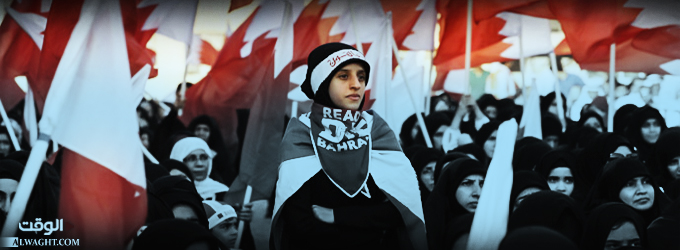


Not responding to Peoples' calls for reforms, Bahraini regime has been facing a legitimacy challenge, and a large part of the nation including Sunni, Shiite, religious, secular, political and ordinary peoples have been opposing the regime; however Al Khalifa has roughly managed to distance some of the opposing forces, e.g. Sunnis, from the ongoing stream of the protests using the securitization and sectarian policies. Large financial incomes, foreign aids as well as generous grants of the ruling regime are other factors which have been influential in Bahraini regime’s success. These factors challenged the comprehensiveness of the Bahrain's uprising as a popular movement and paved the way for ignition of sectarianism in Bahraini community.
However, Min reason behind Al Khalifa's regime maintenance is a loyalist army that has deep sectarian and religious bonds to the ruling family, as Saudi support and the US green light also provided the ground for Ruling regime to remain in power.
Looking at the current situation in Bahrain and considering foreign countries' intervention, two perspectives are expected ahead of Bahraini revolution: 'reconciliation and Participation' as well as 'Resistance and change'.
Reconciliation and participation
Being a small island nation, Bahrain does not enjoy a full independence, and it has conventionally been under the influence of foreign powers’, specifically Western ones. On the one hand, Saudi Arabia considers Bahrain as its backyard and on the other hand the tiny Island Hosts the US Fifth Fleet in the Middle East, paves the way for these countries to meddle in small Arab state's domestic affairs.
Regarding this perspective, the Bahraini crisis has no military solution as the US and the Saudi Arabia block any fundamental change and reform demanded, and financially and military support Bahraini regime to help it deal with the demonstrations.
To find a peaceful settlement to the situation in Bahrain, Iran’s agreement and participation, as a major and weighty player among the regional countries, in the series of talks and actions regionally and internationally are required, an issue that although cannot make deep changes can result in granting more privileges to the Bahraini Shiites.
Resistance and change
Another perspective highlights the fact that the US and Saudi Arabia, Bahraini regime’s main supporters, no longer have the potentials, powers and conditions necessary for directing and manipulating the regional crises and fresh developments because Riyadh’s power has declined and the US has reviewed and modified its policies in the West Asia region. The influence of the US and Saudi Arabia regionally and globally has seen a big impairment as Washington has failed to actualize its objectives in some pivotal areas like Iraq, Syria and Afghanistan and Riyadh has failed to reach it s goals in Lebanon and Syria. Considering the new conditions and emergence of new effective forces regionally and internationally, the resistance option and persistent protests and pressing for fundamental reforms or even restructuring the power mechanism in the country by Bahraini opposition movements could gradually yield favorable and major results. Avoiding any intensification of the conflicts with the regime or radicalization of the circumstances in the present conditions help the opposition groups go on with their protest activities, as they would have more time and opportunity to set their next moves and strategically make their future decisions.
For actualization of the second scenario ahead of Bahrain’ uprising the international and regional players’ limitations in assistance of the Al-Khalifa and Saudi regimes have to be considered. Likewise, examination of the possibilities and powers as well as weakness of the countries like Iran which make the major force for supporting the resistance choice is of high significance.
Future of Bahrain’s uprising
A set of regional and international developments including Iran’s nuclear conclusion, increased Russian role in West Asia, US limitations to help Bahraini regime, and embroilment of Saudi Arabia as major supporter of Bahrain in Yemen and Syria conflicts, could provide the ground for a change in Bahrain.
It seems that as protestors go on with their demonstrations and resistance in the face of the regime, international and regional players such as Iran and the US will intensify their attempts to settle Bahrain’s crisis.
In fact continuation of ground and diplomatic gains made by Resistance Axis in the region which is spearheaded by Iran helps preserve the Shiite forces, and make Al-Khalifa concede to the demands of the protestors and accept incorporation of Shiite movement in the country’s power structure and decision-making mechanisms.
Along with settling the regional conflicts and build-up of diplomatic activities which could put Bahraini regime’s supporters under more pressure, it is expected that Bahrainis' revolutionary resistance go more energetic and active, facilitating a deal which secures minimum interests of Shiite majority.