








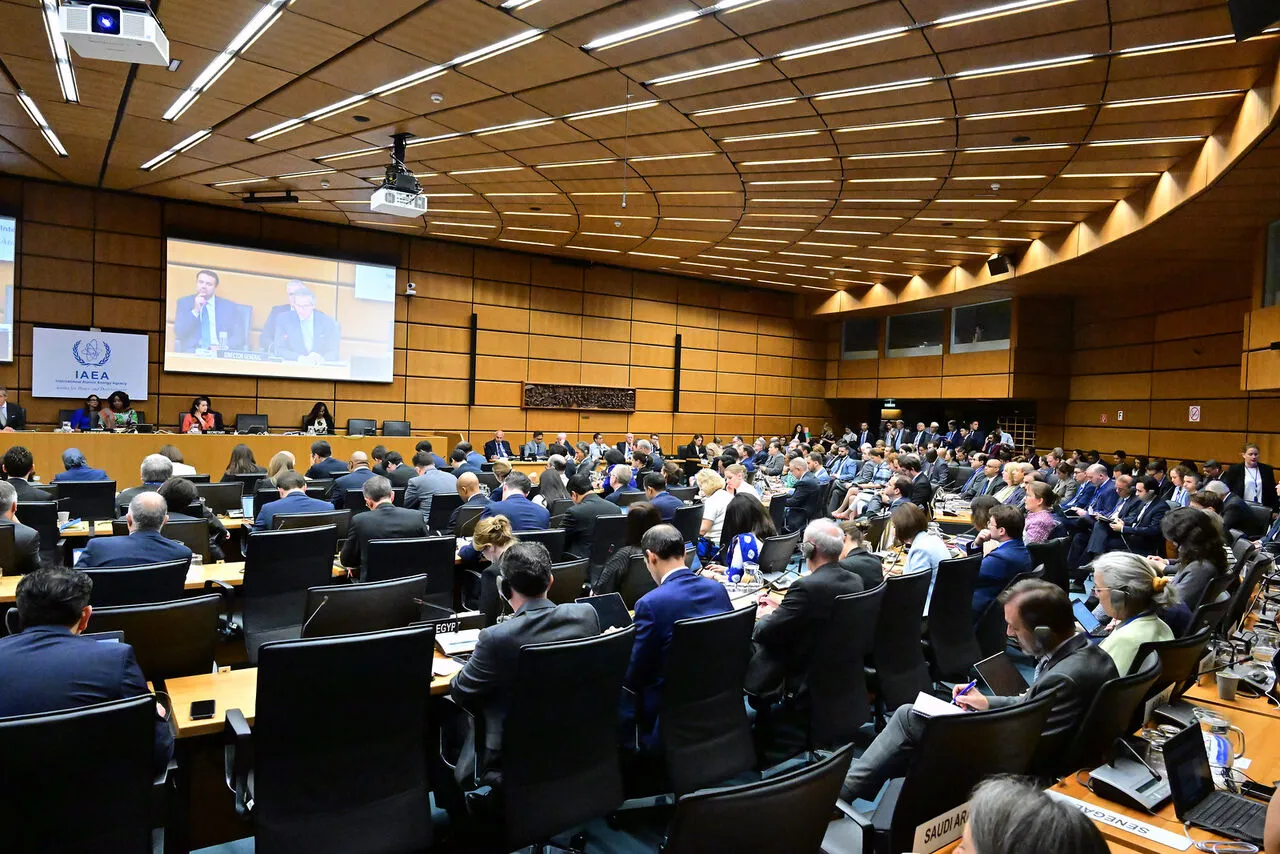


Alwaght- Amid growing speculation about renewed war between Iran and the US in recent weeks, the International Atomic Energy Agency (IAEA) meeting on Thursday and Friday with a special focus on Iran nuclear program once again raised the idea of the agency's head collaborating with the Western camp against Iran.
Having spared no chance to put strains on Iran on the international stage after the 40-day war, the Western countries this time, too, in Vienna tried to draw on the IAEA capacity to once again paint Iran as a source of international concern.
Meanwhile, the role of the biased reports of the IAEA chief Rafael Grossi, who several times fed political and propagandost campaigns of the West with his biased reports to heighten pressures against Tehran, was still considerable.
In his speech to the Board of Governors, Grossi once again claimed: "Until Iran provides us with information about the status of its declared nuclear material and facilities and grants access to those facilities for on-site verification activities, the agency will not be able to conclude that no diversion of declared nuclear material from peaceful nuclear activities has occurred in Iran."
Following Grossi's remarks, the United States, joined by Britain, France and Germany, filed a joint request at Thursday's Board of Governors meeting demanding that Tehran allow the agency's inspectors access to Iran's bombed nuclear facilities.
In a joint statement, the four Western countries accused Iran and told the 35-member Board of Governors: "It should concern all members of this Board that for a year and a half, the agency has lost its continuity of knowledge and surveillance over Iran's highly enriched uranium stockpile that had previously been verified.
The Western countries declared in the statement: "The Director General has repeatedly made clear that there is currently no technical reason preventing the agency's access to the damaged nuclear facilities, and inspectors have long been ready to return to these sites. It is now Iran that must seize this opportunity and change course."
This push comes as Iran's enrichment facilities at Natanz, Fordow and Isfahan, which had operated under agency supervision, were directly and militarily struck twice during American and Israeli aggression in June 2025 and January 2026. For this reason, Iran in recent months, recalling the agency's and its Director General's evident failure to fulfill their obligations to defend the interests of an official member of the institution, has demanded necessary guarantees against future threats and attacks by the two nuclear powers, which are not even NPT members, before any continued cooperation with inspectors. Tehran also insists that the US, as a hostile force and a source of threat against Iran's legal nuclear facilities and nuclear scientists, has access to the inspectors' information, and there is no guarantee that this information will not be used to identify new targets and design military strikes against Iranian facilities. Tehran believes the IAEA must prove its independence and impartiality before full cooperation can be possible.
In this regard, in a statement addressing the IAEA members Iran said that the American and Israeli threats and attacks and Tehran's concerns about military use of the inspections set up the main obstacles to the agency's normal activities in Iran.
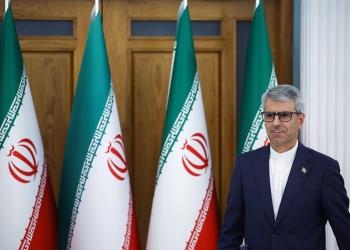
Iran's mission to international organizations in Vienna stressed: "The European troika and the United States claim that allowing a country to take into account the unprecedented realities and conditions resulting from attacks and threats would deal a devastating blow to the IAEA's safeguards system, but that allowing the United States to bomb safeguarded nuclear facilities and threaten to attack them again is entirely lawful and strengthens the safeguards system. They must be living in their own world, a world where hypocrisy is the rule, double standards are the law, and bombing safeguarded facilities means protecting them."
Chinese and Russian veto against Western propaganda
The US and its allies were hopeful that through consensus against Iran in the IAEA they can once again advance their agenda, but the opposition by Iran supporters shattered this scenario.
In a joint statement, Moscow and Beijing, while condemning strikes against peaceful and safeguarded Iranian nuclear facilities, called for end of hostile actions, including military action threats, and providing credible guarantees the attacks as preconditions for resumption of the agency's fact-checking activities in Iran.
"Military attacks and threats against Iran and its nuclear facilities violate the prohibition on the threat or use of force enshrined in the UN Charter and, by directly undermining the conditions essential for verification activities, jeopardize the credibility, integrity and effectiveness of the IAEA's safeguards system," the trilateral statement also said.
The statement stressed that the inspections reflected in the Director General's report demonstrate Iran's continued adherence to its safeguards obligations and its good-faith cooperation with the agency, despite serious obstacles and military threats.
The move by Russia and China, two nuclear powers with veto-wielding seats on the Security Council, to issue a joint statement aligned with Iran's positions at this juncture bore enormous significance.
Beijing and Moscow's action, while neutralizing the Western public-relations campaign and that of the agency and preventing the projection of an international consensus against Tehran's peaceful nuclear program, carried an implicit message, which is that a continuation of the policy of preserving strategic ties with the Islamic Republic and not leaving its ally alone in any scenario of Western escalation.
Grossi a West's pawn
The IAEA Board of Governors' latest meeting once again laid bare Grossi's extra-legal, central role in securitizing Iran's nuclear file.
The agency's performance over the past decade has shown that it has in practice acted in lockstep with Washington's demands.
Under its statute, the agency is obliged to uphold the principles of confidentiality and impartiality regarding countries' classified nuclear information and to support members' peaceful activities and civilian facilities, yet these principles have been severely eroded during Grossi's tenure, with sensitive nuclear information exposed to actors hostile to Tehran.
This was laid bare during the Israeli regime's attack on Iran, which was launched less than a day after the agency issued a resolution against Iran's nuclear program and accused Tehran of violating its nuclear obligations.
Even in the face of the risks and irreparable consequences of a military strike on Iran's nuclear facilities, Grossi has yet to condemn it, a point that shows the agency's head is in practice part of the American design for military confrontation with the Iranian people's nuclear rights.
Actually, the suspicious alignment of Grossi with the American and Israeli aggression raises some speculation about him being a Mossad spying agent.