





Alwaght- Yemen's Al Khalifa rulers who over the past two decades have adopted a policy of crackdown on the Shiites and prominent clerics have now launched a new round of clampdown on Shiite religious figures in the country.
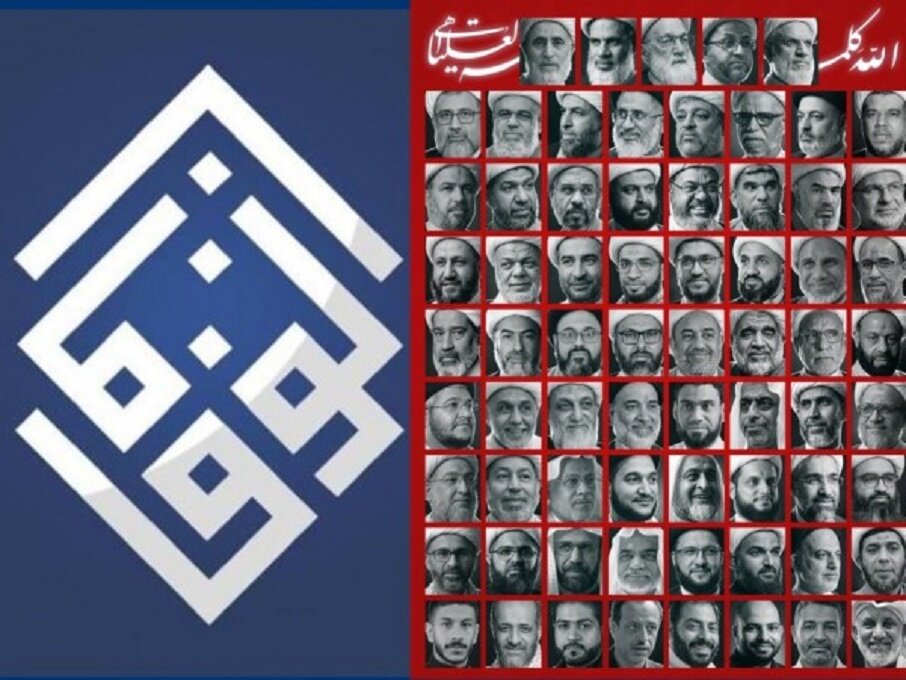
On Monday, A Bahraini court sentenced Ayatollah Sheikh Isa Qassim and 66 other Shiite clerics and figures to life in prison in absentia. All but four of the religious figures received life terms, with the remaining four sentenced to 15 years. Of those convicted, 47 clerics are currently behind bars, while 11 are outside Bahrain.
Some sources say the ruling is not unrelated to the recent war with Iran. Bahraini political activist Taher al-Mousawi told Iran's Tasnim news agency that "All the data on these arrests, in form, content and timing, connects to the ongoing war in the region, and the nature of the charges confirms this. The charges are not real, cite no evidence, and fall outside the clerics' field of expertise and practical experience."
Bahrain's Al-Wefaq party reacted to the ruling, saying it was issued as part of the Al Khalifa regime's escalating judicial and security crackdown on Bahraini clerics and religious activists. It said the rulings have nothing to do with justice and instead serve the Bahraini government's policy of "collective punishment" against the majority population.
"Targeting religious figures, elders and clerics is part of an organized process to squeeze Shiites' lives, erase their religious presence and confiscate their freedoms and beliefs," Al-Wefaq said.
Shiites under heightened pressure after second Iran war
This development comes at a time that after 40-day war the US and Israel waged against Iran, Bahrain, a US ally and providing ground for anti-Iranian attacks, launched a wave of arrests targeting Shiite scholars and religious activists and stripped nationality of a number of citizens.
Ministry of interior, for example, in March and amid Iran war announced that at least 63 were arrested for publishing war-linked content on social mefia. The charges included what it called "abuse of social media" to voice support for Iranian attacks against American bases on Bahrain soil and sharing "sensitive data" with Iran's IRGC, as well as recruiting people for actions against Bahrain. In those days, a young Bahraini man, named Mohammed al-Musawi, died after being subjected to torture of security forces. His charge was sharing on social media images of Iranian missile attacks.
In addition, on April 27 the Bahraini government stripped 69 citizens of their nationality, 33 of them children. The Al Khalifa regime cited national security and actions against the country's interests, claiming those affected had expressed sympathy for Iran's hostile actions or cooperated with foreign parties. That same month, 26-year-old Bahraini artist Mansour Yassin was arrested over a design linked to Iran's martyred Leader Ayatollah Sayyed Ali Khamenei.
On May 9, the Al Khalifa regime launched a sweeping wave of arrests targeting Shiite clerics, preachers and religious figures, detaining 53 people. In June, three prominent Bahraini religious figures were expelled from the country within a single week.
Alongside the arrest wave, broad restrictions were imposed on Shiite religious rites during Muharram and Ashura, preventing the traditional mourning ceremonies from being held on their usual grand scale.
Internal and foreign reactions
The life sentences handed down to Bahraini clerics have triggered a wave of reactions inside the country and across the region.
Ayatollah Sheikh Isa Qassim responded to the rulings by stressing that the move would not weaken the people but would only strengthen their determination to continue the struggle for Islam, freedom, dignity and the full realization of their rights.
Bahrain's February 14 Revolution Youth Coalition issued a statement condemning the life sentences as an attack on the very existence of Shiites and an assault on their religious freedoms, calling on Bahrainis to rise up against the injustice. Addressing Bahrain's Shiites, the statement said: "Give these oppressors your clear answer and shout that we will never surrender, we will not abandon our clerics, and we bow only to God."
In response to the call, videos circulated on social media showed people taking to the streets in several areas of Bahrain, including around the capital Manama, chanting against the Al Khalifa regime. According to the civil movement Bahrain Prisoners' Affairs Organization, a heavy deployment of anti-riot and security forces has been reported around Jaw Prison, where the detained clerics are being held.
Foreign ministry of Iran strongly condemned the unjust life sentences and the confiscation of property belonging to a group of Bahraini clerics and citizens, calling it "systematic and widespread human rights violations."
The head of the executive board of Iraq's Al-Nujaba movement condemned the judicial rulings against 53 Shiite clerics and figures in Bahrain, describing them as an attack on the standing of knowledge and scholars. Lebanon's religious seminary also said the Al Khalifa regime's move is a grave violation of the principles of justice and fairness.
A group of Arab journalists, activists and human rights defenders issued a statement condemning the Bahraini government's actions, including political arrests, forced exile, revocation of identity documents and imprisonment of hundreds of clerics and citizens. The signatories described the measures as deliberate and unacceptable targeting that is condemnable from a humanitarian, moral and political standpoint. They also called the actions a blatant violation that worsens the region's difficult conditions and serves only the interests of the region's enemies.
Since the uprising began in February 2011, the Al Khalifa regime has arrested thousands of Shiite citizens on security charges, and according to human rights groups many of them are held in poor and inhumane conditions.
Revenge on Iran
Though Al Khalifa actions against the Shiite majority are not limited to the past few months and have a long record, the nationality revocation, detention, and imprisonment of prominent Shiite clerics in recent months, especially after Iran war, have gained pace.
During the war, Tehran struck several times the military bases and facilities in Bahrain used by the CENTCOM to bomb Iranian cities.
Many analysts and political and civil activists therefore see the intensified security and political pressure on Shiites as an attempt by the Al Khalifa regime to compensate for its inability to respond directly to Iran's attacks. Iran's support for Bahrain's Shiites in recent years is among the factors considered in analyzing Manama's behavior.
It is noteworthy that some of these religious figures now reside in Iran, and the Manama regime appears to use this as a pretext to revoke their citizenship and sever their ties to Bahrain entirely.
Another reason for the pressure on clerics is their outspoken support for the Islamic Republic during the recent war and their efforts to raise awareness among Bahrainis and neutralize the Al Khalifa regime's propaganda about the hidden dimensions of the conflict. In this context, Sheikh Isa Qassim condemned the United States in a May speech for pursuing malicious policies and trying to overthrow the Islamic Republic. The cleric asked: "Can any reasonable person disparage the Islamic Republic for defending itself against an aggressive war of such scale and aims?"
The cleric also criticized the lack of justice in international affairs, saying that with reason and an awakened global conscience, justice will prevail and falsehood will perish. Sheikh Qassim called on Muslims worldwide to do their duty in this regard.
Therefore, Al Khalifa, furious at the Shiite clerics' enlightenment and rejection to align with Manama rulers' positions regarding anti-Iranian attacks, is abusing judicial procedures to put strains on them.
In general, given the stepped-up pressures against prominent Shiite figures, the call by the February 14 Movement for resumption of uprising amid escalating regional tensions, the Al Khalifa actions can bring it face to face with serious challenges. Perhaps this time, unlike in 2011, Al Khalifa will not be able to quell the popular protests, especially as the other Persian Gulf Arab monarchies, bogged down in regional conditions, may lack the capability to deploy Peninsula Shield Forces to suppress the demonstrations.