















Alwaght- After two weeks of fruitless airstrikes against Yemen to press Ansarullah resistance movement to withdraw its recently announced sea blockade on Saudi Arabia in the Red Sea, Riyadh once again moved to the already tested and failed formula of coalition making.
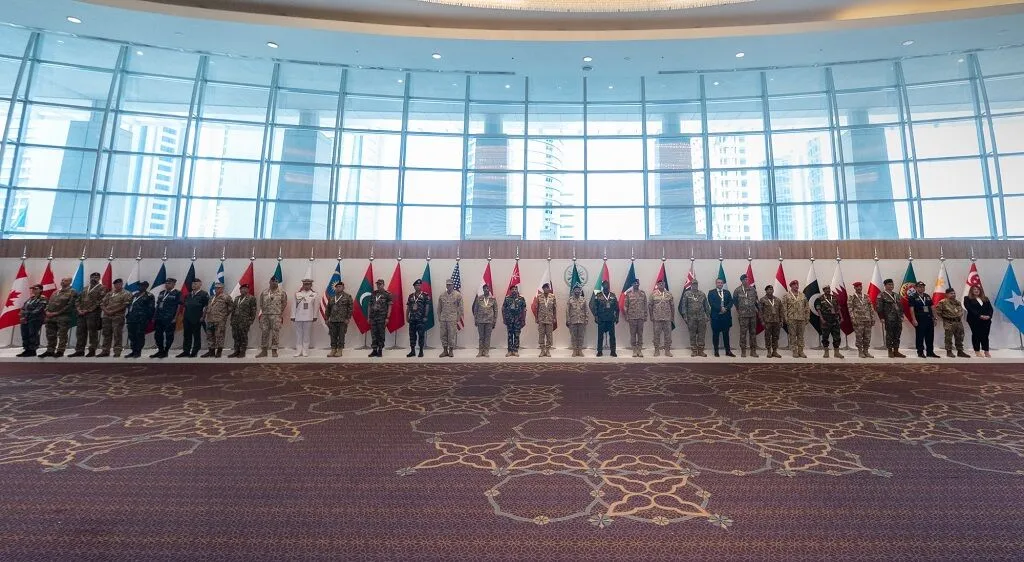
Saudi Defense Ministry said on Thursday that it hosted a meeting of over 40 countries. The ministry said that the participants discussed a draft deal for a multinational maritime defense coalition to enhance cooperation and commonly counter threats in the Bab-el-Mandeb, Red Sea, sbd the Gulf of Oman.
Riyadh claimed that by the end of the meeting, 14 countries, Saudi Arabia, Kuwait, Bahrain, Qatar, Pakistan, Turkey, Egypt, Jordan, Yemen’s internationally recognized government, Bangladesh, Nigeria, Sudan, Djibouti, and Somalia, had thrown their weight behind the initiative, issuing a joint statement in support of forming the coalition.
Saudi Arabia said the coalition would remain open to other nations, stressed its purely defensive nature, and insisted it was not targeting any country, coalition, or international organization. Yet despite invitations sent to roughly 50 nations, many Western allies, including the US, have approached the proposal with caution, demanding a clearer understanding of the coalition’s commitments and operational mechanisms before signing on.
Riyadh, grappling with the economic fallout from disrupted shipping routes and mounting threats to its energy infrastructure, is now scrambling to rally a broad array of nations to forge a new front in the Red Sea and Bab-el-Mandeb.
Last week, Major General Turki Al-Malki, spokesman for the Saudi-led coalition, declared that the joint forces command “will take all decisive and necessary operational measures to protect commercial vessels transiting the Bab-el-Mandeb.”
But the formation of this theatrical coalition, says less about Riyadh’s strength than about the tricky predicament in which it now finds itself.
The Ansarullah's imposition of a naval blockade, along with strikes on oil facilities and airports, has posed an unprecedented challenge to Saudi Arabia, laying bare the vulnerability of its critical infrastructure. In response, the Saudis are seeking to enlist broader international backing, hoping a multilateral framework will ease the pressure on their trade and energy routes and offer a way out of their economic straits. Many observers, however, view the move as little more than a rehash of failed past experiments.
Saudi Arabia and record of symbolic coalition makings
In such conditions, the main question is this: Will the new sea coalition meet its favored goals?
Past form does not favor Riyadh. When Saudi Arabia first launched its military intervention in Yemen in March 2015, it boasted of a nine-nation Arab and Islamic coalition that would upend the battlefield and defeat Ansarullah. Saudi media at the time billed the alliance as a decisive force that would end Ansarullah's rule for good. But subsequent events proved that battlefield realities bore little resemblance to Riyadh’s rosy forecasts.
Several member states never actually joined the fight on the ground; others limited their role to political backing. Egypt and Pakistan, two major military powers in the Islamic bloc with close ties to Riyadh, carefully kept their forces out of Yemen’s quagmire altogether.
In the end, a coalition that was supposed to reshape Yemen in short order failed to achieve its objectives after nearly a decade of conflict. The Saudi-backed government of Aden never returned to Sana'a, Ansarullah were not defeated, and Saudi Arabia fell short of its core goals. Ultimately, it was Sana'a government that forced Riyadh to the negotiating table and compelled it to dial back its military operations.
Then there is the even more telling precedent: Washington’s failed foray in the Red Sea. In the wake of the Gaza war and Hamas’s Operation Al-Aqsa Storm, the US launched “Operation Prosperity Guardian” in January 2024, a multinational naval coalition featuring the US, Britain, Bahrain, Canada, France, Italy, the Netherlands, Norway, Seychelles, and Spain. With a heavy deployment of warships in the Red Sea, Washington sought to halt Ansarullah strikes on vessels linked to Israel.
Yet despite fielding the world’s largest navy, advanced missile-defense systems, and the backing of several Western allies, the US achieved little and ultimately settled for a truce with Ansarullah. Some American officials later conceded that Ansarullah's campaign against shipping and US maritime interests posed the most serious challenge to the American Navy since World War II.
Given that failed track record, skepticism is only deepening over whether the new coalition Saudi Arabia is now trying to piece together will fare any better.
Jafar Ghanad-Bashi, a West Asia analyst, told Alwaght in an interview that the failed US experiment offers a sobering preview of what lies ahead for Riyadh's latest bid to navigate its economic quagmire.
"If the United States, with all its military and intelligence firepower, could not find an effective way to contain Ansarullah," he said, "then countries like Egypt, Sudan, Djibouti, and Somaliland, whose military capabilities don't come close to those of major powers, are hardly going to shift the equation."
Ghanad-Bashi also pointed to Saudi Arabia's own history of abortive coalition-building, saying: "Beyond the anti-Yemen coalition, Riyadh's attempt to assemble a sprawling 137-nation alliance against Iran went nowhere. Then there was the plan, during Donald Trump's first term, to build a front against the Axis of Resistance, particularly Hezbollah, with backing from terrorist organizations like ISIS. That, too, fizzled. These failures suggest that Saudi Arabia's centralized decision-making structure and unilateralist approach have consistently undermined its ability to forge lasting, effective coalitions."
He further attributed Riyadh's coalition woes to the governing style of its new rulers.
"Even relations within the (Persian) Gulf Cooperation Council have grown more fractured under King Salman's reign than ever before," Qanad-Bashi said. "The old bonds among(P) GCC members have eroded, and we are now seeing the highest level of divergence among them."
Return of Riyadh-Tel Aviv cooperation in Yemen
Given the string of past failures, some analysts now suggest that Saudi Arabia may pivot toward deeper security cooperation with Israel in the Red Sea to bolster its deterrence. Shared interests in securing shipping lanes and countering Ansarullah's operations, they argue, could lay the groundwork for closer coordination between the two.
Israel, for its part, views the Bab-el-Mandeb as a vital artery for its trade and maritime connectivity, and would likely welcome any security initiative that helps relieve mounting pressure.
Yet even such a potential cooperation would not necessarily shift the balance on the ground. The core challenge in the Red Sea is not merely military, it is deeply rooted in politics and geopolitics. The very fact that Israel, despite turning to Washington and its Arab allies to break Ansarullah's naval blockade, ultimately failed to achieve its goal underscores the limits of conventional power.
The reality is that Ansarullah today bear little resemblance to the movement Saudi Arabia took on in 2015. Years of war have allowed Sana'a to expand its missile, drone, and naval capabilities while honing extensive experience in asymmetric warfare. That means any new coalition will confront a vastly different landscape, one in which Yemen has not been sidelined but has instead emerged as a pivotal player in Red Sea security dynamics.
Ghanad-Bashi, underscoring that the balance of power has shifted in the Ansarullah's favor, argued that Saudi Arabia's proposed coalitions would neither eliminate the movement nor break the blockade.
"Applying naval pressure on Saudi Arabia is no complicated feat for Yemen today," he said. "Striking ships bound for Saudi ports or threatening the kingdom's air infrastructure can sustain the blockade. Breaking it, on the other hand, will prove exceedingly difficult for any opposing coalition. Ansarullah, drawing on their asymmetric warfare experience and resilient mindset, have inflicted heavy costs on their rivals in recent years. On that basis, even if Saudi Arabia's new coalition does materialize, it is unlikely to offer Riyadh a way out of this deadlock."
All in all, the latest moves suggest that Saudi Arabia is once again betting on international coalition-building to overcome the Red Sea crisis. But the ghosts of its failed 2015 military campaign, and Washington's own abortive effort to contain Sana'a, cast long shadows over any such venture, raising serious doubts about its prospects.
For Riyadh, the more pragmatic path may lie elsewhere. Accepting the new realities on the ground in Yemen, lifting the blockade, ending its intervention, and respecting Yemen's territorial sovereignty remain the most realistic options for de-escalating tensions and preventing a wider conflagration in one of the world's most vital waterways.