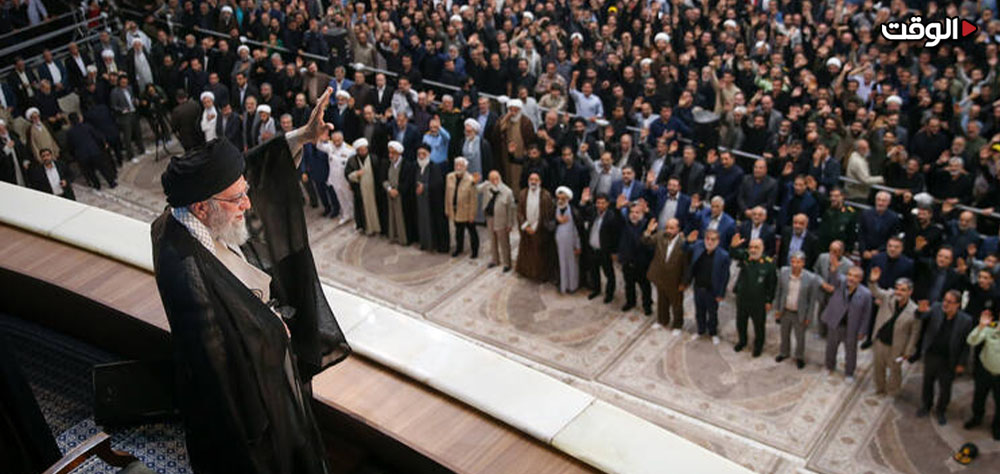


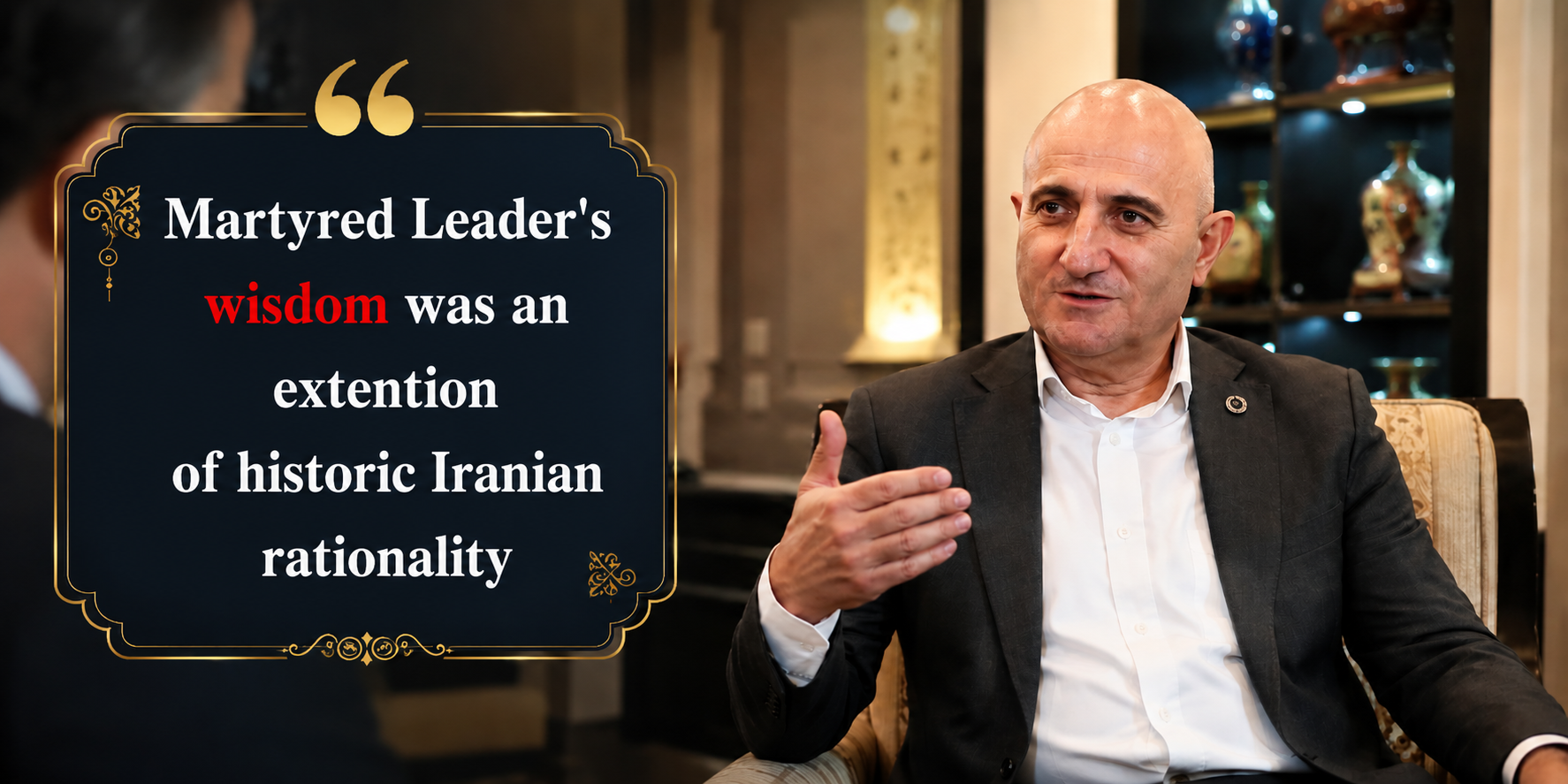


Alwaght- Mikhak Apresyan, the head of Armenian Tourism Federation who traveled to Tehran to pay tributes to the martyred Supreme Leader of Iran Ayatollah Sayyed Ali Khamenei, in an interview with Alwaght gave a picture of the place of the martyred leader in the eyes of people of Armenia and the massive capacities of the cooperation between Tehran and Yerevan.
Alwaght: What is bringing you to Iran?
Apresyan: I came to Iran to express my condolences and respect to the people of Iran for the martyrdom of the Leader Sayyed Ali Khamenei. This trip for me is not merely an official visit, but a tribute to a nation with whose culture, history, and people I have felt a close connection for many years.
Alwaght: You have cooperation and connection with Iran for years. What picture did this bond give you of the martyred Leader of Iran?
Apresyan: For many years, I have collaborated with Iran in the fields of culture and tourism, and this ongoing connection has given me a deep understanding of Iranian society, Persian culture, as well as the views and conduct of Iran's leader. Over all these years, I have followed his stances and leadership style, and the news of his martyrdom was deeply moving for me.
What has always mattered to me was the Iranian leader's perspective and way of thinking, an approach that I see as a reflection of the culture, wisdom, and identity of the Iranian people. The intelligence, foresight, and rationality evident in his decisions have always been worthy of my respect and admiration.
Alwaght: You referred to wisdom. What do you mean?
Apresyan: By wisdom, I mean the historical and cultural legacy of the Iranian nation, a heritage that has been shaped over thousands of years. Iran has always been one of the great centers of science, culture, and civilization, and the people of this land have, at various historical junctures, been able to stand firm against challenges and pressures by drawing on this very cultural heritage.
In my view, the conduct of Iran's leader was a continuation of this historical tradition, a form of leadership grounded in rationality, an acute understanding of circumstances, and the safeguarding of national interests. This characteristic was also noteworthy to many outside observers.
Alwaght: How was the place of the martyred leader in the eyes of the people of Armenia?
Apresyan: Almost all of the people of Armenia knew and highly respected him. He was a prominent and respected figure to the public opinion of Armenia. He always backed expansion of Iran-Armenia ties and this positive view importantly influenced bilateral relations.
Alwaght: How do you see the future of Tehran-Yerevan relationship?
Apresyan: I consider Iran and Armenia to be neighboring countries with deep historical ties, two nations that have lived alongside each other for thousands of years and have had extensive cultural, social, and economic relations. In my view, the potential for cooperation between the two countries is far greater than its current state, and these relations should be expanded across all fields.
In the cultural sphere, this year we will hold the fifth joint Iran-Armenia cultural festival in Iran. Prominent cultural and artistic figures from both countries will take part in this event, and we hope that this program will further enhance mutual understanding between our two nations.
Alwaght: How do you assess the tourism cooperation between Iran and Armenia?
Apresyan: At present, a considerable number of Iranian citizens travel to Armenia, and likewise, Armenian tourists choose Iran as one of their key destinations. However, I believe the existing potential is far greater than the current level, and the barriers to travel between the two countries should be reduced in order to strengthen people-to-people connections.
Alongside the development of tourism, the establishment and reinforcement of trade corridors between Iran and Armenia also hold strategic importance. Increased tourist exchange, expanded trade, and facilitated transportation can lead to the further consolidation of economic and cultural relations between the two countries and usher in a new chapter in Tehran-Yerevan cooperation.