
















ALWAGHT- According to The Global Risks Report 2026, geo-economic confrontation now tops global threats, with US–China trade frictions and oil volatility transforming the Middle East’s strategic landscape.
Geo-economic confrontation has emerged as the most severe global risk over the next two years, according to the World Economic Forum’s Global Risks Report 2026. Economic tools such as sanctions, tariffs, and investment controls are increasingly replacing military force, signaling a shift toward economy-driven power struggles. The EU’s sanctions on Russia illustrate both the reach and limits of this approach, offering lessons for regions heavily dependent on trade and energy.
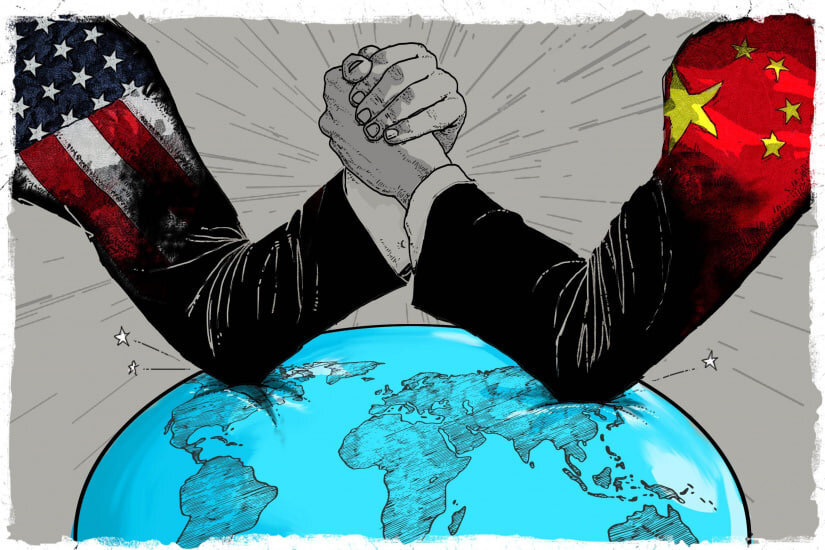
The rivalry between the United States and China is the central fault line of this new geoeconomic era, with major spillover effects for the Middle East. China has become the region’s largest trading partner and a dominant buyer of Middle Eastern oil, deepening regional exposure to US–China trade tensions. As tariffs and sanctions escalate, oil demand, investment flows, and access to technology across MENA are increasingly affected.
These tensions have fueled oil price volatility, directly impacting Persian Gulf economies that rely on energy exports. Sharp drops in Brent crude prices in 2025—linked to tariff threats and trade retaliation—cut into state revenues and strained national budgets, particularly in Saudi Arabia, the UAE, and Kuwait. Sanctions on Iranian oil further reshaped regional crude flows, reinforcing Persian Gulf producers’ role in Asian markets while amplifying price uncertainty.
In response, Middle Eastern states—especially in the Persian Gulf—have pursued a strategy of balance rather than alignment. They have expanded energy and trade ties with China while simultaneously deepening investment, technology, and security partnerships with the United States. In an increasingly multipolar world, the region’s ability to manage geo-economic confrontation through diversified partnerships will be crucial to preserving economic stability, strategic autonomy, and long-term growth.










