











Alwaght- In the shadow of new Israeli-American threats against Iran, it seems that Tehran has put aside its past reservations concerning its missile range and is reviewing its defense strategy.
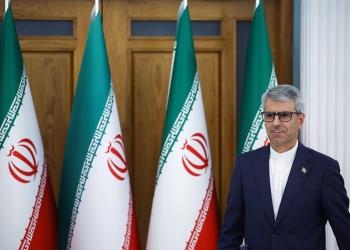
In this connection, the Islamic Revolutionary Guards Corps (IRGC) spokesman General Hussein Mohebi on Saturday highlighted Iran's decision to lift the limit on range of its missiles, saying that the Islamic Republic will display its military capabilities on the ground if the enemies act on their threats. He added that Tehran is capable of striking where enemies do not expect.
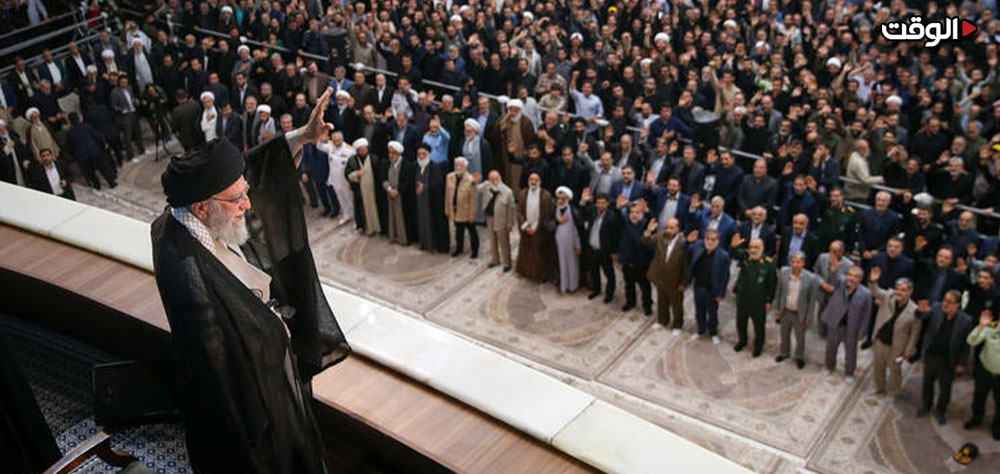
These remarks came after reports came out saying that Iran's Supreme Leader Ayatollah Sayyed Mojtaba Khamenei in his meeting with senior military commanders stressed the need for immediate response to any threats at any level without considering geographic limits.
Removing missile range cap in a time of regional tensions is examinable from a set of aspects and, according to experts, carries important messages to the US and its allies.
Broadening defense strategy
The first yield of this move is worth examining through the lens of Iran's defense strategy. The lifting of previous limits on missile range following the 12-day and 40-day wars shows that Tehran, in defining the scope of its threats, no longer considers only the region's geographical confines, particularly the Israeli regime. In this framework, missile range can extend beyond the region's borders and reach deeper into the geography of potential adversaries.
This shift in approach comes as, in recent months, NATO's secretary-general and some European officials have acknowledged logistical support for the US in the war against Iran, and bases in those countries, including Britain's Diego Garcia in the Indian Ocean and Fairford on British soil, were among the military installations Washington used extensively. The disclosure of these cooperations can influence the armed forces' defense and security calculations and broaden the scope of their assessment of external threats.
Therefore, the development of missile capability can be seen as carrying a clear message to Western countries, telling them that any country that participates in Washington's and Tel Aviv's warmongering must also factor the potential consequences of that companionship into its security calculations.
Expanding deterrence range
Another important message is expansion of military deterrence and raising the costs of any new military action against Iran.
After two wars, Iran has shown it has not only managed to boot its defensive and offensive capabilities, but also is has reached new levels in redefining the deterrence equations. Any threats against its national interests, security, and territorial integrity, regardless of where it happens, can draw proportionate and at the highest level response.
Iran's acquisition of long-range and intercontinental missiles could extend the country's deterrence reach all the way to American soil, enabling it to counter threats to its territorial integrity even at far greater distances.
Crucially, this deterrent approach is not confined to the military domain, but it can manifest in political and even nuclear dimensions as well. Before the 12-day war, for instance, Iran had warned that in the event of a military strike, it might reconsider its nuclear policy, with its approach of transparency and cooperation with the IAEA potentially giving way to a policy of nuclear ambiguity.
Similarly, ahead of the 40-day war, Iranian political and military officials had warned that any aggression would prompt them to expand the conflict to a regional level, a warning that took on operational dimensions.
Against this backdrop of mounting threats from Washington and Tel Aviv and the prospect of repeated military strikes, the hypothesis is gaining ground: could the lifting of previous restrictions on missile range be a prelude to a broader revision of other components of Iran's defense doctrine, including its nuclear program? The issue has become a national demand in the country's political and strategic discourse in recent months, with some officials and analysts refusing to rule out its realization should military aggression recur.
This issue matters because, according to post-war polling, more than 80 percent of Iranians believe that had the country possessed nuclear weapons, the US and the Israeli regime would not have dared to attack, especially given that Donald Trump has repeatedly acknowledged that had Iran obtained a nuclear weapon, Washington would have had no choice but to deal with it with respect.
Increasing military power
The third result of this shift in strategy is uplift of Iran's military standing. At present, only 8 countries have Inter-Continental Ballistic Missiles (ICBMs) and Iran's procurement of such a capability can bring it to the club of the countries with this technology and capability.
Indeed, Iran has had a long several-decade effort to develop its missile technology.
Relying on domestic capacity and engineering capabilities, Iran developed various types of ballistic missiles, turning into one of the key actors in this area. So, expanding range of its missiles and moving to higher technology levels can mark a continuation to course Tehran invested on for years and now is updating given the security and military developments in the region.
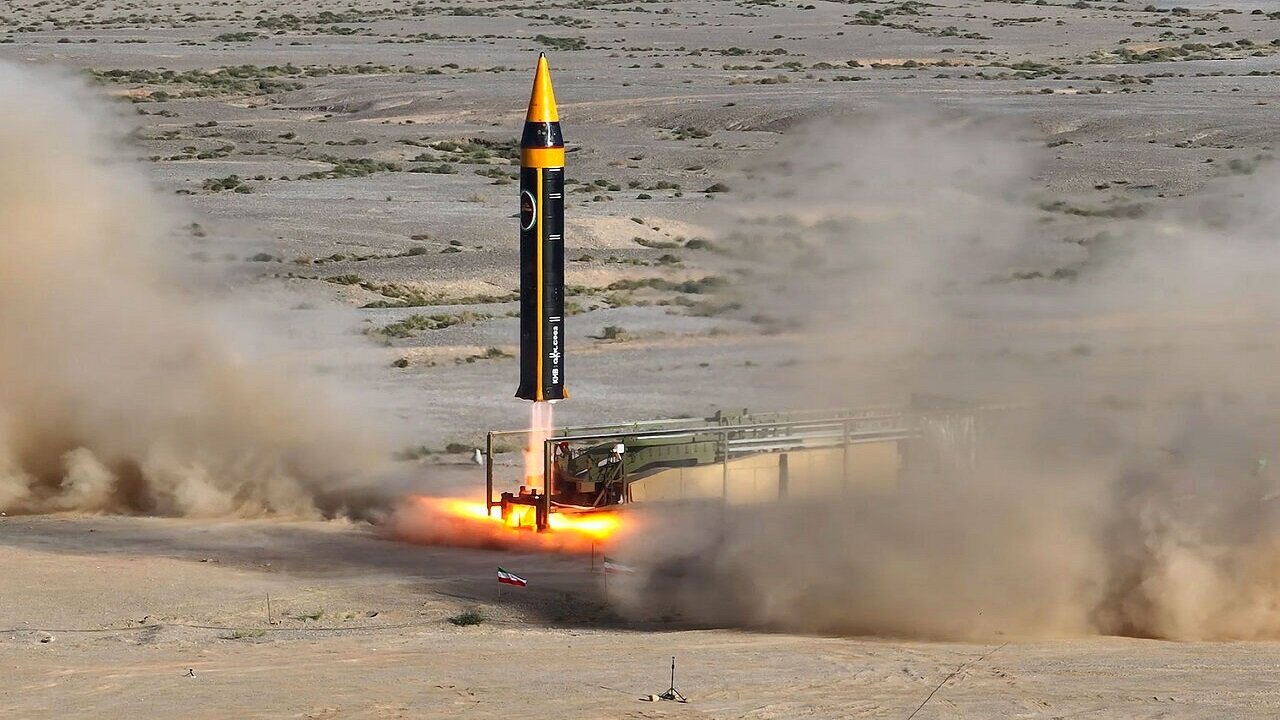
In the current landscape, the Khorramshahr-4 missile, with a declared range of roughly 2,000 kilometers, ranks among Iran's longest-range missiles. A shift in the country's defense strategy and its push to widen the deterrence envelope could therefore open a new chapter in Iran's missile industry, with more advanced and strategic long-range missile technologies assuming a more prominent place in its defense and military calculations.
Finally, the change in missile range is not merely a military development but a signal of an effort to redefine deterrence equations, extend the scope of response to threats, and raise the cost of any military confrontation with Iran.